Plymouth, MA
Plymouth was settled by the passengers of the Mayflower in 1620, making it one of the earliest permanent English settlements in New England. Known as “America’s Hometown”, Plymouth is forever connected to the Pilgrims, Plymouth Rock, the Mayflower, and the story of the first Thanksgiving, as well as the much older history of the Wampanoag people who inhabited this region for thousands of years before the Pilgrims arrived.
Today, its waterfront, historic homes, burial grounds, monuments, and preserved landscapes allow us to explore more than four centuries of history. Plymouth is especially meaningful to us because it is close enough to home that we have returned many times, yet there always seems to be another piece of its remarkable story waiting for us to discover.
Recent Posts
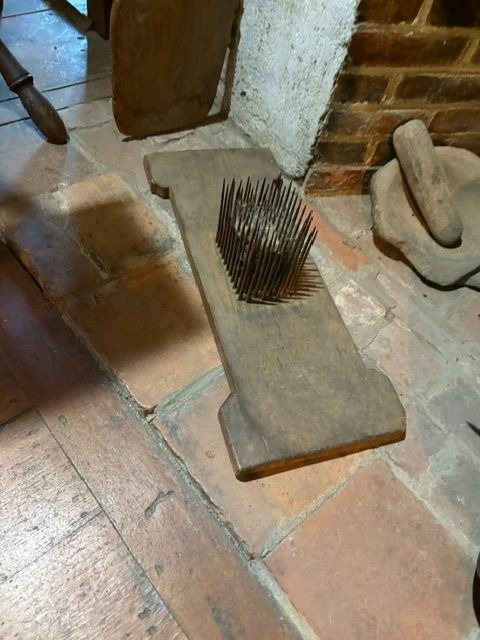
The Flax Hackle
A wooden board fitted with sharp iron teeth preserves one step in the long process of making linen. Known as a hackle, or hetchel, this tool combed flax fibers before they were spun into thread. Its simple construction conceals the skill and repeated effort required to turn a harvested plant into useful cloth. Linen comes […]
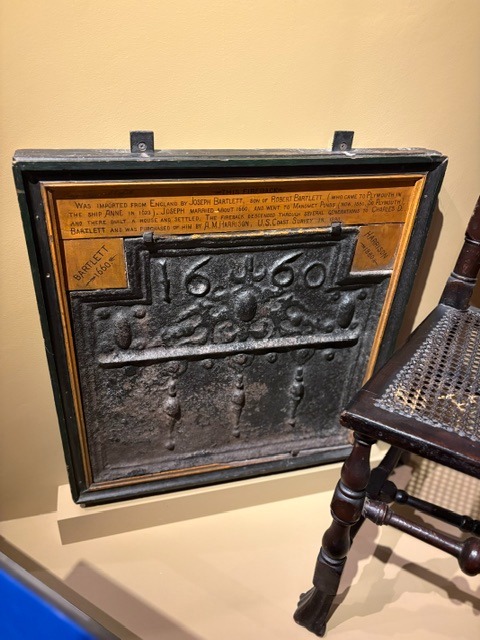
The Bartlett Fireback
Dated 1660, the Bartlett fireback at Pilgrim Hall Museum preserves a substantial piece of an early Plymouth household. Its raised decoration and prominent numerals made it both a useful fireplace fitting and an ornament within the home. A fireback stood against the rear wall of a fireplace, protecting the masonry from direct heat and reflecting […]
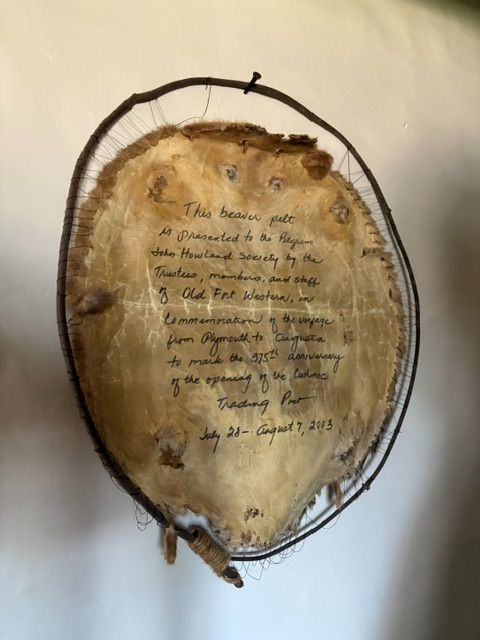
A Beaver Pelt
A beaver pelt stretched within a wooden frame commemorates a connection between Plymouth, Massachusetts, and Augusta, Maine. Its handwritten inscription records a voyage from Plymouth to Augusta in 2003, marking the 375th anniversary of the opening of the Cushnoc trading post. Presented to the Pilgrim John Howland Society by the trustees, members, and staff of […]
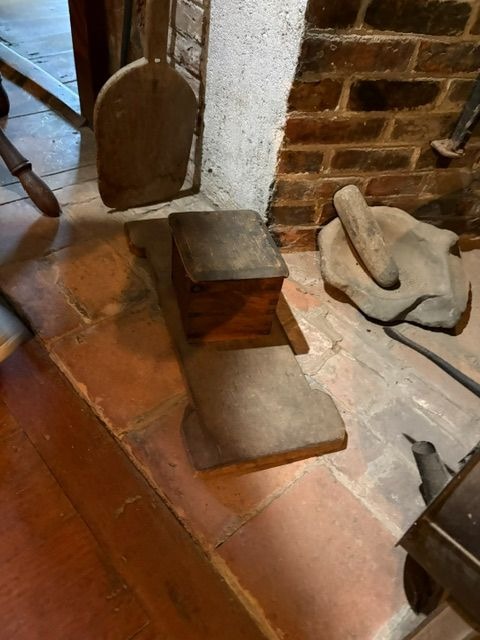
The Eliot Bible
The 1685 Eliot Bible displayed at Pilgrim Hall Museum brings together the histories of religion, language, and printing in colonial Massachusetts. Printed in Cambridge by Samuel Green, it belongs to the second edition of a translation into the Massachusett language. The Reverend John Eliot undertook the project as part of his missionary work. His effort […]
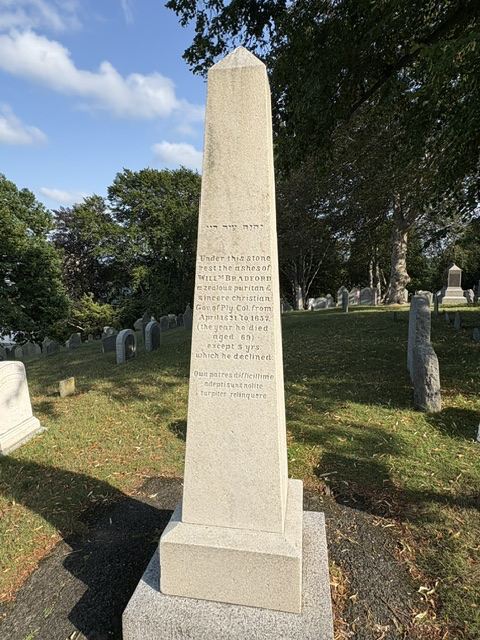
Governor William Bradford Memorial
This granite obelisk on Burial Hill honors William Bradford, one of the Mayflower passengers and a central figure in the establishment of Plymouth Colony. After Governor John Carver died in 1621, Bradford was chosen to lead the struggling colony. He continued to serve as governor for most of the years until his death in 1657, […]
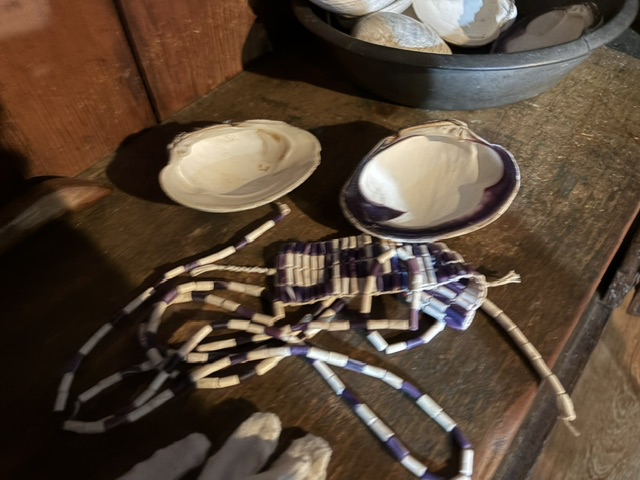
Wampum
Wampum consists of carefully shaped and polished beads traditionally made from shells found along the Atlantic coast. White beads were commonly fashioned from the inner spiral of the whelk shell, while purple beads came from the darker portion of the quahog shell. Because the purple section of the shell was limited, those beads were more […]
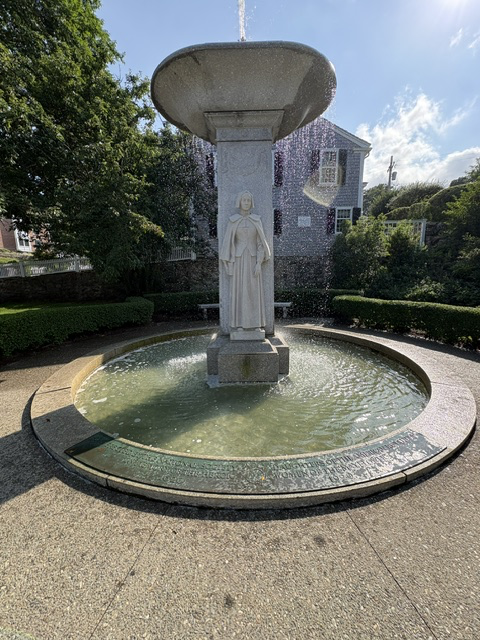
The Pilgrim Mother Fountain
Standing near Plymouth’s waterfront, the Pilgrim Mother Fountain honors the women who crossed the Atlantic aboard the Mayflower and helped establish Plymouth Colony. While the colony’s governors, ministers, and military leaders are frequently remembered by name, this monument turns attention toward the women whose courage and endurance were equally essential to the settlement’s survival. The […]
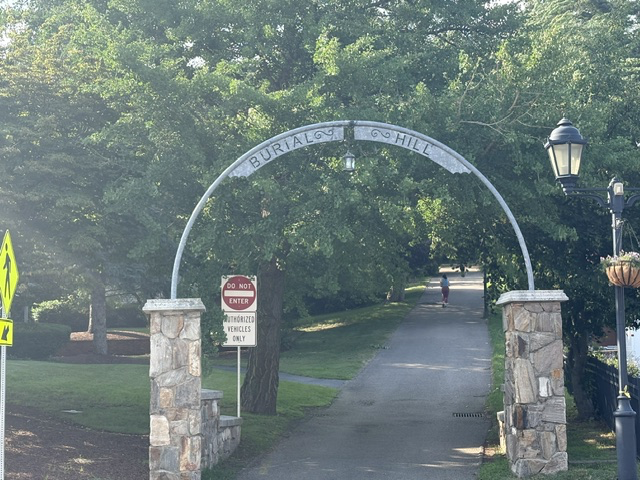
Burial Hill
Rising above Town Square at the upper end of Leyden Street, Burial Hill is one of Plymouth’s most significant historic places. Its elevation provides a commanding view of the harbor, the waterfront, and the route of the town’s first street. That view explains why the settlers initially used the hill for defense rather than burial. […]
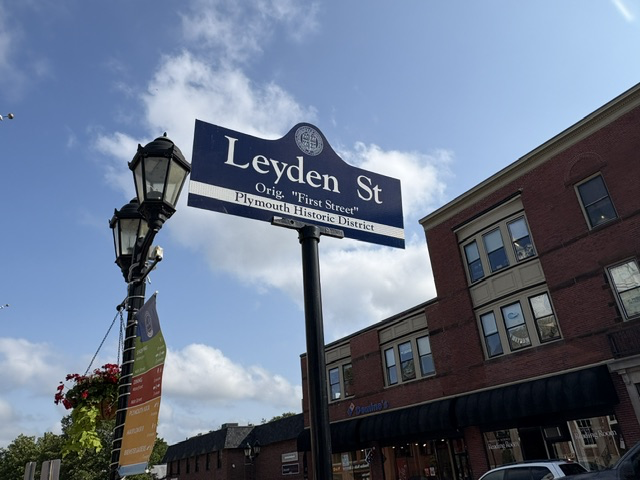
Leyden Street
Leyden Street is easy to overlook among Plymouth’s better-known landmarks. It is not lined with houses preserved from 1620, nor does it resemble a reconstructed colonial village. Modern businesses, homes, vehicles, and signs now occupy the street. Its importance lies beneath those later changes: the route itself follows the first street laid out by the […]
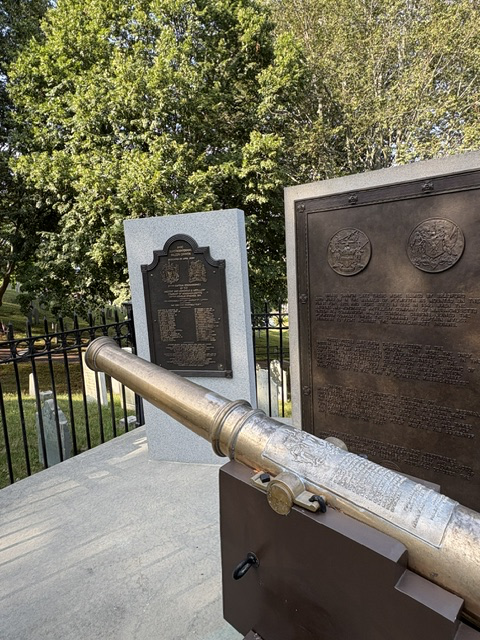
The Burial Hill Cannons
Near the summit of Burial Hill, a cannon and a series of bronze plaques mark the approximate location of Plymouth’s first fort. The settlers chose the hill because its height provided a broad view of the harbor and the settlement below. Their fort, completed in the early 1620s, had cannon mounted on its roof and […]
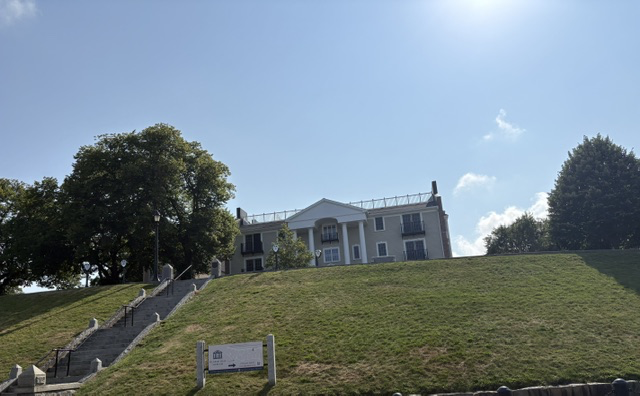
Cole’s Hill
Rising steeply above Plymouth’s waterfront, Cole’s Hill was the colony’s first burial ground. During the devastating winter of 1620–1621, nearly half of the Mayflower’s passengers died from disease, exposure, and the effects of their difficult voyage. Many were buried here in graves overlooking the harbor where their ship remained anchored. According to tradition, the settlers […]
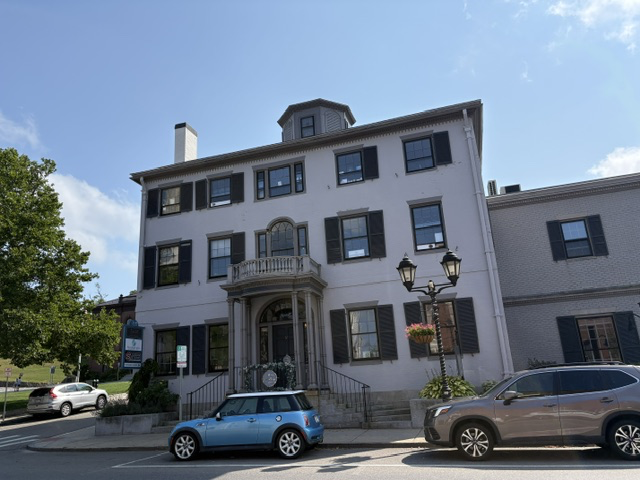
The Bartlett–Russell–Hedge House
Standing prominently on Court Street, the Bartlett–Russell–Hedge House is one of Plymouth’s finest examples of Federal-style architecture. Its symmetrical façade, Palladian window, entrance balcony, and rooftop cupola distinguish it from the surrounding commercial buildings. The house was constructed in 1803 for Joseph Bartlett, a Plymouth Sea captain. Its design has been attributed to Charles Bulfinch, […]

