Governor William Bradford Memorial
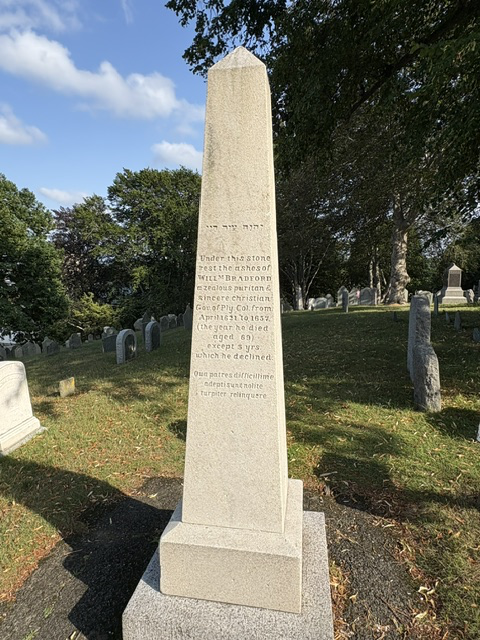
This granite obelisk on Burial Hill honors William Bradford, one of the Mayflower passengers and a central figure in the establishment of Plymouth Colony. After Governor John Carver died in 1621, Bradford was chosen to lead the struggling colony. He continued to serve as governor for most of the years until his death in 1657, guiding Plymouth through its uncertain beginnings and its development into an established colonial community.
Bradford also preserved the colony’s early history in Of Plymouth Plantation. His account records the Separatists’ departure from England, their years in the Netherlands, the Mayflower crossing and the challenges the settlers faced after arriving in New England. Much of what is known about the founding of Plymouth comes from the history he left behind.
The inscription on the monument states that beneath it rest the ashes of William Bradford, describing him as “a zealous patriot and sincere Christian.” However, the precise location of his original grave is not known with certainty. The obelisk is a later memorial standing within the traditional Bradford family burial area, where several generations of the family are remembered.
The Hebrew inscription near the top is generally translated as “The Lord is the help of my life.” Its presence is especially appropriate because Bradford studied Hebrew later in life, hoping to read the language of the Old Testament for himself. The Latin inscription near the bottom offers a message to succeeding generations: “What our fathers with so much difficulty secured, do not basely relinquish.” Together, these inscriptions connect Bradford’s religious faith with his concern that later generations preserve what their ancestors had struggled to establish.
Read More From Nancy
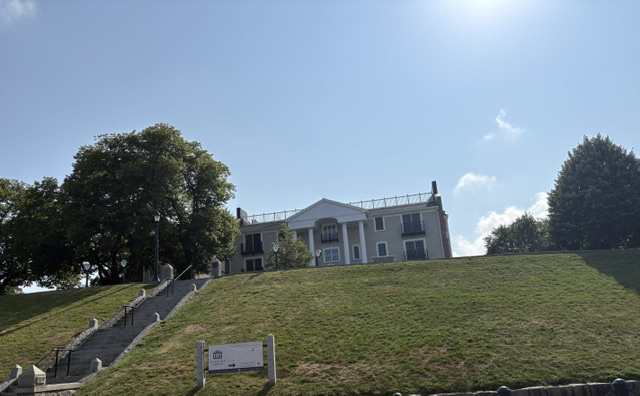
Cole’s Hill
Rising steeply above Plymouth’s waterfront, Cole’s Hill was the colony’s first burial ground. During the devastating winter of 1620–1621, nearly half of the Mayflower’s passengers died from disease, exposure, and the effects of their difficult voyage. Many were buried here in graves overlooking the harbor where their ship remained anchored. According to tradition, the settlers […]
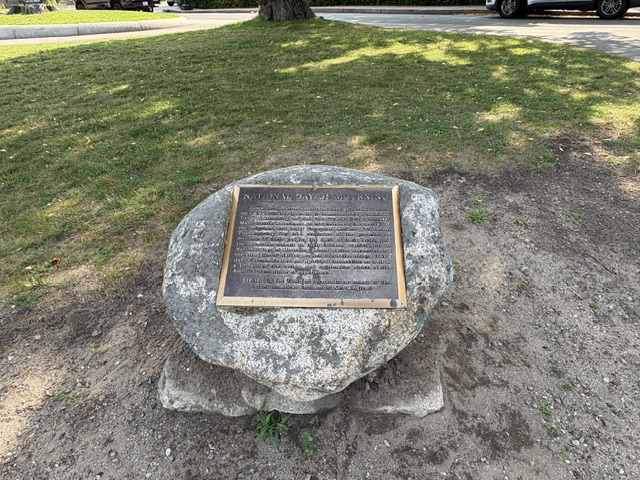
National Day of Mourning
Just a short distance from the statue of Massasoit on Cole’s Hill is this small marker recognizing the National Day of Mourning. It presents another part of Plymouth’s history and reminds us that the events of 1620 and 1621 have been remembered very differently by different people. The National Day of Mourning began in 1970, […]
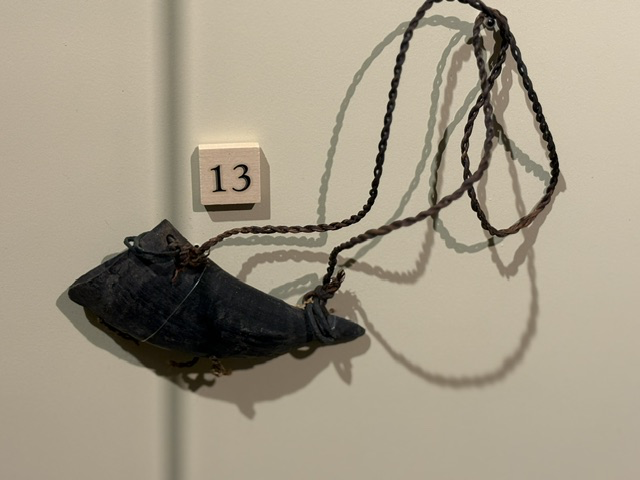
A Grease Horn
Among all the objects that survive from Plymouth’s earliest years, some of the most interesting are not the rare or elaborate possessions, but the simple tools people used in their daily lives. This small grease horn dates from approximately 1635–1665 and is identified as coming from Plymouth. A grease horn was a practical container, usually […]

