The Bartlett–Russell–Hedge House
Standing prominently on Court Street, the Bartlett–Russell–Hedge House is one of Plymouth’s finest examples of Federal-style architecture. Its symmetrical façade, Palladian window, entrance balcony, and rooftop cupola distinguish it from the surrounding commercial buildings.
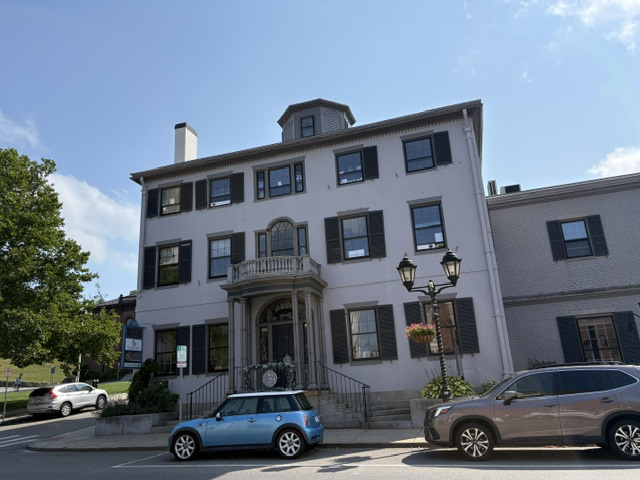
The house was constructed in 1803 for Joseph Bartlett, a Plymouth Sea captain. Its design has been attributed to Charles Bulfinch, the influential early American architect responsible for the Massachusetts State House and other prominent buildings. Although the attribution is not firmly documented, the house reflects the balance, proportion, and classical details associated with his work.
The War of 1812 disrupted American maritime commerce and caused financial difficulties for the Bartlett family. Joseph’s son William eventually assumed control of the property and converted the large residence into an inn.
William’s son John Bartlett spent part of his childhood here. He later became a bookseller and publisher and is remembered for compiling Familiar Quotations. First published in 1855, the reference book collected memorable passages from literature, speeches, and historical writings and became one of America’s most enduring reference works.
The property was later acquired by Nathaniel Russell, who was involved in Plymouth’s iron-manufacturing industry. Russell’s granddaughter married into the family of Barnabas Hedge, one of his business associates, and the house eventually passed to the Hedge family. These successive owners account for the name by which the building is now known.
In 1951, the Hedge family sold the property to a bank. Commercial additions were constructed behind the original residence, but many of the house’s architectural features survived. The Bartlett–Russell–Hedge House was added to the National Register of Historic Places in 1976 and continues to serve as office space.
The house has changed from a private residence to an inn, a family home, a bank, and an office building. Its preservation allows more than two centuries of Plymouth’s domestic, commercial, and architectural history to remain visible along Court Street.
Read More From Nancy
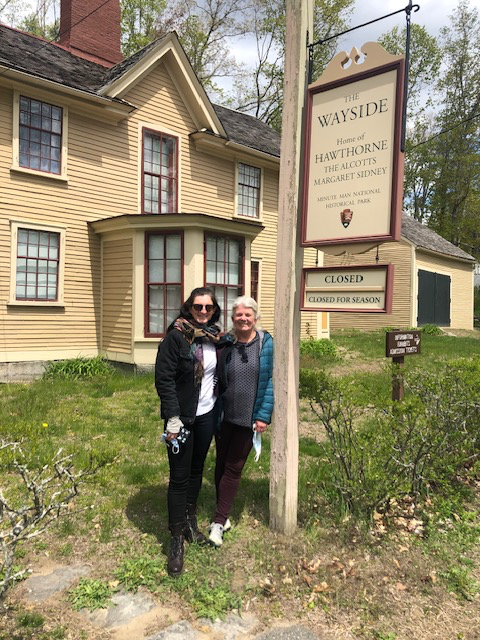
The Wayside
There are houses that preserve history, and then there are houses that helped shape it. The Wayside in Concord, Massachusetts, is one of those extraordinary places. This house has always held a special place in our family’s story. Both of our daughters gave tours here, sharing the remarkable history of the people who lived within […]
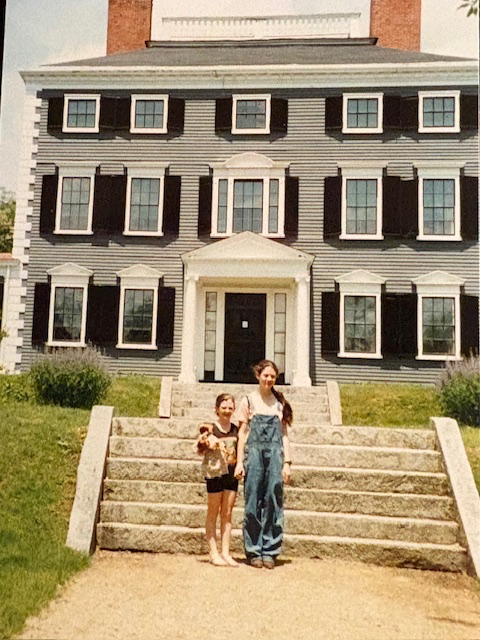
Codman Estate
The Codman House in Lincoln, known as The Grange, stands as one of the most elegant and layered historic homes in Massachusetts, and is another home that we have visited often. There is something about returning to a place like this that deepens appreciation with each visit. Build around 1747, and later expanded, the house […]
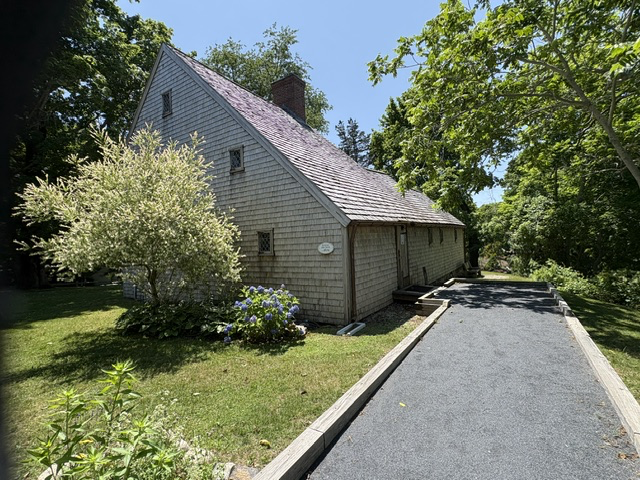
Hoxie House
Overlooking Shawme Pond in Sandwich stands one of the oldest surviving houses on Cape Cod. Today it is known as the Hoxie House, but its earlier story belongs to the Reverend John Smith, Sandwich’s second minister, who occupied the house around 1675 with his family. The simple saltbox appearance is exactly what makes the house […]

