A Beaver Pelt
A beaver pelt stretched within a wooden frame commemorates a connection between Plymouth, Massachusetts, and Augusta, Maine. Its handwritten inscription records a voyage from Plymouth to Augusta in 2003, marking the 375th anniversary of the opening of the Cushnoc trading post.
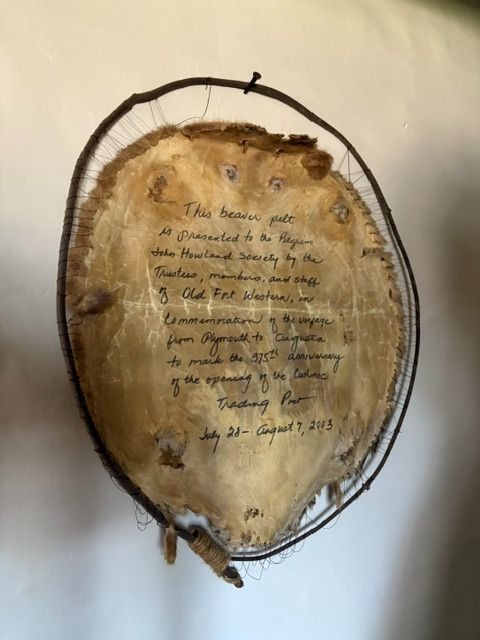
Presented to the Pilgrim John Howland Society by the trustees, members, and staff of Old Fort Western, the pelt is a modern commemorative gift. The material chosen for that gift recalls a commodity that played an important role in Plymouth Colony’s finances.
In 1628, Plymouth colonists established a trading post at Cushnoc on the Kennebec River, in what is now Augusta. There they exchanged goods with Native traders for furs, connecting the colony to an inland trading network and the European market.
Beaver fur was particularly valuable because it could be processed into felt for fashionable hats. Profits from the trade helped the Plymouth colonists meet obligations to their English financial backers and obtain supplies.
The trading post also reveals how far Plymouth’s economic interests extended beyond its settlement. Its prospects depended partly on waterways, trading relationships, and markets reaching from the Kennebec Valley across the Atlantic.
The commemorative pelt brings that wider history into a single object. Its inscription records a twentieth-first-century act of remembrance, while the pelt itself recalls the trade that linked two communities centuries earlier.
Read More From Nancy
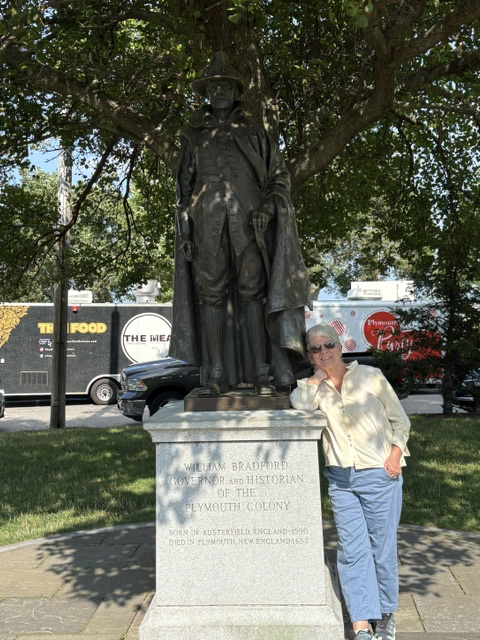
William Bradford Statue
Standing near Plymouth Harbor is this imposing statue of William Bradford, one of the most important figures in the story of Plymouth Colony. Bradford crossed the Atlantic aboard the Mayflower in 1620 and, after the death of Governor John Carver the following spring, was elected governor of Plymouth Colony. He would serve in that position […]
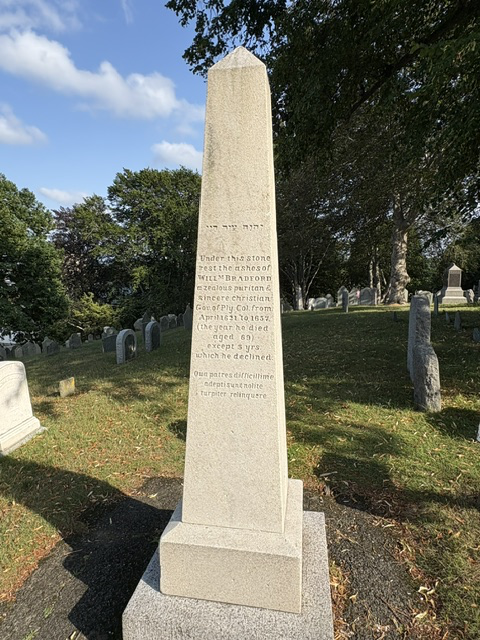
Governor William Bradford Memorial
This granite obelisk on Burial Hill honors William Bradford, one of the Mayflower passengers and a central figure in the establishment of Plymouth Colony. After Governor John Carver died in 1621, Bradford was chosen to lead the struggling colony. He continued to serve as governor for most of the years until his death in 1657, […]
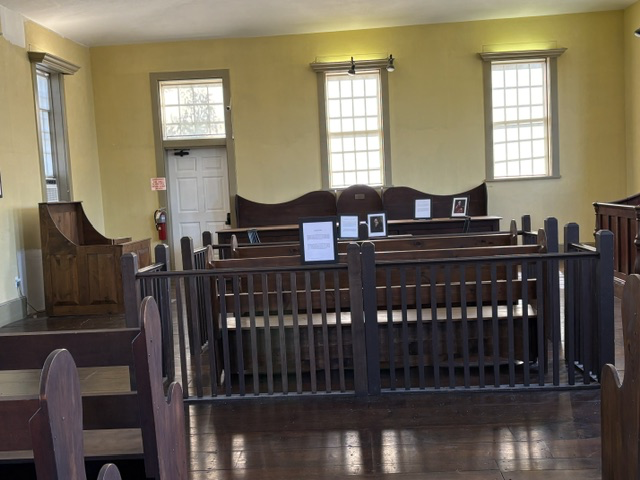
The Jury Box
The jury box in Plymouth’s 1749 Court House gives us another glimpse into how justice was administered in colonial Massachusetts. Enclosed by a wooden railing and positioned directly before the justices, this was where local citizens sat to listen to testimony, consider the evidence, and reach a verdict. Serving on a jury was considered an […]

