Wampum
Wampum consists of carefully shaped and polished beads traditionally made from shells found along the Atlantic coast. White beads were commonly fashioned from the inner spiral of the whelk shell, while purple beads came from the darker portion of the quahog shell. Because the purple section of the shell was limited, those beads were more difficult to produce.
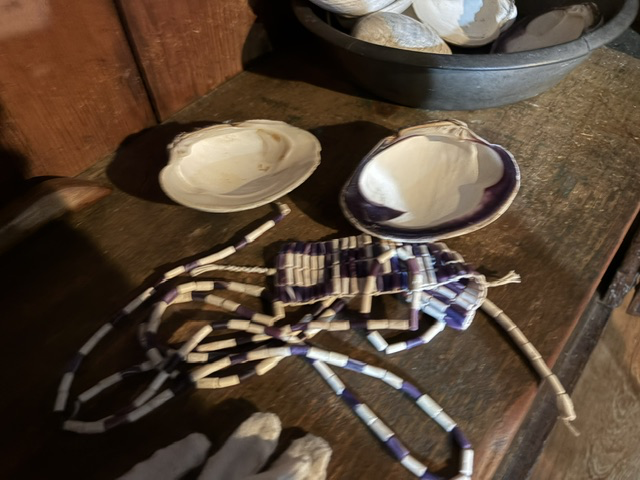
Making wampum required patience and considerable skill. Shell fragments were cut, shaped, drilled, ground, and polished. Before European metal tools became available, Indigenous craftspeople completed this demanding work with stone tools and other natural materials. The finished beads could be strung together or woven into patterned belts.
Among the Wampanoag and other Indigenous nations of the Northeast, wampum held cultural, political, diplomatic, and ceremonial importance. Individual strings or woven belts could accompany messages, confirm agreements, express condolence, acknowledge relationships, or mark important events.
Wampum belts also helped preserve collective memory. Their colors and patterns were connected to specific events, agreements, or responsibilities. Knowledge keepers were entrusted with remembering and explaining their meaning. The belt was therefore not a written record in the European sense; it worked together with the oral history carried by the people responsible for it.
Wampum was sometimes exchanged but describing it simply as “money” overlooks its much broader meaning. Its value came from the labor involved in making it, the significance of the shells, and the relationships and commitments represented by the finished beads.
After Europeans arrived in the Northeast, they recognized that wampum already held value within Indigenous trade and diplomatic networks. Dutch and English colonists began using it in commerce, particularly in the fur trade. During the seventeenth century, several colonies established exchange rates that allowed wampum to be accepted for certain payments.
Metal tools made drilling and shaping the beads faster, leading to increased production. As Europeans incorporated wampum into their commercial system, its use as a medium of exchange became more prominent. This colonial adaptation eventually contributed to the mistaken idea that wampum had always functioned primarily as currency.
For Indigenous communities, wampum remained connected to ceremony, diplomacy, memory, kinship, authority, and responsibility. Some historic belts continue to carry the records of agreements and relationships established generations ago.
Wampum reveals how an object made from the shells of coastal New England could preserve history without paper. Each bead required skilled hands to create it, while each completed strand or belt carried meanings maintained through memory, ceremony, and spoken tradition.
Read More
Read More From Nancy
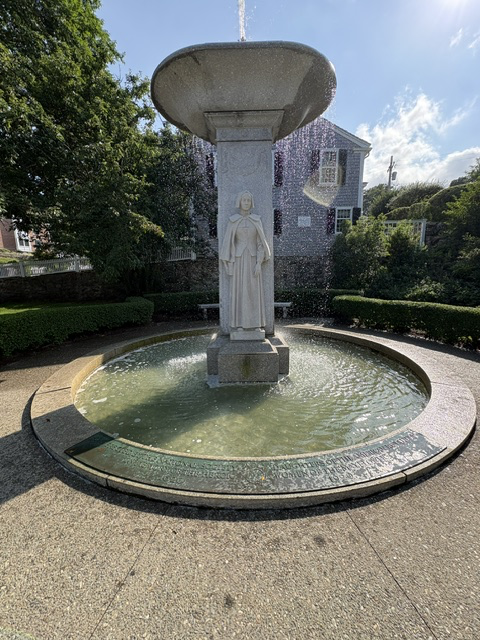
The Pilgrim Mother Fountain
Standing near Plymouth’s waterfront, the Pilgrim Mother Fountain honors the women who crossed the Atlantic aboard the Mayflower and helped establish Plymouth Colony. While the colony’s governors, ministers, and military leaders are frequently remembered by name, this monument turns attention toward the women whose courage and endurance were equally essential to the settlement’s survival. The […]
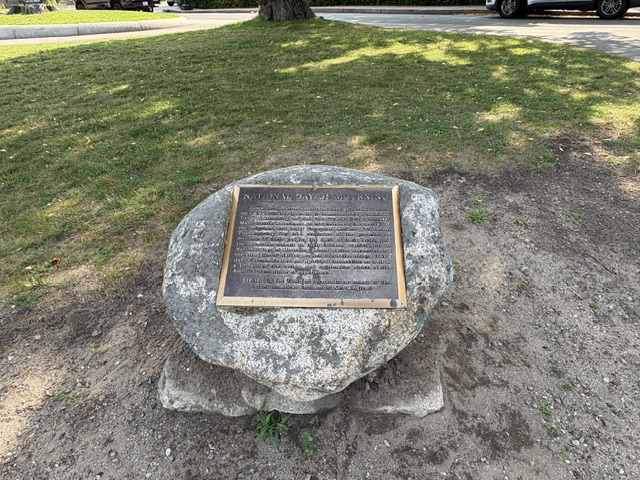
National Day of Mourning
Just a short distance from the statue of Massasoit on Cole’s Hill is this small marker recognizing the National Day of Mourning. It presents another part of Plymouth’s history and reminds us that the events of 1620 and 1621 have been remembered very differently by different people. The National Day of Mourning began in 1970, […]
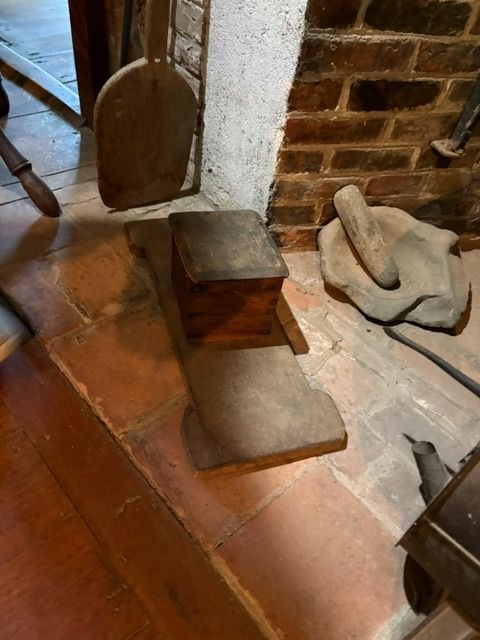
The Eliot Bible
The 1685 Eliot Bible displayed at Pilgrim Hall Museum brings together the histories of religion, language, and printing in colonial Massachusetts. Printed in Cambridge by Samuel Green, it belongs to the second edition of a translation into the Massachusett language. The Reverend John Eliot undertook the project as part of his missionary work. His effort […]

