Massachusetts
Massachusetts was one of the original thirteen colonies and became the sixth state to ratify the United States Constitution on February 6, 1788. Known as the Bay State, it has Boston as both its capital and largest city. Its geography extends from the Atlantic coastline, Cape Cod, and the islands of Martha’s Vineyard and Nantucket to the river valleys and rolling hills of central Massachusetts and the Berkshire Mountains in the west.
The founding of Plymouth Colony in 1620 and the Massachusetts Bay Colony in 1630 established the region as an important center of colonial life. More than a century later, events in Boston, Lexington, and Concord helped ignite the American Revolution. During the nineteenth century, the state became a leader in manufacturing, education, literature, and social reform, giving Massachusetts an enduring influence on the political and cultural development of the nation.
Recent Articles
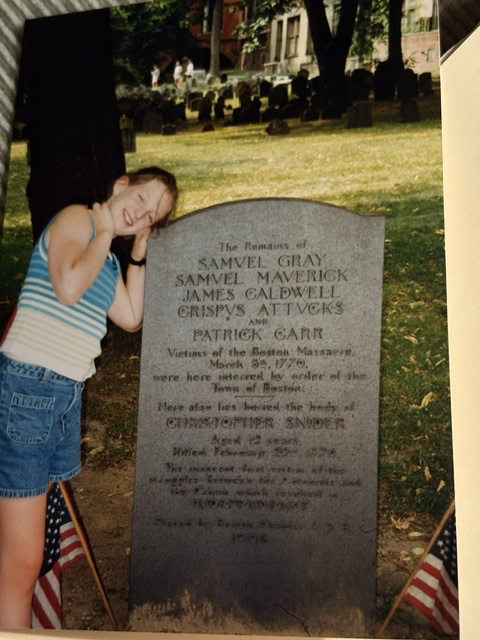
Grave of the Boston Massacre Victims
We were walking Boston’s Freedom Trail after studying this period of American history with our daughters. When we entered the Granary Burying Ground, Erin knew exactly whose grave she was standing beside and why this place mattered. This was one of the great benefits of visiting historic sites as a family: the people and events […]
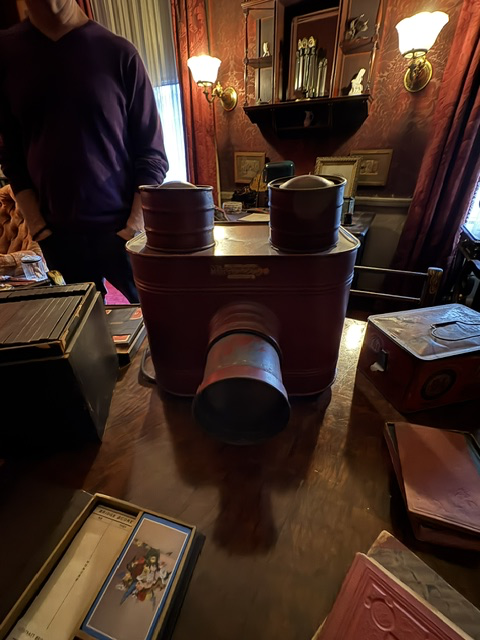
The Mirroscope
Among the objects that caught my attention while visiting the Gibson House Museum in Boston was this unusual piece of photographic equipment. At first glance, with its large projecting lens and boxlike body, I assumed it was an early camera. Looking more closely, however, I discovered that it worked in exactly the opposite direction. It […]
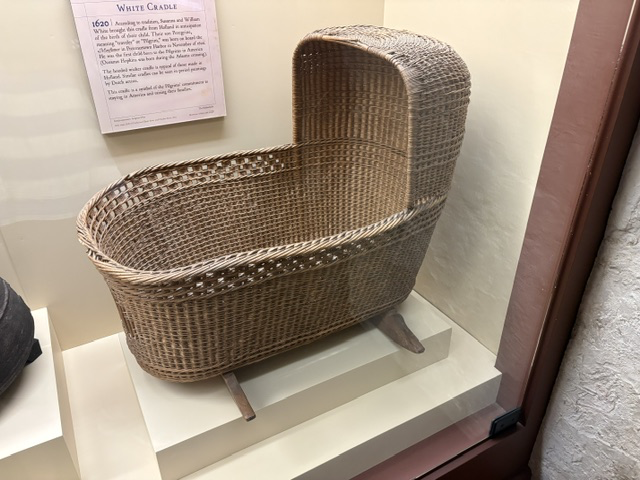
The White Cradle
Among the objects we encountered while exploring Plymouth was this simple wicker cradle. According to tradition, it belonged to Susanna and William White and was brought with them from Holland when they sailed aboard the Mayflower in 1620. Susanna White was pregnant during the Atlantic crossing. The Mayflower left Plymouth, England, in September with more […]
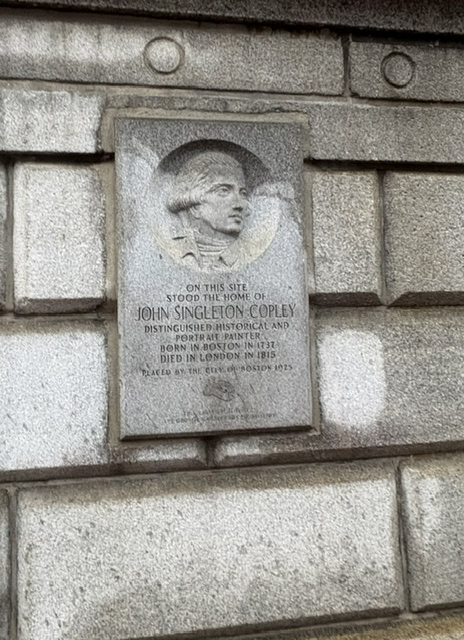
John Singleton Copley
Walking through Boston, I came across this plaque marking the site where the home of John Singleton Copley once stood. The house itself is gone, but the plaque preserves the connection between this location and one of the most important artists of colonial America. Copley was born in Boston in 1738, although the plaque gives […]
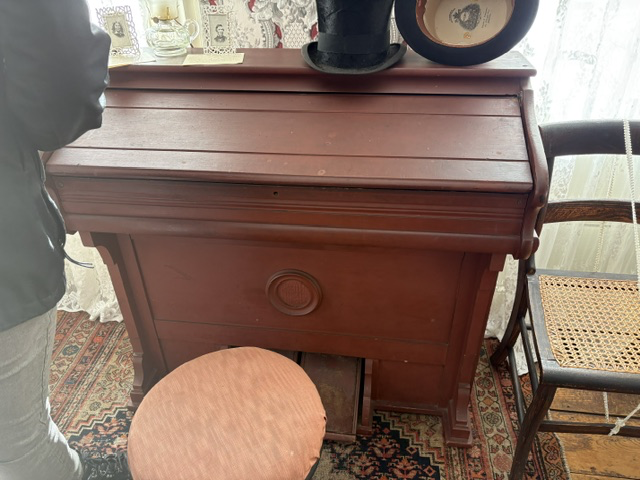
The Melodeon
I found this small wooden instrument in the Wayland History Museum. At first, it could easily be mistaken for a small upright piano, but it is actually a melodeon, or reed organ, made by Mason & Hamlin. The melodeon became a popular way of bringing keyboard music into American homes during the nineteenth century. Unlike […]
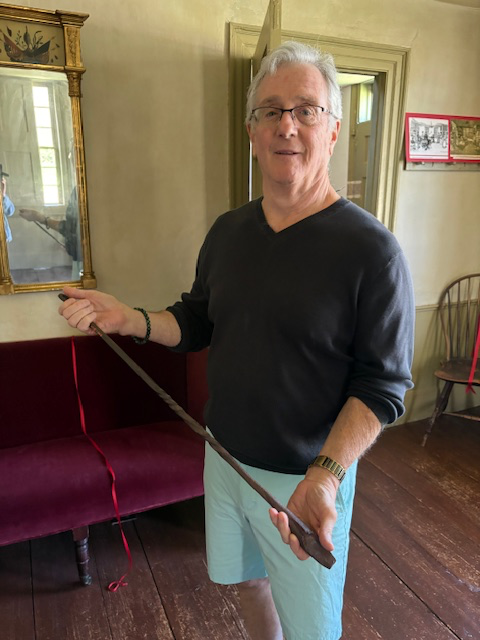
The Flip Dog
When we visited the Golden Ball Tavern in Weston, one of the objects that caught our attention was this long iron implement. At first glance, it doesn’t reveal very much about its purpose. But once we learned how it was used, it provided a wonderful glimpse into everyday tavern life more than two centuries ago. […]
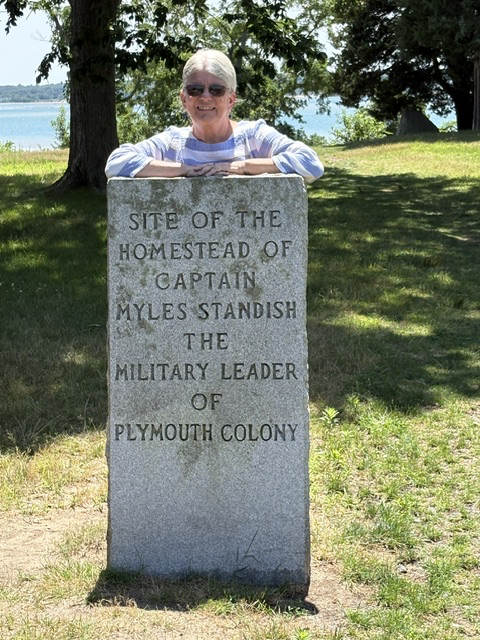
The Myles Standish Homestead
On our camping trip to Plymouth, we wanted to explore more of the Pilgrim story beyond the places we had visited in Plymouth itself. That brought us to nearby Duxbury and the homestead of Captain Myles Standish. Standish is closely associated with the founding of Duxbury, and this was the community where he established his […]
The Gravesite of Myles Standish
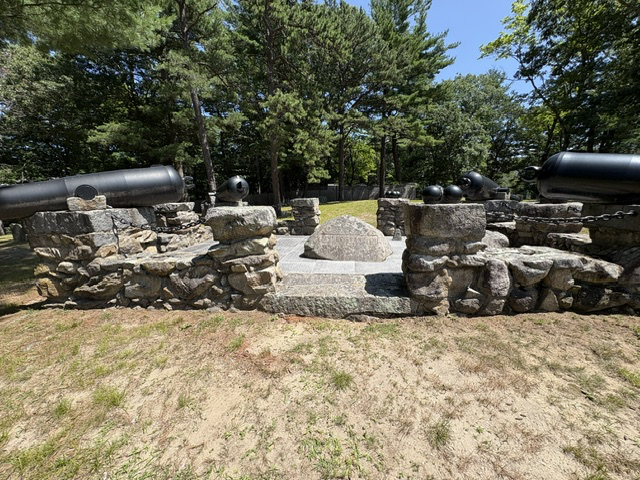
After visiting the site of Myles Standish’s homestead, we continued following his story in Duxbury to the place where he was laid to rest. Standish died here on October 3, 1656, more than three decades after arriving aboard the Mayflower and after spending much of his later life helping establish the community of Duxbury. There […]
The Canals of Lowell
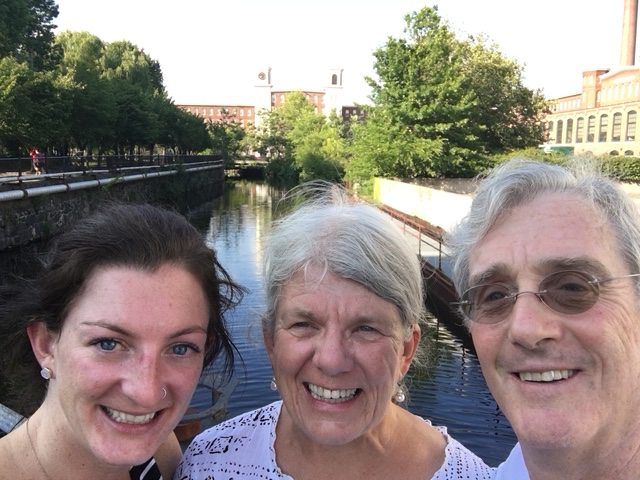
Walking through downtown Lowell, it is almost impossible not to encounter the canals. They pass beneath streets, alongside sidewalks and between the enormous brick mill buildings that still dominate parts of the city. On this day, we were simply walking through Lowell when we stopped along one of them for this photograph. The canals are […]
Replica of David Thoreau’s Cabin
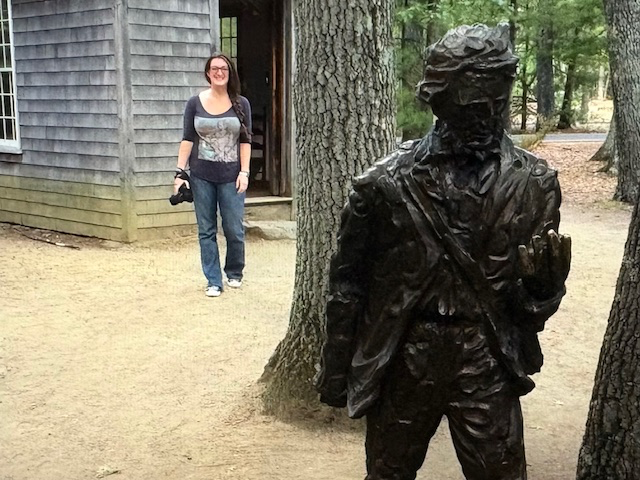
Just outside the replica of Henry David Thoreau’s cabin at Walden Pond stands this bronze statue of Thoreau, depicting him much as we might imagine him during his years here. He is simply dressed and seemingly caught in the act of walking through the landscape he observed so carefully. Thoreau came to Walden Pond in […]
Massachusetts Veterans War Memorial Tower
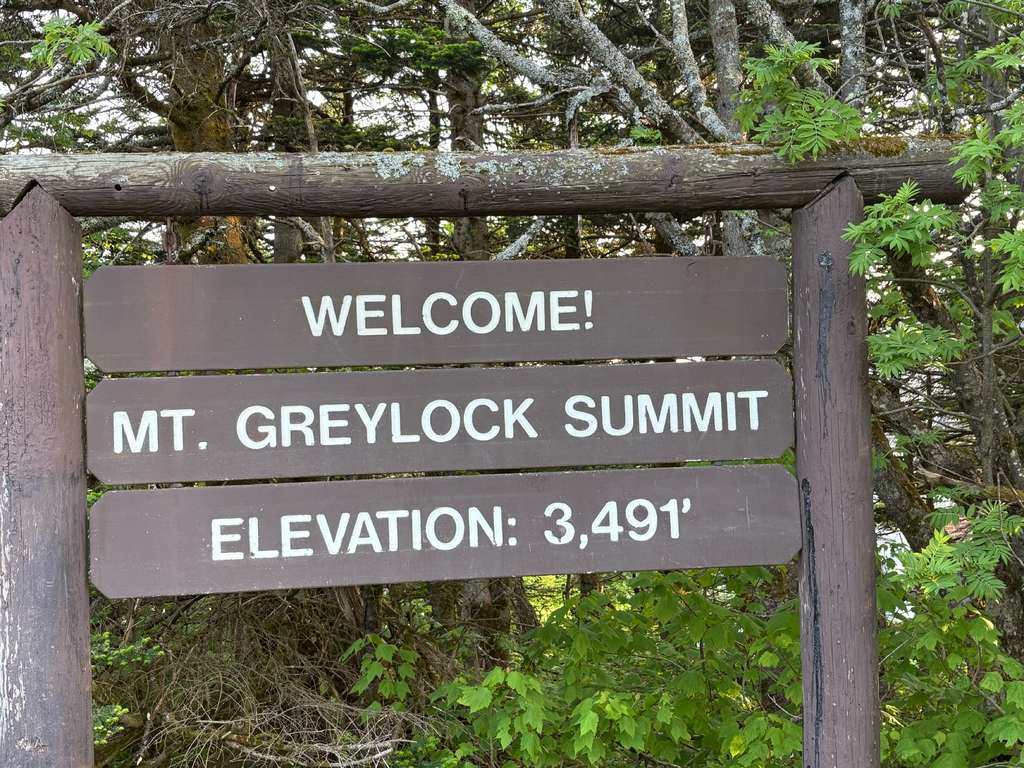
Last year we camped near Mount Greylock, and although we have spent so much of our lives exploring New England, this was the first time we made our way to the summit. It was another reminder to me that exploration never really ends. No matter how many places we have visited, there is always another […]
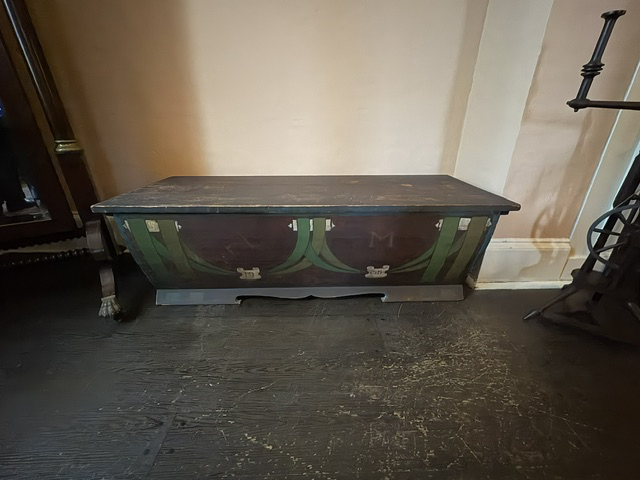
The Dowry Chest
This painted wooden chest at the Nichols House Museum in Boston is more than an attractive piece of antique furniture. Dating from the late 17th century, it is an English oak dowry, or dower, chest that would originally have been used to hold a woman’s personal possessions as she prepared for marriage and the establishment […]

