Grave of the Boston Massacre Victims
We were walking Boston’s Freedom Trail after studying this period of American history with our daughters. When we entered the Granary Burying Ground, Erin knew exactly whose grave she was standing beside and why this place mattered. This was one of the great benefits of visiting historic sites as a family: the people and events we had studied were no longer confined to books. Here, Erin could stand before the names of those whose deaths helped move the colonies closer to revolution.
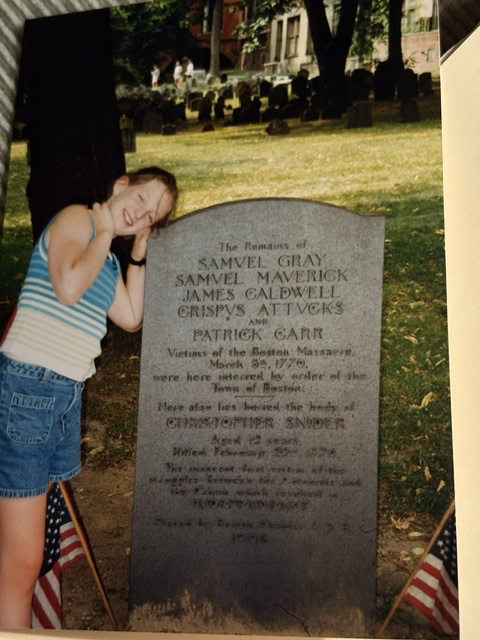
The stone marks the shared resting place of Samuel Gray, Samuel Maverick, James Caldwell, Crispus Attucks, and Patrick Carr. On March 5, 1770, growing tension between Boston residents and British troops erupted into violence on King Street, now State Street. After a confrontation developed between a crowd and a group of soldiers, the troops fired their muskets. Three men died at the scene, and two others later died from their wounds. The event soon became known as the Boston Massacre and was used to rally colonial opposition to British rule.
The victims came from different backgrounds. Crispus Attucks, a sailor and rope maker of African and Native American ancestry, became the best known and is often remembered as the first person killed in the Boston Massacre. Samuel Gray was a rope maker, James Caldwell was a sailor, Samuel Maverick was a young apprentice, and Patrick Carr was an Irish immigrant. The Town of Boston ordered that the victims be buried together, transforming their common grave into a lasting place of remembrance.
The marker also names Christopher Seider, sometimes recorded as Snider, who was killed less than two weeks before the massacre. Christopher was among a crowd protesting a merchant who continued to sell imported British goods despite the colonial boycott. During the confrontation, customs official Ebenezer Richardson fired into the crowd and mortally wounded him. Christopher was only eleven years old, although the later marker records his age as twelve. His large public funeral increased the anger already spreading through Boston, and he is sometimes remembered as the first casualty of the conflict that led to American independence.
Established in 1660, the Granary Burying Ground is one of Boston’s oldest cemeteries. Samuel Adams, John Hancock, Paul Revere, Robert Treat Paine, and many other people associated with the colonial and Revolutionary periods are buried within its grounds. Yet the grave of the Boston Massacre victims tells a different part of the story. It remembers laborers, sailors, an apprentice, an immigrant, and a young boy whose lives became inseparable from the growing struggle between the colonies and the Crown.
Walking the Freedom Trail allowed our daughters to connect the individual places into a larger story. They could visit the site of the massacre, walk the streets where resistance developed, and then stand at the grave of those who were killed. Erin was not simply posing beside an unfamiliar monument. She understood the history represented by the names on the stone and how their deaths became a turning point on the road to the American Revolution.
Read More From Nancy
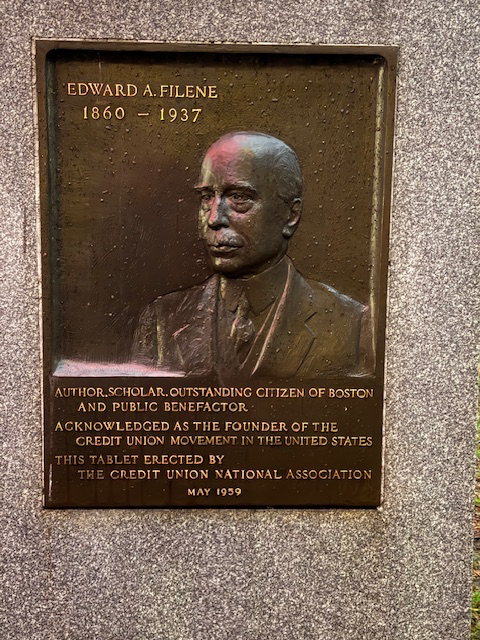
Edward A. Filene Plague
Walking along the fence surrounding the Boston Common, I came across this bronze plaque honoring Edward A. Filene. While many people recognize the Filene name from the famous Boston department store, few realize the tremendous influence he had beyond retail. Filene believed that ordinary working families deserved access to affordable credit and financial opportunity. His […]
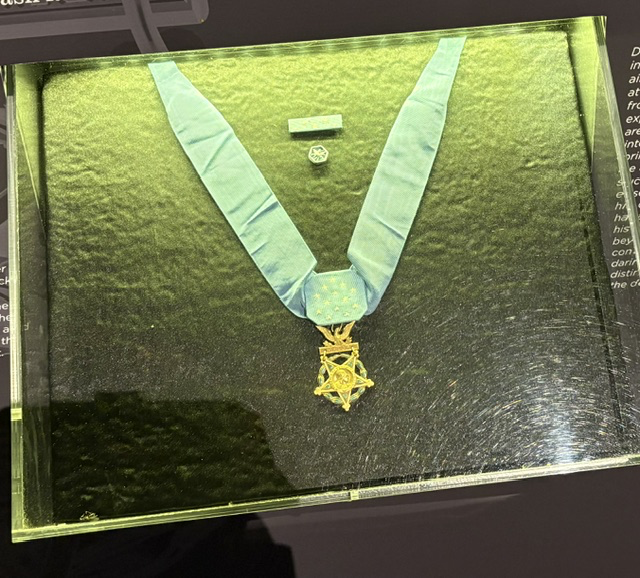
The Medal of Honor
Among all the artifacts displayed at the American Heritage Museum, few carry the emotional weight of the Medal of Honor. Unlike a tank, an aircraft, or a weapon, this small medal represents something that cannot be manufactured or engineered. It symbolizes extraordinary courage in the face of overwhelming danger. Established during the American Civil War […]
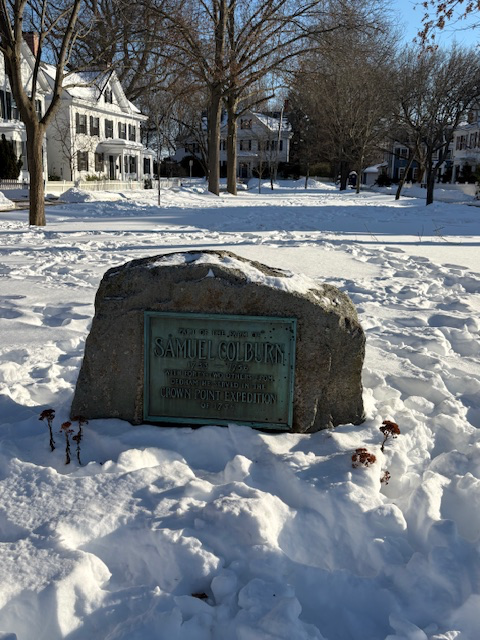
Samuel Colburn
As I was walking through downtown Dedham, I came across a simple rock monument honoring Samuel Colburn. I must admit I was not aware of the Crown Point Expedition. That unfamiliar name immediately caught my attention. I was excited to take a photo and look up more information later. There is something satisfying about discovering a small marker and realizing it opens […]

