The White Cradle
Among the objects we encountered while exploring Plymouth was this simple wicker cradle. According to tradition, it belonged to Susanna and William White and was brought with them from Holland when they sailed aboard the Mayflower in 1620.
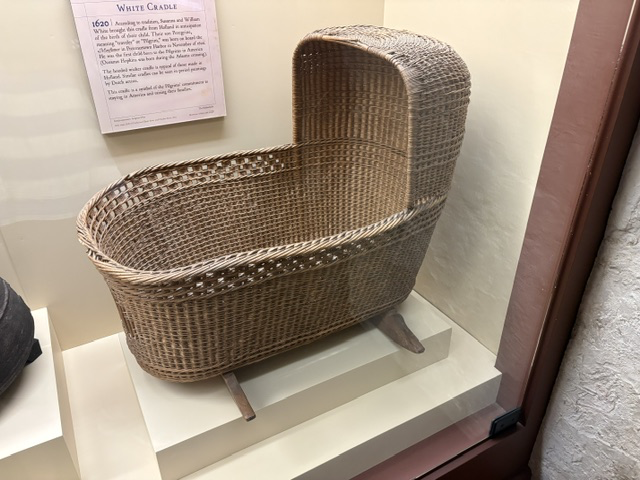
Susanna White was pregnant during the Atlantic crossing. The Mayflower left Plymouth, England, in September with more than 100 passengers crowded aboard for a voyage that would last more than two months. They reached Cape Cod in November, but before the passengers established their settlement at Plymouth, Susanna gave birth while the ship was anchored in Provincetown Harbor.
Her son was named Peregrine White. His name was particularly appropriate: “Peregrine” comes from a word meaning traveler, pilgrim or stranger. He is traditionally recognized as the first English child born to the Pilgrims after the Mayflower reached New England.
If the tradition associated with this cradle is correct, it had already crossed the Atlantic before Peregrine was born. The museum identifies it as a hooded wicker cradle typical of those made in Holland, with similar examples appearing in Dutch paintings of the period.
The White family’s story soon became much more difficult. William White died during the terrible first winter at Plymouth, when disease and exposure killed about half of the Mayflower passengers. Susanna was left with her young son Resolved and the infant Peregrine. In May 1621, she married fellow Mayflower passenger Edward Winslow, whose wife Elizabeth had also died that winter. Their marriage was the first recorded wedding in Plymouth Colony.
That history makes this cradle much more than an example of 17th-century furniture. The Mayflower story is often told through the voyage, the Mayflower Compact, Plymouth Colony and the relationships between the English settlers and the Wampanoag. An object like this brings the story down to the scale of an individual family.
Someone had to prepare for a baby while preparing to cross an ocean. A cradle had to be packed among the family’s possessions. A pregnant woman endured the long voyage aboard a crowded ship, gave birth while it remained anchored off Cape Cod, lost her husband only months later, and began creating a new family in an unfamiliar land.
Whether every detail of the cradle’s traditional history can ultimately be proven or not, that larger human story is very real. Families did cross the Atlantic aboard the Mayflower, children traveled with them, and one baby was born before the passengers had even established Plymouth. This cradle gives us a particularly intimate way to think about what that journey meant for the people who made it.

Read More From Nancy

The Gravesite of Myles Standish
After visiting the site of Myles Standish’s homestead, we continued following his story in Duxbury to the place where he was laid to rest. Standish died here on October 3, 1656, more than three decades after arriving aboard the Mayflower and after spending much of his later life helping establish the community of Duxbury. There […]
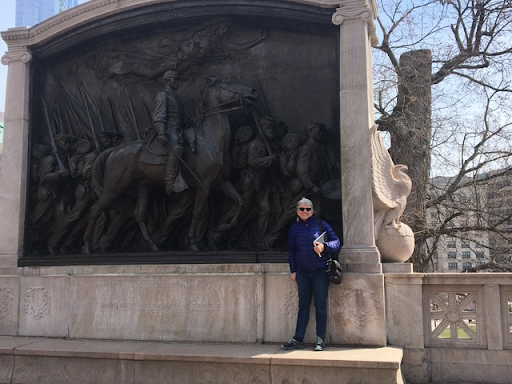
Shaw Memorial
Every time I visit Boston Common, I find myself stopping to admire this remarkable relief by Augustus Saint-Gaudens. Not only is it one of the finest works of public art in America, but it captures its subject with extraordinary power and dignity. Rather than glorifying war, the sculpture honors the courage, sacrifice, and determination of […]

Massachusetts Vietnam Veterans Memorial
Some memorials ask you to stop and reflect. The Massachusetts Vietnam Veterans Memorial in Worcester is one of those places. Unlike many war memorials that focus on statues or monuments, this memorial invites visitors to walk quietly through the landscape. Granite monuments surround a peaceful reflecting pond, each bearing words that tell the story of […]

