The Mirroscope
Among the objects that caught my attention while visiting the Gibson House Museum in Boston was this unusual piece of photographic equipment. At first glance, with its large projecting lens and boxlike body, I assumed it was an early camera. Looking more closely, however, I discovered that it worked in exactly the opposite direction. It was a Mirroscope, designed not to take pictures but to enlarge and project them.
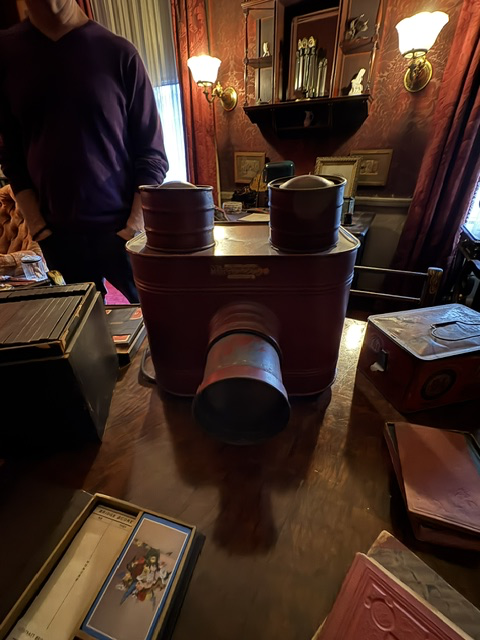
The Mirroscope appeared around 1909–1910 and was manufactured by the Buckeye Stereopticon Company of Cleveland, Ohio. It belonged to a class of devices known as opaque projectors or episcopes. Unlike the familiar magic lantern, which projected light through a transparent glass slide, the Mirroscope could project an ordinary photograph, postcard, magazine illustration or even a small solid object.
The object or photograph was placed inside the machine. Powerful lamps illuminated it, reflectors directed the light toward the large lens in front, and an enlarged image appeared on a wall or screen. The two cylinders rising from the top of the machine in my photograph were important: they allowed heat from the lamps to escape while limiting unwanted light.
Advertisements promoted the Mirroscope as both entertainment and education. Families could project their snapshots and postcards for everyone in the room to see rather than passing the pictures from person to person. Children could use it for geography and history lessons, and travelers could return home and project photographs and postcards from their journeys. One advertisement even suggested using it specifically to show photographs and postcards from a vacation.
That makes finding one inside the Gibson House especially appropriate. The house preserves not simply elegant furniture and architecture, but the everyday possessions accumulated by a Boston family over several generations. An object like the Mirroscope represents the arrival of new technology into the home during the early 20th century.
I find it particularly interesting because what the Mirroscope allowed families to do more than a century ago is something we now take completely for granted. They could gather, turn down the lights and enlarge their photographs so everyone could share the experience at once.
The technology has changed enormously, but the impulse behind it has not. People were already looking for ways to preserve their travels, share their photographs and tell the stories behind them. The Mirroscope was one of the early devices that helped bring those pictures out of the family album and onto the wall for everyone to see.
Read More From Nancy
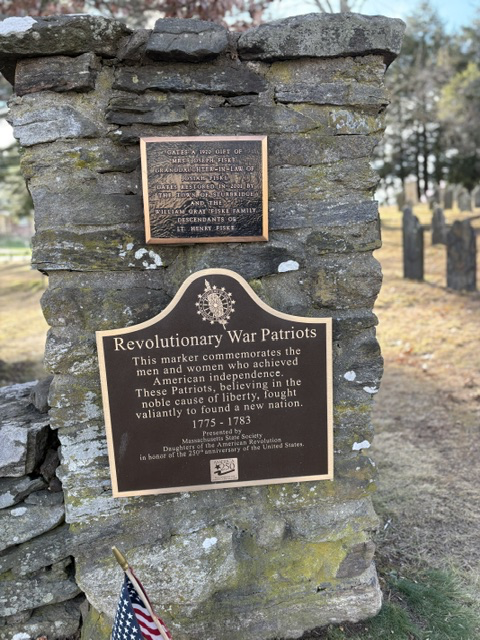
The Old Burial Ground
Long before modern cemeteries were carefully landscaped parks, New England towns established simple burial grounds at the heart of their communities. The Old Burial Ground in Sturbridge is one of those places. Established in 1740, only two years after the town itself was incorporated, it became the final resting place for generations of the men, […]
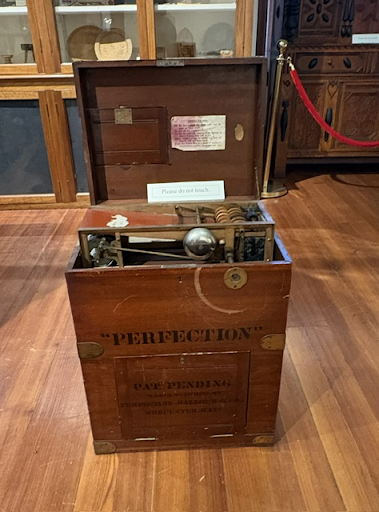
Perfection Ballot Box
One of the more intriguing artifacts we encountered in the Historical Museum at the Thayer Memorial Library was a beautifully crafted wooden voting machine known as the “Perfection” Ballot Box. Marked “Commonwealth of Massachusetts, Ballot Box No. 1483, Boston 1905,” the device offered a fascinating glimpse into the mechanics of democracy in the early twentieth […]
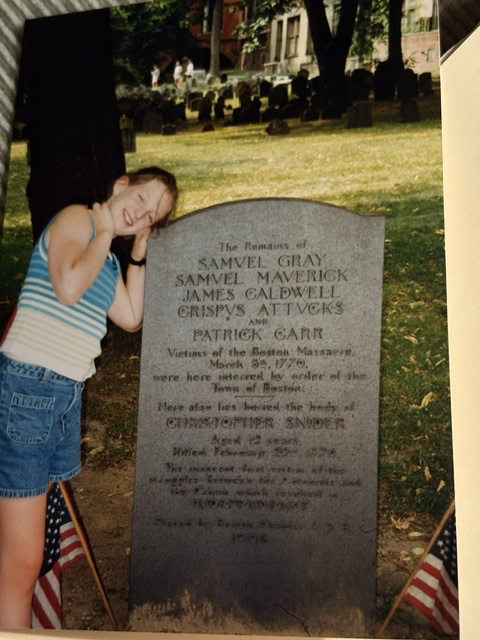
Grave of the Boston Massacre Victims
We were walking Boston’s Freedom Trail after studying this period of American history with our daughters. When we entered the Granary Burying Ground, Erin knew exactly whose grave she was standing beside and why this place mattered. This was one of the great benefits of visiting historic sites as a family: the people and events […]

