The Canals of Lowell
Walking through downtown Lowell, it is almost impossible not to encounter the canals. They pass beneath streets, alongside sidewalks and between the enormous brick mill buildings that still dominate parts of the city. On this day, we were simply walking through Lowell when we stopped along one of them for this photograph. The canals are much more than picturesque waterways. They are one of the keys to understanding why Lowell exists where it does and how it became one of America’s most important early industrial cities.
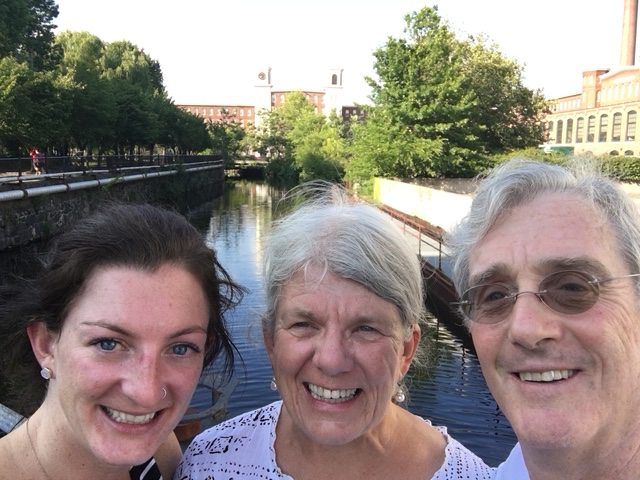
The story began with the Pawtucket Canal, completed in 1796 to allow boats to bypass Pawtucket Falls on the Merrimack River. The falls created an obstacle to navigation, but their dramatic drop in elevation also represented an enormous source of potential power. When textile manufacturers arrived in the 1820s, they recognized that the water of the Merrimack could be redirected through a system of canals and used to power large factories.
What followed was an extraordinary feat of engineering. The original canal was incorporated into an expanding network that eventually included nearly six miles of canals operating at different elevations. Water was diverted from the Merrimack through gates and channels and carried directly to the mills, where its falling force powered water wheels and later turbines connected to textile machinery.
The canals helped determine the shape of Lowell itself. Mills were positioned to take advantage of waterpower, and streets, worker housing, commercial buildings and neighborhoods developed around them. By the middle of the 19th century, Lowell had become one of the country’s great textile manufacturing centers, employing thousands of workers and serving as a model for industrial development elsewhere in America.
We have taken the canal tour through Lowell on another visit, which gave us an opportunity to experience this remarkable system from the water and learn more about how it operated. But I also like encountering the canals this way by simply walking through the city. They are not isolated behind museum walls. They remain woven directly into Lowell’s streets and neighborhoods.
Today the enormous mills are no longer filled with the thousands of textile workers who once depended upon this waterpower, but the canals remain. They are a visible reminder that Lowell was quite literally built around water. Standing beside one while walking through the city connects today’s Lowell with the industrial city of nearly two centuries ago. The purpose of the canals has changed, but their presence continues to define the landscape and to tell the story of why Lowell grew here in the first place.
Read More From Nancy
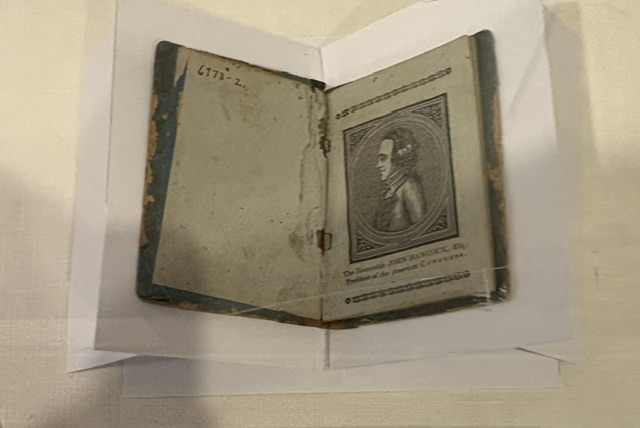
A 1777 Child’s Primer in Revolutionary
Inside Buckman Tavern in Lexington, I came across this remarkably small book. It is a children’s primer dating from 1777, only two years after the fighting at Lexington and Concord and just one year after the Declaration of Independence. On the first page, John Hancock is identified as a leader of the new nation. That […]

The Flip Dog
When we visited the Golden Ball Tavern in Weston, one of the objects that caught our attention was this long iron implement. At first glance, it doesn’t reveal very much about its purpose. But once we learned how it was used, it provided a wonderful glimpse into everyday tavern life more than two centuries ago. […]
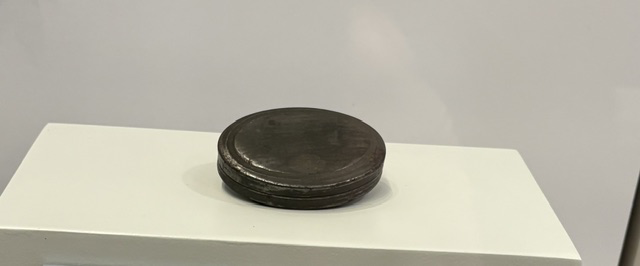
Caleb Harrington’s Tobacco Box
Among the artifacts preserved in Lexington is this small tobacco box, an ordinary object made extraordinary by the events of April 19, 1775. This box belonged to Caleb Harrington, one of the eight militiamen killed by British troops on Lexington Common during the opening moments of the American Revolution. The box was found in his pocket […]

