The Dowry Chest
This painted wooden chest at the Nichols House Museum in Boston is more than an attractive piece of antique furniture. Dating from the late 17th century, it is an English oak dowry, or dower, chest that would originally have been used to hold a woman’s personal possessions as she prepared for marriage and the establishment of a new household.
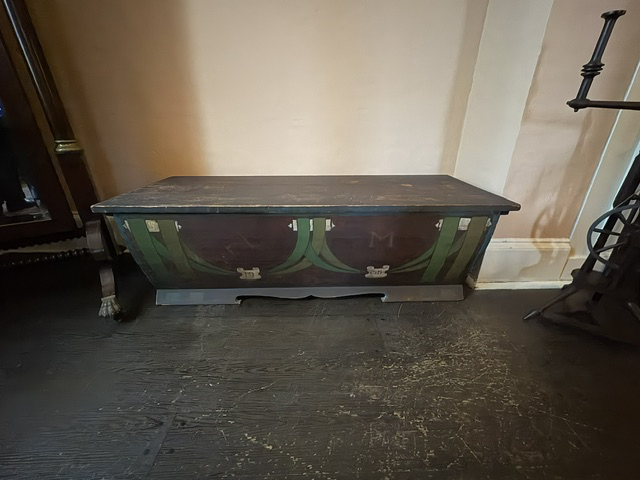
The initials “H.I.” painted across the front are believed to identify the woman for whom the chest was originally made. Inside would have been stored valuable personal belongings, particularly textiles such as clothing, linens and other household goods. At a time when many of these items were made by hand, their preparation could represent years of work and considerable value. The chest itself became both the container for those possessions and part of the property a woman brought into her marriage.
The Nichols family purchased the chest in England in 1910 from John Wilson & Son, by which time it was already more than two centuries old. When brought to their Beacon Hill home, it was initially placed in the front entrance hall and was later moved to the foot of Rose Standish Nichols’s bed. Rose had a strong interest in historic decorative arts, and pieces such as this helped create the sense of an earlier English and colonial past within the Nichols home.
There is also a deeper story contained in this object. In the 17th century, when the chest was made, marriage profoundly affected a woman’s legal and economic independence. Under the English legal principle of coverture, much of a married woman’s property came under the control of her husband. A dowry chest therefore represents not simply preparations for marriage, but the very different position women occupied within the society of the period.
That is what makes this chest particularly interesting to me. At first, it appears to be simply a beautifully painted old storage chest. But the initials on its front connect us to an unidentified woman who lived more than three centuries ago, while its later place in Rose Nichols’s home connects it to another generation of women whose opportunities were beginning to change dramatically.
The chest survived both worlds. Made in England for a woman preparing for marriage in the 1600s, it eventually crossed the Atlantic and found a home in the bedroom of an independent woman on Beacon Hill. In that journey, a practical piece of furniture became an unexpected witness to centuries of change in women’s lives.
Read More From Nancy
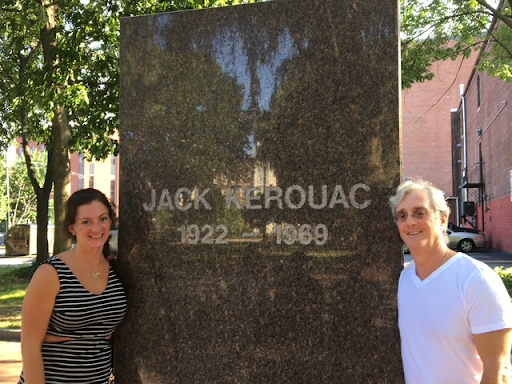
Jack Kerouac Memorial
Born in Lowell in 1922, Jean-Louis Lebris de Kérouac was the son of French-Canadian immigrants and grew up speaking French before learning English. His working-class upbringing and the close-knit ethnic neighborhoods of Lowell would later appear throughout his writings. Although he became famous for his travels across America, he never lost his During a visit to […]
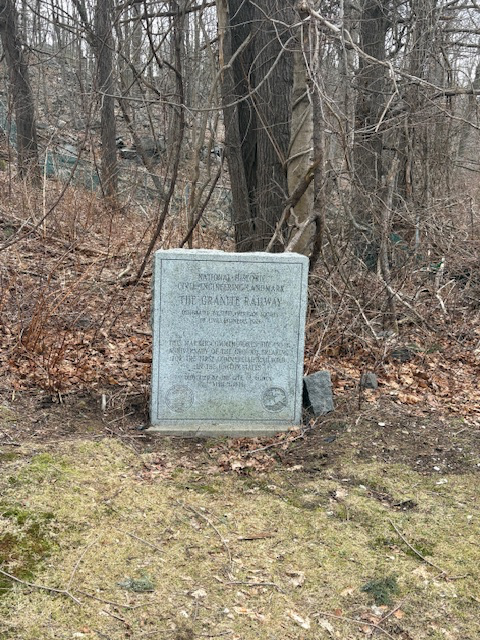
The Granite Railway
Hidden at the end of Mullin Avenue in West Quincy are the remains of the historic Granite Railway Incline, part of the pioneering Granite Railway system that began operating in 1826. The railway was created to transport enormous blocks of granite from the Quincy quarries to a wharf on the Neponset River in Milton. From […]
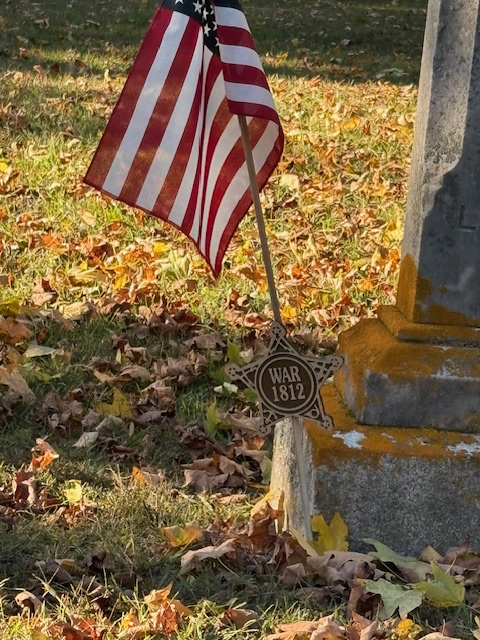
Star of War of 1812
Walking through a local cemetery, I noticed something that made me pause: a five-pointed metal star planted beside a grave holding an American flag. Cast into its surface are the words: War of 1812 I have come to recognize the familiar markers for Revolutionary War patriots and Civil War soldiers. Those appear often in New England cemeteries. But […]

