The Flip Dog
When we visited the Golden Ball Tavern in Weston, one of the objects that caught our attention was this long iron implement. At first glance, it doesn’t reveal very much about its purpose. But once we learned how it was used, it provided a wonderful glimpse into everyday tavern life more than two centuries ago.
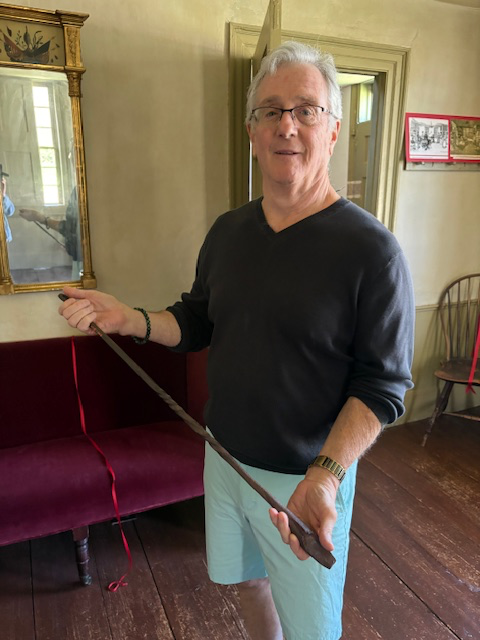
Known as a flip dog, toddy rod or loggerhead, this type of iron tool was heated directly in the fireplace. Once the end became extremely hot, it could be plunged into a mug of ale, cider or another drink. The heated iron quickly warmed the liquid, often causing it to hiss, bubble and froth.
One of the drinks particularly associated with this method was flip, a popular colonial mixture that could contain ale, rum, sugar, spices and sometimes egg. Instead of preparing it on a modern stove, the tavern keeper could plunge the red-hot iron directly into the mug. The sudden heat warmed the drink and helped create the characteristic frothy mixture.
It is easy to forget how important the fireplace was to almost every aspect of life in an 18th-century tavern. It provided warmth and light, but it was also the kitchen and, in a sense, the bar. Drinks that we would simply heat today required tools specifically designed to work with an open hearth.
That is what makes an object like this so interesting to me. The Golden Ball Tavern itself tells an important story about Weston and the years surrounding the American Revolution, but a simple iron rod tells a different kind of history. It takes us away from famous events and introduces us to the ordinary routines of the people who gathered here. Sometimes it is the simplest object in a historic house that gives us the clearest glimpse of how people lived.

Read More From Nancy
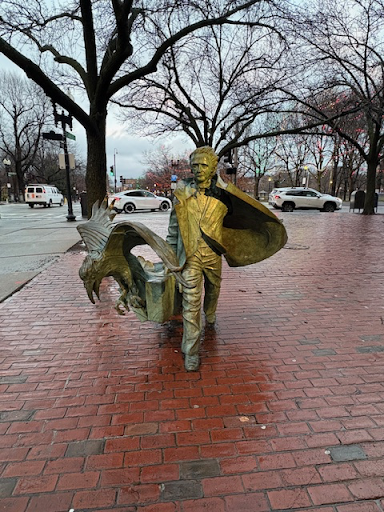
Edgar Allen Poe Statue
This is a statue of Edgar Allan Poe on the sidewalk along Boylston Street in Boston. He is caught in mid-stride, coat swirling with a raven perched atop a stack of books at his feet. The placement of this statue is intentional and rooted in Poe’s relationship with the city where his life began. Poe […]
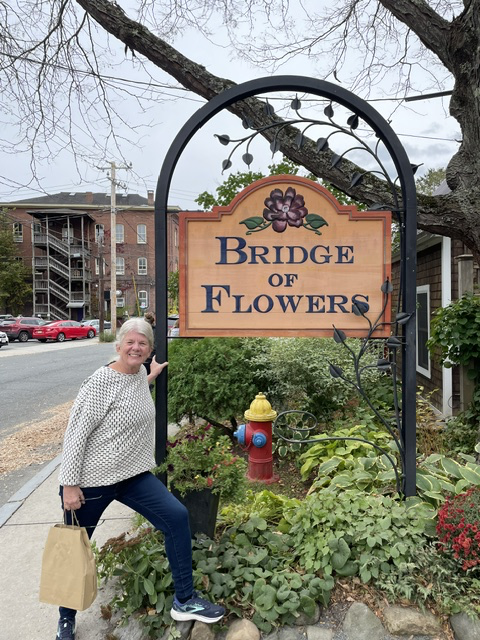
Bridge of Flowers
Some places are created to solve practical problems. Others become places that simply make people smile. The Bridge of Flowers in Shelburne Falls manages to do both. The bridge was originally built in 1908 as the Deerfield River trolley bridge, carrying electric streetcars between Shelburne and Buckland. For years it served as an important transportation link, […]
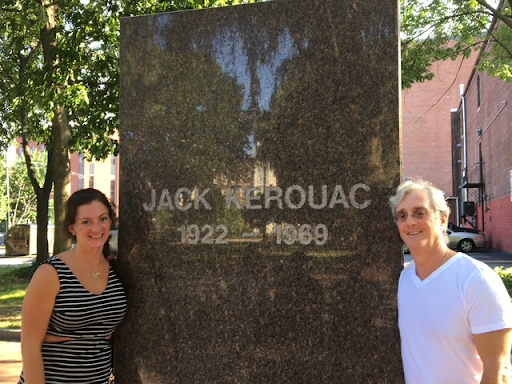
Jack Kerouac Memorial
Born in Lowell in 1922, Jean-Louis Lebris de Kérouac was the son of French-Canadian immigrants and grew up speaking French before learning English. His working-class upbringing and the close-knit ethnic neighborhoods of Lowell would later appear throughout his writings. Although he became famous for his travels across America, he never lost his During a visit to […]

