The Melodeon
I found this small wooden instrument in the Wayland History Museum. At first, it could easily be mistaken for a small upright piano, but it is actually a melodeon, or reed organ, made by Mason & Hamlin.
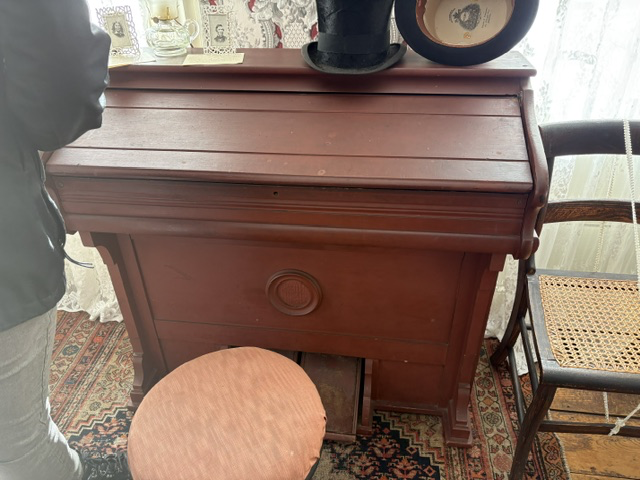
The melodeon became a popular way of bringing keyboard music into American homes during the nineteenth century. Unlike a piano, it has no strings and hammers. Instead, it produces sound by causing thin metal reeds to vibrate as air passes across them. The player operates the bellows with the foot pedals visible at the bottom of the instrument while playing the keyboard with the hands.
That made it quite different from a large pipe organ. It required no permanent installation, took up relatively little space, and was far less expensive. Melodeons and the reed organs that developed from them consequently found their way into homes, schools and small churches throughout America.
The maker of this instrument has an especially interesting Massachusetts connection. Mason & Hamlin was founded in Boston in 1854 by Henry Mason and Emmons Hamlin. Mason was the son of Lowell Mason, the influential composer and music educator associated with bringing music instruction into American public schools. Hamlin was a mechanic and inventor who developed new ways of shaping, or “voicing”, organ reeds to create richer and more varied tones.
Mason & Hamlin began as a maker of melodeons rather than pianos. The company continued experimenting with reed instruments and developed its organ-harmonium and eventually the American cabinet organ. By the early 1870s, Mason & Hamlin had become one of the country’s leading reed-organ manufacturers. The company did not begin developing the pianos for which it later became famous until the 1880.
The wooden cabinet is also part of the story. Instruments like this were pieces of household furniture as well as musical instruments. When closed, the keyboard was largely concealed and the melodeon could sit comfortably among the other furnishings of a Victorian parlor. Opening it transformed an otherwise quiet piece of furniture into the source of music for the household.
Before recorded music, radio or television, an instrument like this meant that music in the home had to be created by someone who was actually there. Hymns, popular songs and familiar melodies could accompany family gatherings or provide an evening’s entertainment.
Read More
Read More From Nancy
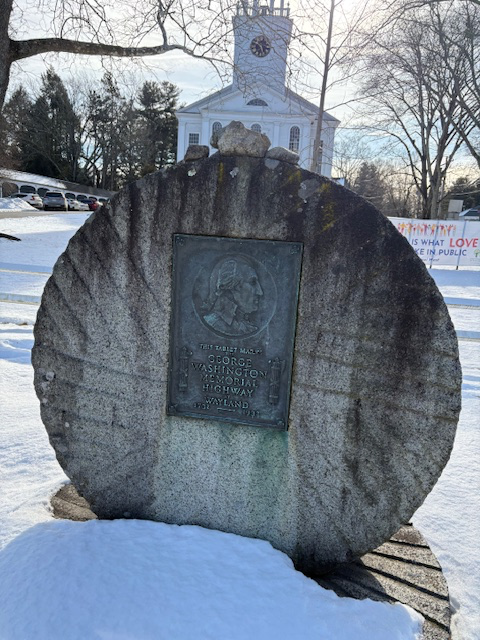
George Washington Marker
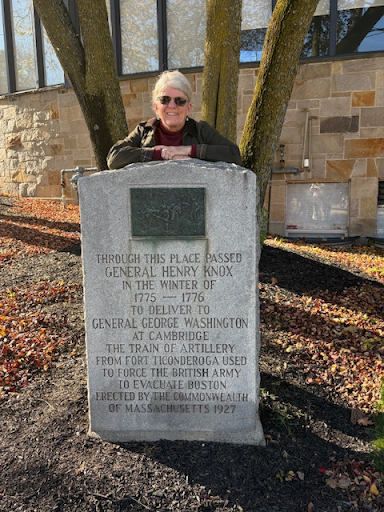
Driving through the town of Wayland, there is the round stone monument that sits along the roadside. Unlike grand statues that make historic events, this one is modest, a cylindrical stone pillar with a bronze marker identifying it as part of the George Washington Memorial Highway. The roadside marker reflects an interesting moment in American history when […]
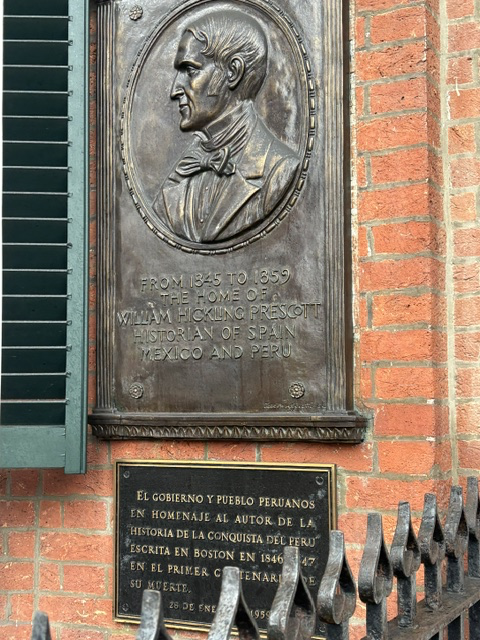
William Hickling Prescott
Walking through Boston’s Beacon Hill, it is easy to admire the elegant brick homes and historic streets without realizing how many remarkable people once lived behind these doors. One of those homes belonged to William Hickling Prescott, one of the nineteenth century’s most celebrated American historians. From 1845 until his death in 1859, Prescott lived […]
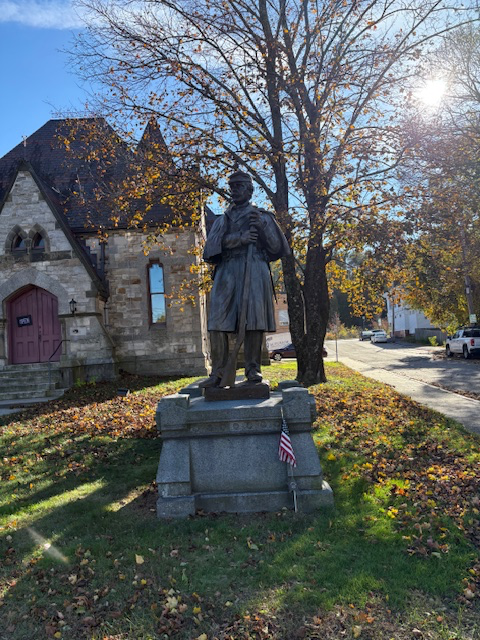
Millmore’s Confederate Statue
Standing outside the Framingham History Center is a powerful piece of the town’s history: a Civil war memorial sculpture created by the noted nineteenth century artist Martin Millmore. Millmore, an Irish-born sculptor who became one of Massachusetts’ more prolific creators of war memorial, is known for honoring ordinary citizens who answered extraordinary calls to service. His works appear in communities across […]

