The Myles Standish Homestead
On our camping trip to Plymouth, we wanted to explore more of the Pilgrim story beyond the places we had visited in Plymouth itself. That brought us to nearby Duxbury and the homestead of Captain Myles Standish. Standish is closely associated with the founding of Duxbury, and this was the community where he established his home and spent much of the remainder of his life.
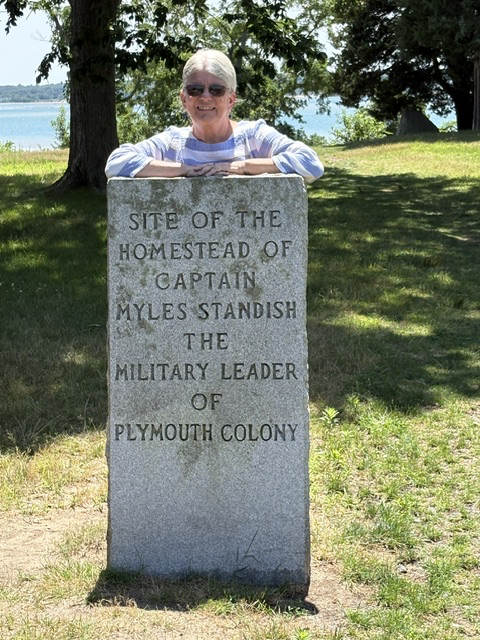
Standish had arrived aboard the Mayflower in 1620, although he was not one of the religious Separatists. A professional soldier, he had been brought along for his military experience and became the military leader of Plymouth Colony. During the colony’s precarious early years, he was responsible for organizing its defenses and participated in expeditions throughout the surrounding region.
As Plymouth became more secure, its settlers began looking beyond the original settlement for additional farmland. During the 1630s, Standish and several other prominent colonists established farms north of Plymouth in an area initially called Duxbury. Among those settling nearby were William Brewster and John Alden. Duxbury became a separate town in 1637, with Standish playing an important role in the developing community.
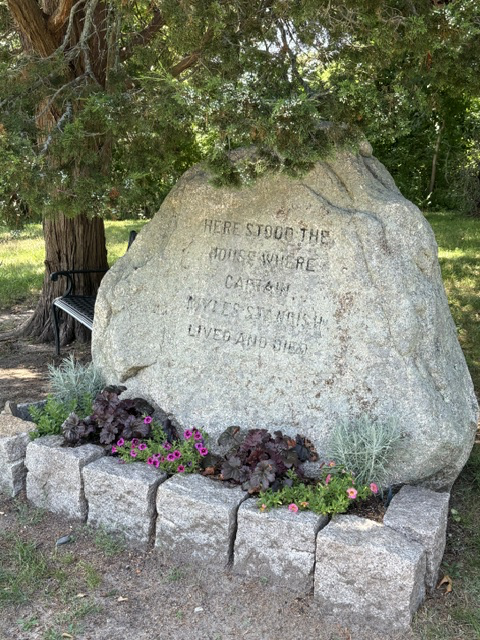
Standish established his homestead near the base of what became known as Captain’s Hill, overlooking Duxbury Bay. The location provided farmland while keeping the family connected to the waterways that were so important for travel and commerce in the seventeenth century. Although the original house has disappeared, these two markers preserve its location. One identifies the site of the homestead of “Captain Myles Standish, the Military Leader of Plymouth Colony”, while the older stone marks the place where his house once stood and where he “lived and died”.
Standish continued to serve Plymouth Colony while living in Duxbury, holding a number of public offices in addition to his military responsibilities. He remained here until his death in 1656, more than three decades after the Mayflower arrived.
Visiting the homestead added another dimension to our exploration of Pilgrim history. In Plymouth, we had encountered Standish as one of the figures associated with the Mayflower and the survival of the original colony. Here in Duxbury, we could follow the next chapter of his life. The period when those early settlers began moving outward, establishing farms and creating new communities.

Read More From Nancy
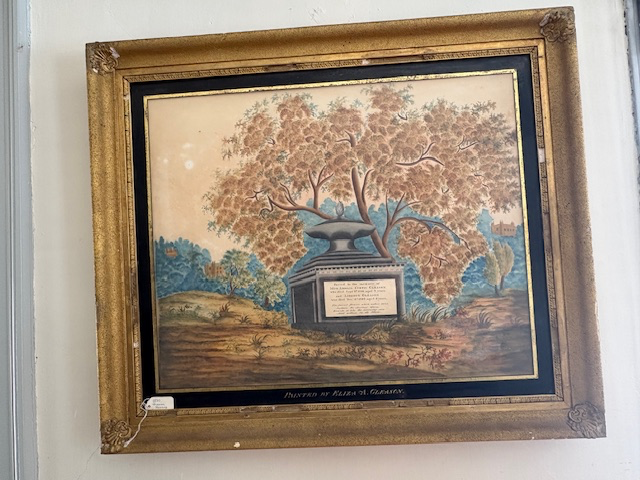
Mourning Painting
One of the unexpected discoveries during our visit to the Dedham Museum was this small watercolor known as a mourning painting. At first glance, it appears to be a peaceful landscape—a willow tree shading a funerary urn and memorial tablet. Looking more closely, however, it becomes a deeply personal expression of love and loss. The […]
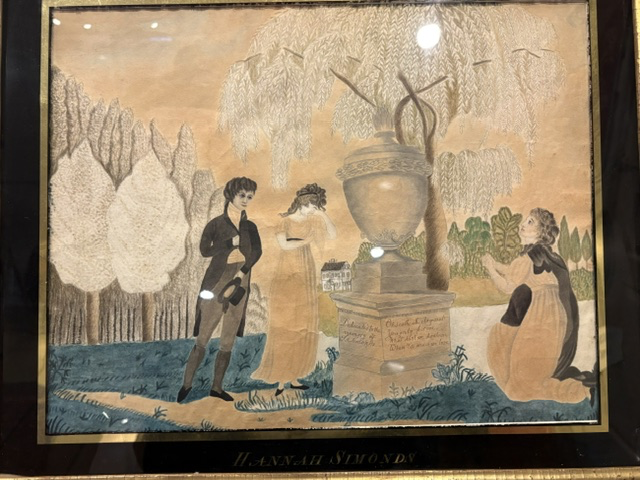
Hannah Simonds’ Mourning Portrait
One of the most moving pieces we discovered at the Buckman Tavern in Lexington was this delicate watercolor painted by Hannah Simonds in 1805. At first glance, it appears to be a simple family memorial, but it tells a much larger story about remembrance, family, and the quiet ways ordinary Americans preserved the legacy of […]
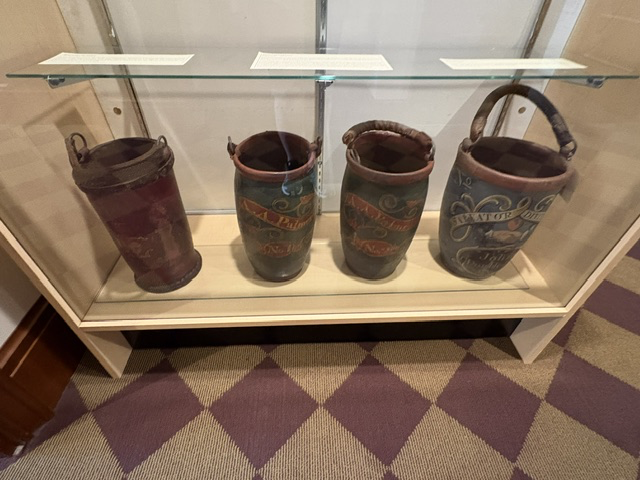
Fire Buckets
Among the interesting artifacts preserved in the Lancaster Library is a collection of leather fire buckets, reminders of a time when communities relied on cooperation rather than machinery to combat one of their greatest threats. Before organized fire departments and modern fire engines towns maintained leather buckets that were kept in homes, businesses, churches, and […]

