Harpers Ferry, WV
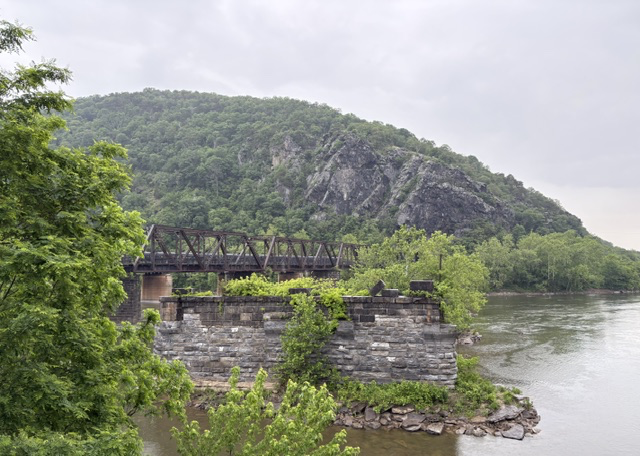
Nestled where the Potomac and Shenandoah Rivers meet, with the Blue Ridge Mountains rising around them, Harpers Ferry is a small West Virginia town that has played an outsized role in American history. Its location made it an important transportation and industrial center, particularly after the federal government established the United States Armory and Arsenal here at the end of the eighteenth century. Canals and railroads soon connected Harpers Ferry to the rapidly expanding nation beyond the mountains.
The town is perhaps best known for the events of October 1859, when abolitionist John Brown and his followers seized the federal armory in an attempt to begin an uprising against slavery. Brown's raid failed, and he was captured, tried and executed, but the confrontation intensified the national debate over slavery less than two years before the beginning of the Civil War. Harpers Ferry's strategic location then placed it directly in the path of the conflict, and the town changed hands repeatedly between Union and Confederate forces.
But the story of Harpers Ferry continued after the war. Storer College was established there in 1867 to educate formerly enslaved people and became an important center of African American education. In 1906, the Niagara Movement, led by W.E.B. Du Bois and others, held a significant meeting at Storer College, helping lay the groundwork for the later civil rights movement.
Today, much of this history is preserved within Harpers Ferry National Historical Park. The steep streets, historic buildings, railroad tracks, surrounding mountains and meeting of the two rivers create a landscape where geography and history are almost inseparable. Harpers Ferry is one of those places where you can walk through several chapters of the American story within just a few blocks—from the nation's early industrial development and John Brown's raid to the Civil War, emancipation, education and the beginnings of the modern civil rights movement.
Recent Posts
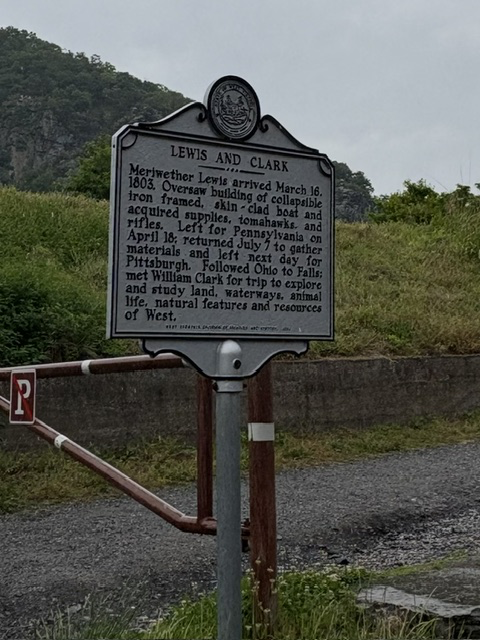
Harpers Ferry and the Lewis and Clark Expedition
This historical marker adds another piece to the Meriwether Lewis story in Harpers Ferry. Before the famous Lewis and Clark Expedition began its journey across the continent, Lewis spent several weeks here gathering equipment and working with the skilled craftsmen of the United States Armory. Meriwether Lewis arrived in Harpers Ferry on March 16, 1803. […]
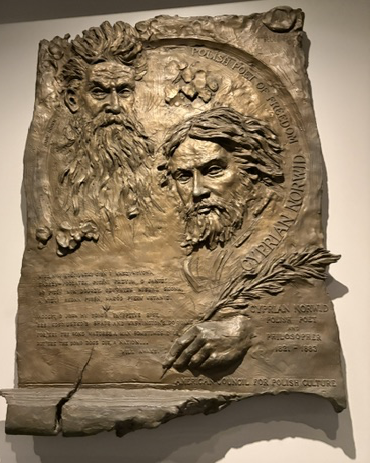
John Brown and Gerrit Smith Relief
This bronze relief brings together two men connected by the abolitionist movement but remembered for very different roles in the struggle against slavery: John Brown and Gerrit Smith. John Brown, shown at the upper left, became the militant abolitionist whose 1859 raid on Harpers Ferry was intended to seize federal weapons and help ignite a […]
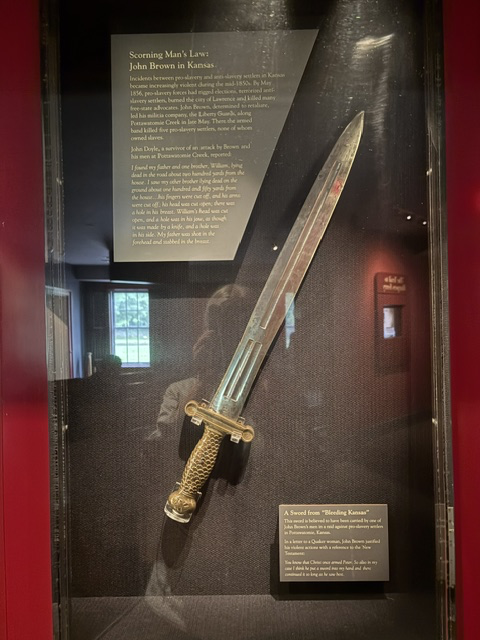
A Sword from “Bleeding Kansas”
This sword connects John Brown’s raid at Harpers Ferry to an earlier and violent chapter in the struggle over slavery. Before Brown came to Virginia in 1859, he had already become a nationally known, and deeply controversial, figure because of his actions in the Kansas Territory. During the 1850s, Americans were fighting over whether Kansas […]
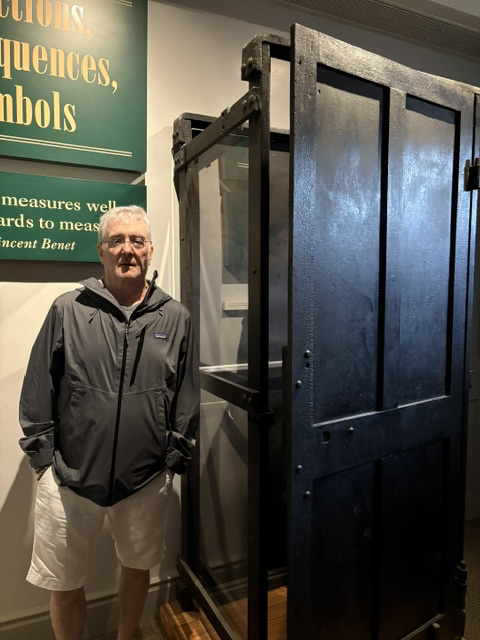
John Brown’s Jail Door
After John Brown was captured at Harpers Ferry on October 18, 1859, he was turned over to Virginia authorities and taken about seven miles away to Charles Town, the county seat of Jefferson County. It was there, rather than in Harpers Ferry, that Brown would be imprisoned, tried and sentenced to death. These photographs show […]
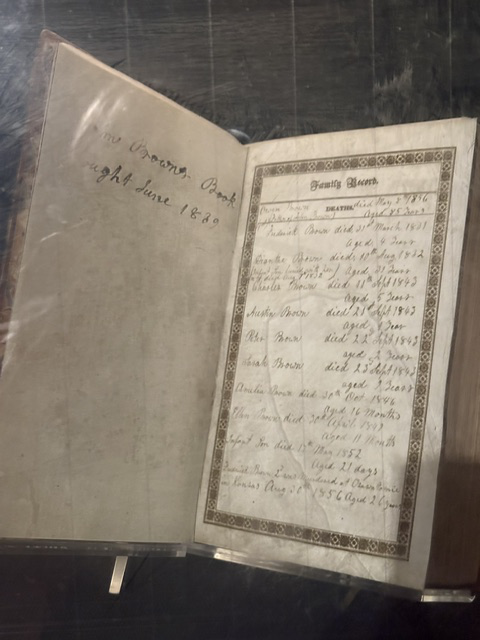
John Brown’s Family Bible
Among the objects preserved at Harpers Ferry, John Brown’s family Bible provides a particularly personal connection to the man whose actions here became part of the national struggle over slavery. Unlike a weapon, military artifact or political document, this was an object connected to Brown’s family life and to the religious beliefs that profoundly influenced […]
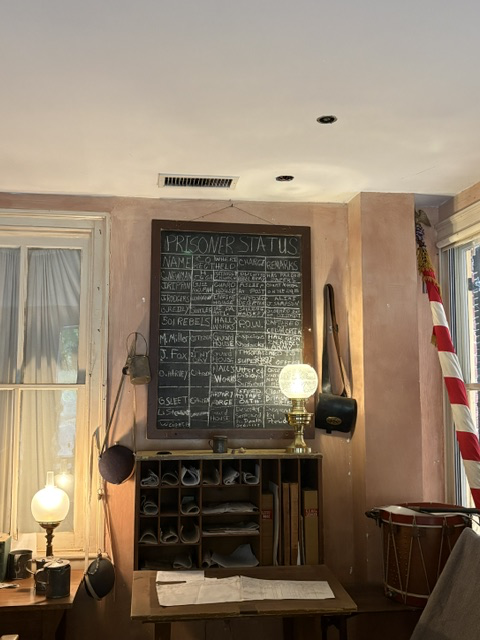
Prisoner Status
The large chalkboard labeled “Prisoner Status” immediately caught my attention in this recreated Civil War provost office. It provides a glimpse into the practical problem faced by the military authorities in Harpers Ferry: how do you keep track of a constantly changing population of prisoners during wartime? The board is arranged almost like a nineteenth-century […]
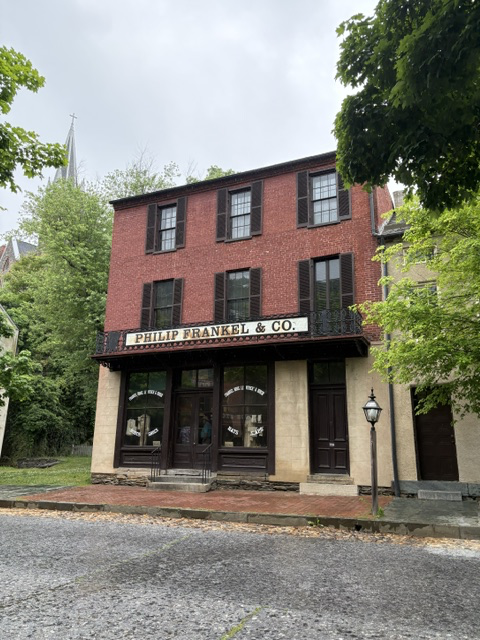
Philip Frankel & Co.
Among the restored buildings of Lower Town Harpers Ferry is Philip Frankel & Co. Philip Frankel was a German-born Jewish immigrant who came to the United States during the nineteenth century and eventually established himself as a merchant in Harpers Ferry. His story places him within the larger migration of German-speaking Jews who came to America […]
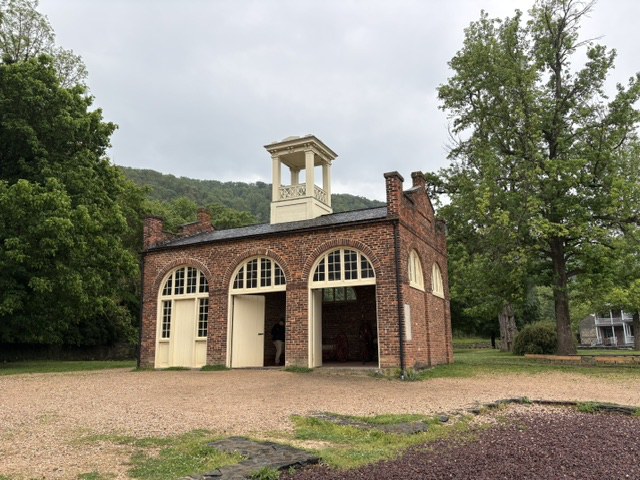
John Brown’s Fort
This small brick building is one of the most historically significant structures in Harpers Ferry. It is known today as John Brown’s Fort, although when the events that made it famous occurred, it was the fire engine and guard house for the United States Armory. On October 16, 1859, abolitionist John Brown led a group of 21 men into […]
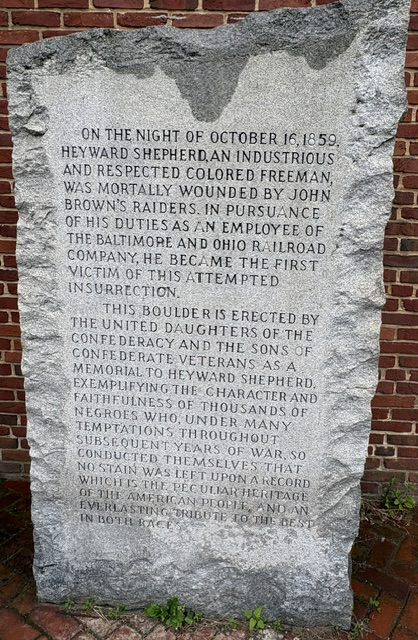
Remembering Heyward Shepherd
This monument in Harpers Ferry tells the story of Heyward Shepherd, a free Black man who became the first person killed during John Brown’s raid on October 16, 1859. Shepherd worked as a baggage master for the Baltimore & Ohio Railroad and was also described as a respected member of the local community. On the night […]
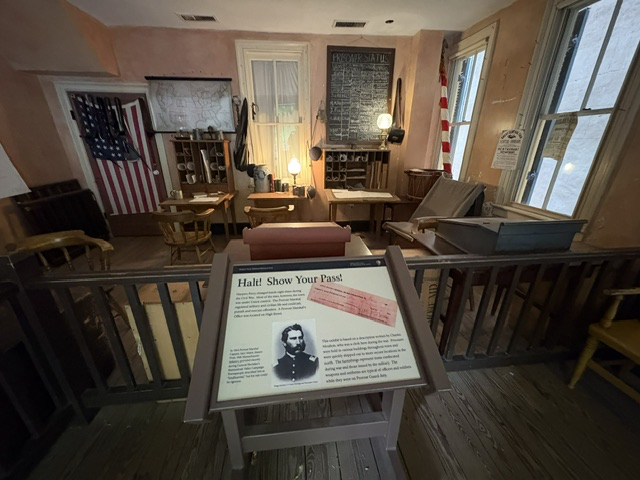
Provost Guard Duty Office
This room recreates a very different aspect of life in Harpers Ferry during the Civil War. The exhibit is based on a description written by Charles Moulton, who served as a clerk here during the war, giving us an unusual firsthand glimpse into the military administration of the town. During the war, Harpers Ferry was […]
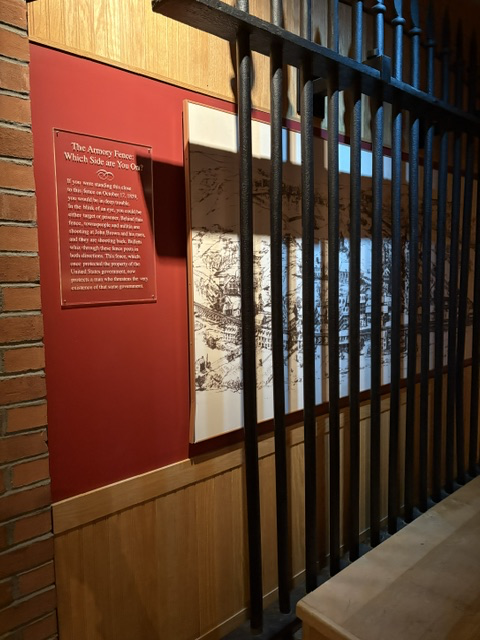
The Armory Fence
At first glance, these iron bars might not seem as significant as a weapon, a building or one of the personal objects associated with John Brown. But they are another surviving physical connection to the night of October 16, 1859.This is a section of the original wrought-iron fence that surrounded the United States Armory at […]
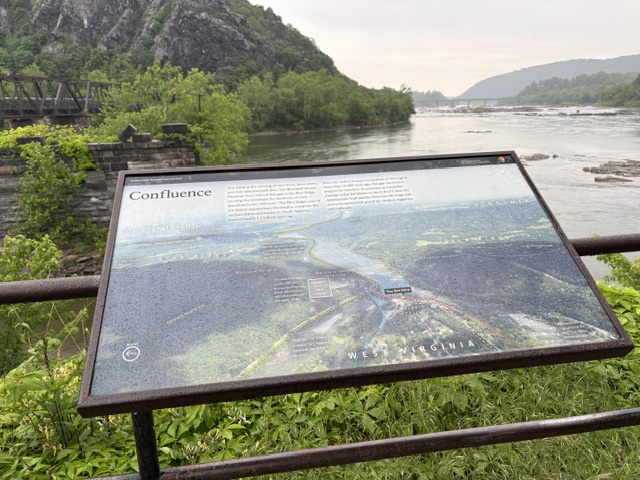
The Confluence of Two Rivers
One of the defining features of Harpers Ferry is its geography. Standing here at The Point, you can see the confluence of two great rivers: the Potomac and the Shenandoah. The Shenandoah approaches from the south and joins the Potomac, which continues east through the Blue Ridge on its journey toward the Chesapeake Bay. This meeting […]

