Provost Guard Duty Office
This room recreates a very different aspect of life in Harpers Ferry during the Civil War. The exhibit is based on a description written by Charles Moulton, who served as a clerk here during the war, giving us an unusual firsthand glimpse into the military administration of the town.
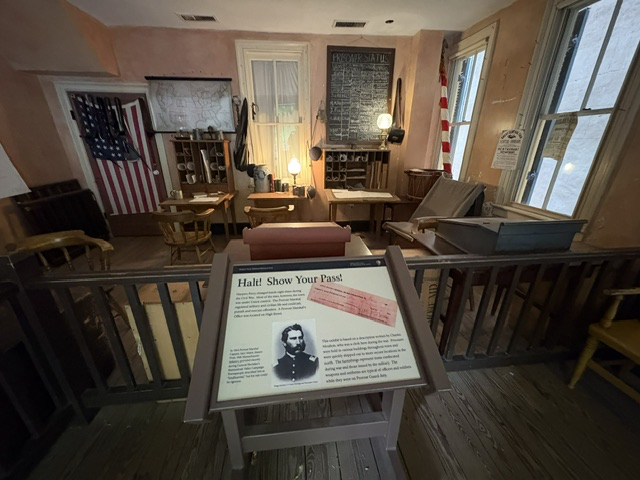
During the war, Harpers Ferry was repeatedly occupied by military forces, and maintaining order required more than soldiers on the battlefield. Provost guards performed military police duties, enforcing regulations, guarding prisoners, maintaining order and dealing with the constant movement of soldiers and civilians through this strategically important town.
Prisoners were held in various buildings throughout Harpers Ferry rather than in one permanent prison. Because the town was vulnerable to attack and changed hands during the war, prisoners were generally not kept here for long. They were quickly transported to more secure facilities farther north.
The furnishings in the room have been selected to represent the kinds of objects that would have been found in such a wartime office. Some represent property confiscated during the war, while others are typical of equipment and supplies issued by the military. The weapons and uniforms represent those used by officers and soldiers assigned to provost guard duty.
Through Charles Moulton’s description, this recreated room gives us a glimpse of that daily wartime activity in Harpers Ferry, a part of the Civil War that took place not on the battlefield, but inside offices and buildings throughout the town.
Read More From Nancy
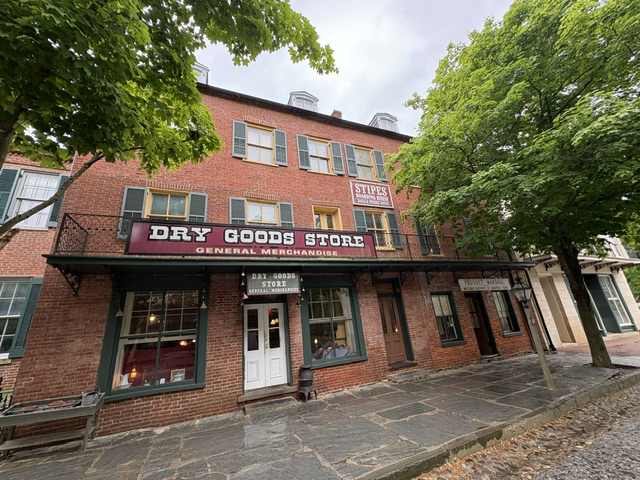
The Dry Goods Store
Walking along the streets of Lower Town Harpers Ferry, the restored Dry Goods Store offers a glimpse into something much more ordinary than the major events usually associated with the town. It gives us the experience of everyday shopping in a nineteenth-century community. A dry goods store was an important part of town life. The […]
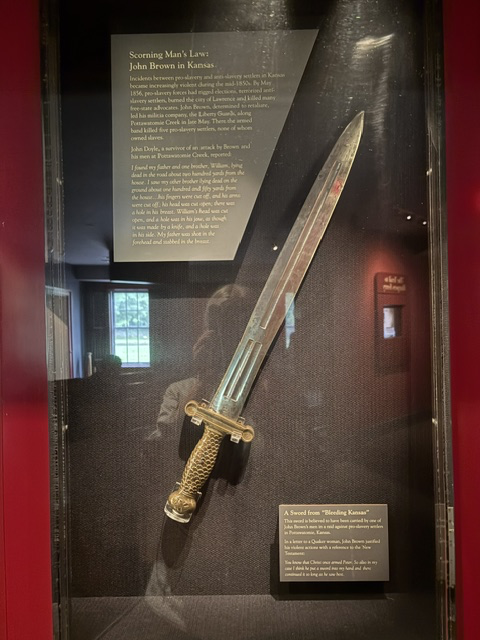
A Sword from “Bleeding Kansas”
This sword connects John Brown’s raid at Harpers Ferry to an earlier and violent chapter in the struggle over slavery. Before Brown came to Virginia in 1859, he had already become a nationally known, and deeply controversial, figure because of his actions in the Kansas Territory. During the 1850s, Americans were fighting over whether Kansas […]
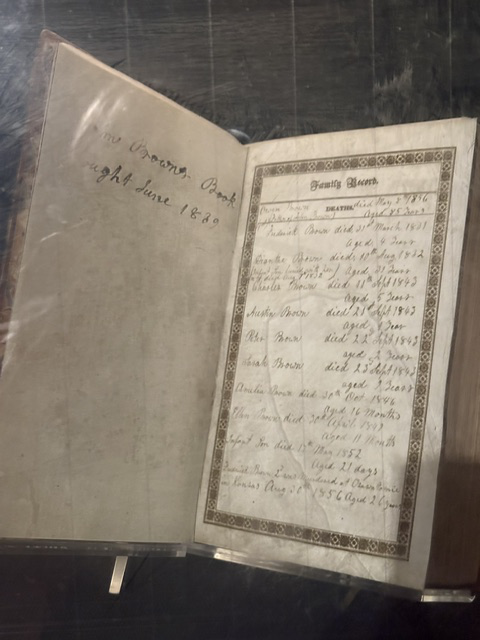
John Brown’s Family Bible
Among the objects preserved at Harpers Ferry, John Brown’s family Bible provides a particularly personal connection to the man whose actions here became part of the national struggle over slavery. Unlike a weapon, military artifact or political document, this was an object connected to Brown’s family life and to the religious beliefs that profoundly influenced […]

