John Brown and Gerrit Smith Relief
This bronze relief brings together two men connected by the abolitionist movement but remembered for very different roles in the struggle against slavery: John Brown and Gerrit Smith.
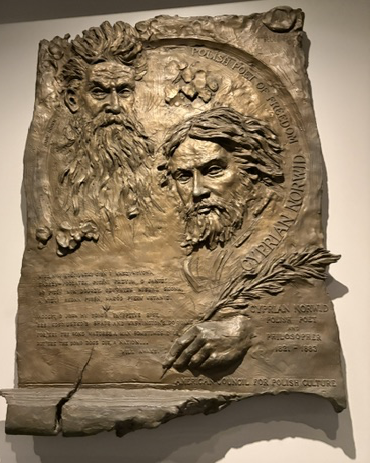
John Brown, shown at the upper left, became the militant abolitionist whose 1859 raid on Harpers Ferry was intended to seize federal weapons and help ignite a broader uprising against slavery. Gerrit Smith, pictured below him, was a wealthy New York reformer, philanthropist and abolitionist who used his money and influence to support anti slaverycauses.
Smith was one of the group of prominent abolitionists later known as the “Secret Six”. These men provided Brown with financial assistance as he prepared for his campaign against slavery. Some supplied money knowing Brown intended to take direct action, although historians have continued to debate how much each man understood about the specific plan to attack the federal armory at Harpers Ferry.
The relationship between Brown and Smith had developed well before the raid. Smith had devoted substantial portions of his fortune to reform movements and had given land in New York to Black families in an effort to help them establish economic independence. Brown became involved with the Black community at North Elba, New York, where Smith had provided land for settlement, and Brown eventually established his own farm there.
The words incorporated into this relief help explain why the two men are portrayed together. Both believed slavery represented a profound moral wrong, but Brown ultimately embraced armed resistance in a way that distinguished him from most other abolitionists.
After Brown’s capture at Harpers Ferry, the revelation that prominent Northern abolitionists had helped finance him intensified Southern fears that the raid represented something much larger than the actions of a small group of men. Brown’s financial connections became part of the national controversy surrounding the raid and further deepened the growing divide between North and South.
This relief is therefore about more than John Brown alone. It reminds us that the raid at Harpers Ferry did not emerge in isolation. Behind Brown stood a larger network of abolitionists, people who contributed money, offered encouragement, provided contacts or otherwise supported the campaign against slavery. Brown carried that struggle to Harpers Ferry. Gerrit Smith represents part of the network that helped make Brown’s actions possible.
Read More From Nancy
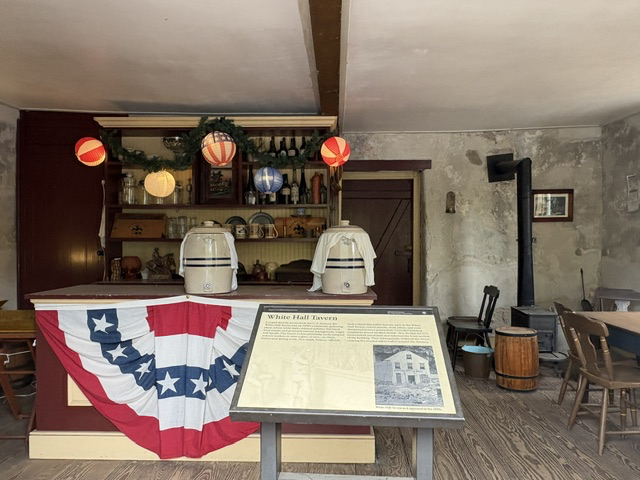
White Hall Tavern
The White Hall Tavern gives us another look at everyday life in nineteenth-century Harpers Ferry. While the armory, railroad and political events brought national importance to the town, places like this were where residents gathered, exchanged news, ate and drank, and discussed what was happening around them. White Hall Tavern was operated by Frederick Roeder, […]
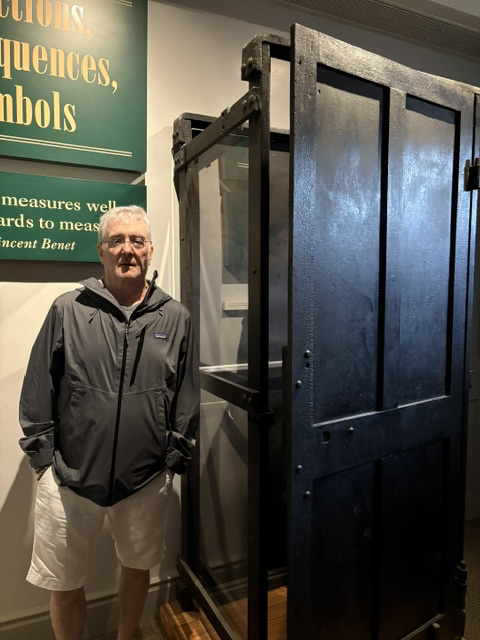
John Brown’s Jail Door
After John Brown was captured at Harpers Ferry on October 18, 1859, he was turned over to Virginia authorities and taken about seven miles away to Charles Town, the county seat of Jefferson County. It was there, rather than in Harpers Ferry, that Brown would be imprisoned, tried and sentenced to death. These photographs show […]
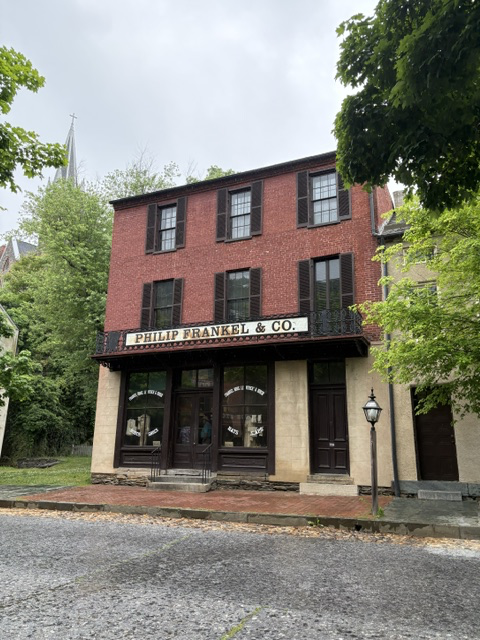
Philip Frankel & Co.
Among the restored buildings of Lower Town Harpers Ferry is Philip Frankel & Co. Philip Frankel was a German-born Jewish immigrant who came to the United States during the nineteenth century and eventually established himself as a merchant in Harpers Ferry. His story places him within the larger migration of German-speaking Jews who came to America […]

