Prisoner Status
The large chalkboard labeled “Prisoner Status” immediately caught my attention in this recreated Civil War provost office. It provides a glimpse into the practical problem faced by the military authorities in Harpers Ferry: how do you keep track of a constantly changing population of prisoners during wartime?
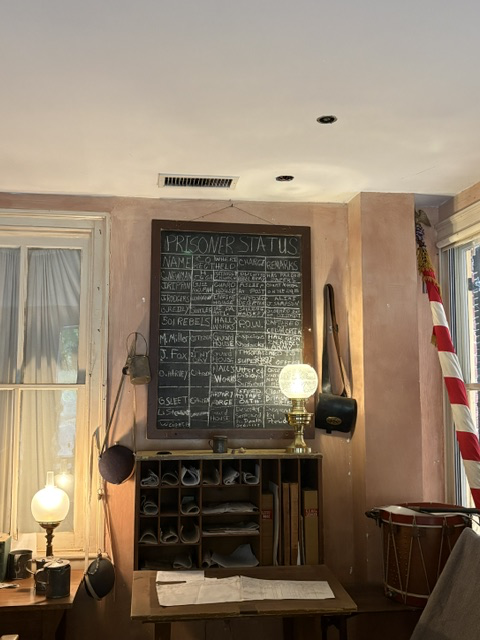
The board is arranged almost like a nineteenth-century database. Each horizontal line represents an individual prisoner, while the columns organize the information needed by the provost staff. Looking closely, we can see headings for the prisoner’s name and other identifying information, along with columns recording charges and remarks concerning the prisoner’s status or disposition.
The names written on the board also demonstrate that there was no single type of prisoner passing through the provost office. The charges appear to represent a variety of military offenses and circumstances. Some individuals might have been Confederate prisoners of war, while others could have been Union soldiers detained for disciplinary violations, deserters, suspected spies, civilians accused of violating military regulations, or people whose movements or loyalties required investigation.
That helps explain why such a board would have been useful. Harpers Ferry was not primarily a long-term prison facility. Prisoners were temporarily confined in various buildings around town and, when necessary, quickly transferred to more secure locations farther north. The provost staff therefore needed to know who had arrived, why each person was being held, where they were being kept and what was supposed to happen to them next.
The chalkboard provided a simple way of keeping that information immediately visible. A clerk could add a new prisoner, change a status or erase a name once someone had been released or transferred. The records on the desk and in the pigeonholes would have provided the more permanent documentation, while the board functioned as a working reference for the office.
The recreated office is based on the wartime description of Charles Moulton, who served as a clerk here. That makes the board especially useful as an interpretive piece. Rather than simply showing us uniforms and weapons, the exhibit allows us to see the administrative side of military occupation—the names, charges, records, orders and constant movement of people that had to be managed every day.
It is easy to walk past a chalkboard when surrounded by more dramatic Civil War artifacts, but this one tells a very human story. Each line represented someone whose freedom had temporarily been taken away, and each notation helped determine what would happen to that person next.
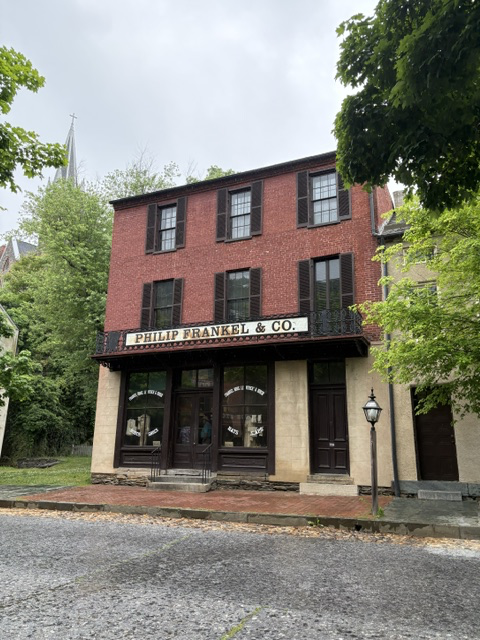
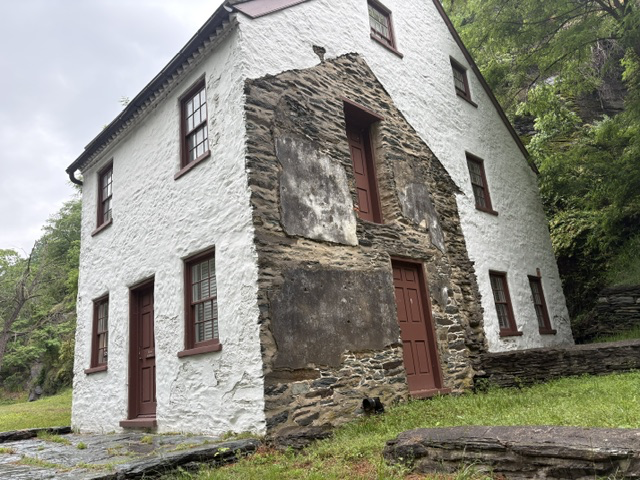
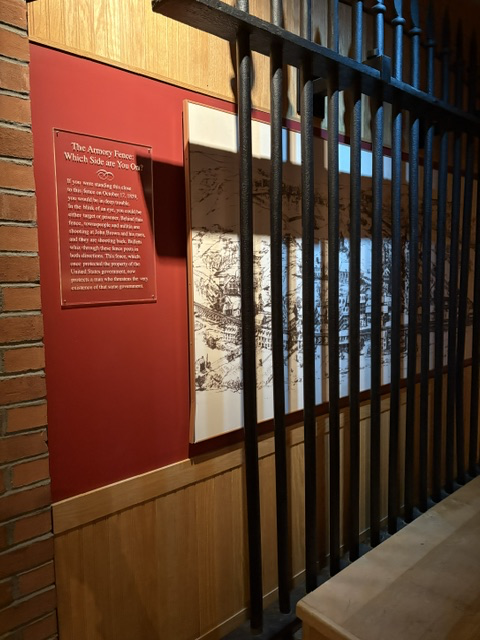
Read More From Nancy
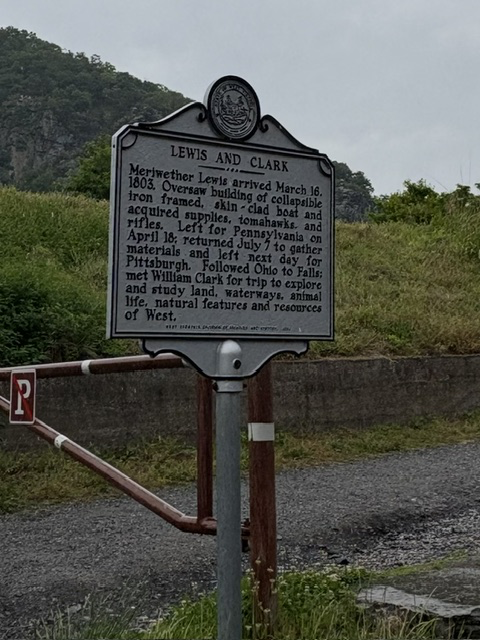
Harpers Ferry and the Lewis and Clark Expedition
This historical marker adds another piece to the Meriwether Lewis story in Harpers Ferry. Before the famous Lewis and Clark Expedition began its journey across the continent, Lewis spent several weeks here gathering equipment and working with the skilled craftsmen of the United States Armory. Meriwether Lewis arrived in Harpers Ferry on March 16, 1803. […]
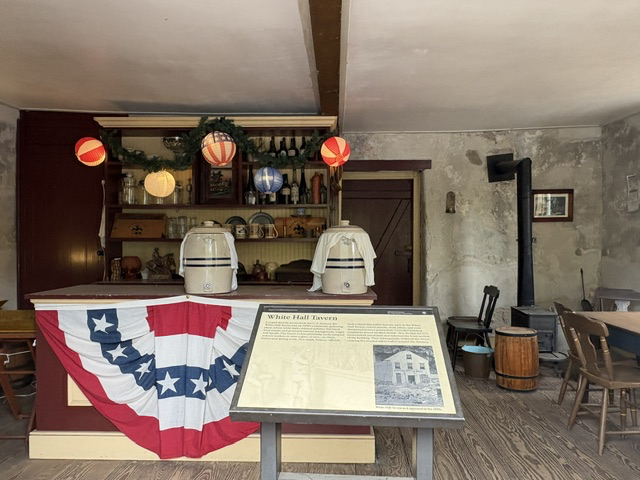
White Hall Tavern
The White Hall Tavern gives us another look at everyday life in nineteenth-century Harpers Ferry. While the armory, railroad and political events brought national importance to the town, places like this were where residents gathered, exchanged news, ate and drank, and discussed what was happening around them. White Hall Tavern was operated by Frederick Roeder, […]
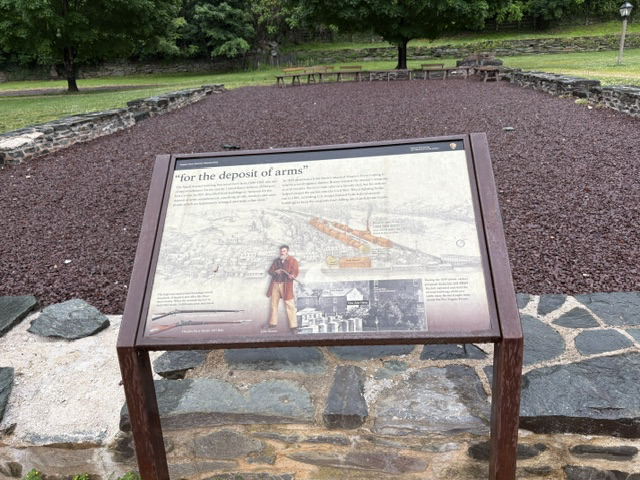
The United States Arsenal
This open foundation in Harpers Ferry marks the site of one of the buildings that once formed the United States Arsenal. Today there is little left above ground, but during the nineteenth century this was part of a large federal complex devoted to the manufacture and storage of weapons. The story began with George Washington. […]

