John Brown’s Fort
This small brick building is one of the most historically significant structures in Harpers Ferry. It is known today as John Brown’s Fort, although when the events that made it famous occurred, it was the fire engine and guard house for the United States Armory.
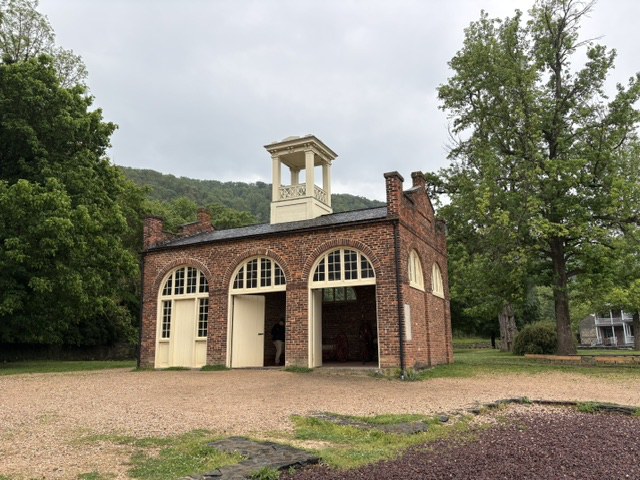
On October 16, 1859, abolitionist John Brown led a group of 21 men into Harpers Ferry. His plan was to seize weapons from the federal arsenal and use them to arm enslaved people, hoping to ignite a larger uprising against slavery. Brown believed slavery would not end peacefully and that direct action was necessary.
Initially, Brown and his men took control of several important locations and captured hostages. But the uprising he hoped for did not occur. Local militia and armed townspeople surrounded the raiders, forcing Brown and the remaining members of his group to retreat into this small engine house with their hostages.
By the morning of October 18, U.S. Marines had arrived under the command of Colonel Robert E. Lee. Among Lee’s officers was J.E.B. Stuart, another name that would soon become prominent in the Civil War. After Brown refused to surrender, the Marines battered their way through the doors of the engine house. Several of Brown’s men were killed, and Brown himself was wounded and captured.
The building itself has had an extraordinary journey. It did not simply remain where Brown made his final stand. After the Civil War, it became something of a historical artifact in its own right and was moved several times. In 1891, it was dismantled and transported to Chicago for display at the World’s Columbian Exposition. Afterward it returned to Harpers Ferry, but not to its original location. It was later moved to nearby Storer College before eventually being relocated again.
Today it stands within Harpers Ferry National Historical Park, only a short distance from its original site. The landscape around it has changed substantially since 1859, so what we see today is not exactly the setting Brown and his men would have known.
I find the size of the building particularly striking. So much has been written about John Brown’s raid that it can seem like an enormous event—and historically, it was. Yet when you stand in front of the building where the final confrontation occurred, it is surprisingly small.
That is one of the reasons I enjoy visiting the actual places where history happened. A familiar story suddenly acquires dimensions, distances and a physical setting. Here in Harpers Ferry, this modest brick engine house became the scene of an event that intensified the national struggle over slavery and helped move the country closer to the Civil War.
A very small building became part of a very large American story.
Read More From Nancy
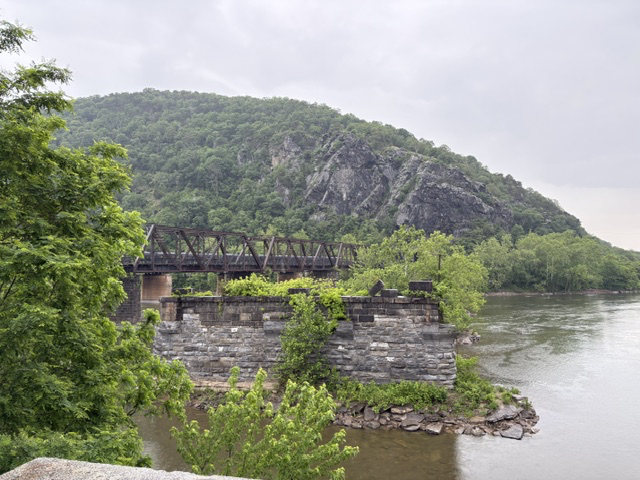
The Remains of the Railroad Bridge
These stone piers standing in the Potomac are remnants of the long transportation history that made Harpers Ferry such an important crossroads. The narrow opening through the Blue Ridge created by the Potomac provided a natural route through the mountains, and in the nineteenth century the Baltimore & Ohio Railroad used that route as it […]
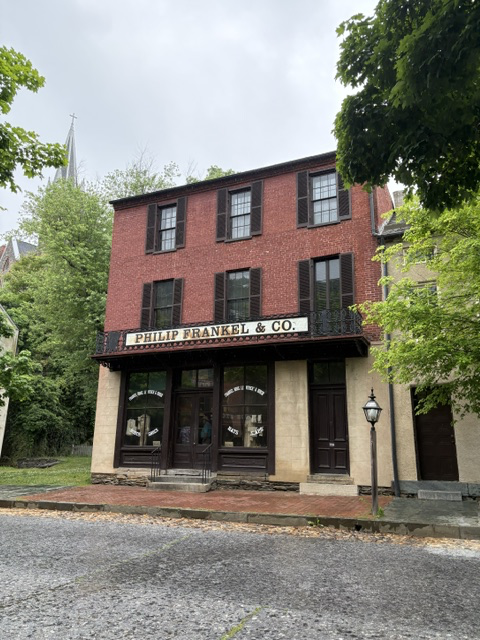
Philip Frankel & Co.
Among the restored buildings of Lower Town Harpers Ferry is Philip Frankel & Co. Philip Frankel was a German-born Jewish immigrant who came to the United States during the nineteenth century and eventually established himself as a merchant in Harpers Ferry. His story places him within the larger migration of German-speaking Jews who came to America […]
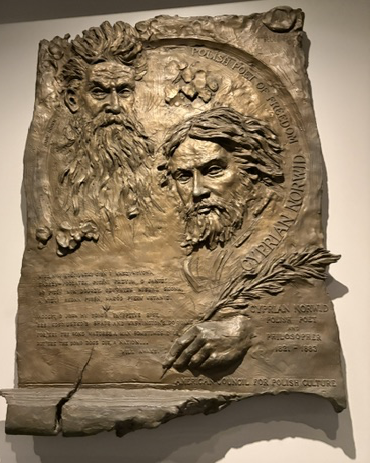
John Brown and Gerrit Smith Relief
This bronze relief brings together two men connected by the abolitionist movement but remembered for very different roles in the struggle against slavery: John Brown and Gerrit Smith. John Brown, shown at the upper left, became the militant abolitionist whose 1859 raid on Harpers Ferry was intended to seize federal weapons and help ignite a […]

