John Brown’s Jail Door
After John Brown was captured at Harpers Ferry on October 18, 1859, he was turned over to Virginia authorities and taken about seven miles away to Charles Town, the county seat of Jefferson County. It was there, rather than in Harpers Ferry, that Brown would be imprisoned, tried and sentenced to death.
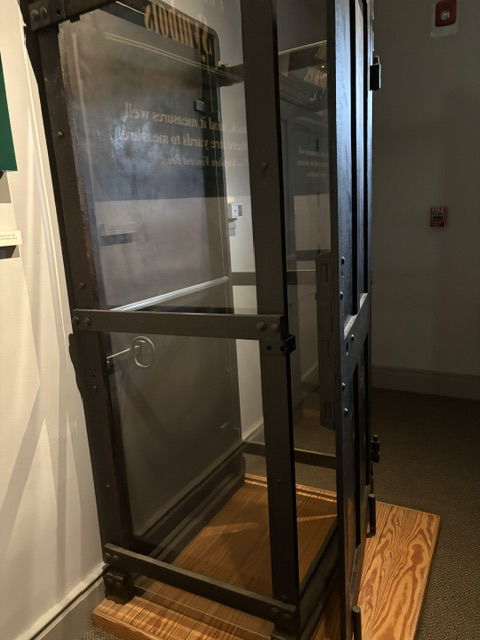
These photographs show something remarkable: the original stockade frame and entrance doors from the Charles Town jail where Brown was held in custody. Unlike a reconstruction, these are surviving pieces of the actual jail through which Brown and his guards would have passed during the final weeks of his life.
Brown’s trial began only a week after his capture. He was charged with treason against the Commonwealth of Virginia, conspiring with enslaved people to rebel, and murder. The proceedings attracted enormous national attention. Reporters descended on Charles Town, and newspapers throughout the country followed the trial closely. Brown was found guilty on all three charges and sentenced to hang.
He remained confined in the Charles Town jail while awaiting execution. During this period, Brown wrote numerous letters and received visitors, and his statements increasingly reached a national audience. His conduct during his trial and imprisonment transformed the failed raid into something much larger. To many in the North he became a martyr to the antislavery cause, while many white Southerners saw the raid as evidence that abolitionists threatened both slavery and their personal security. Brown was taken from the jail on the morning of December 2, 1859, transported to a field outside Charles Town and executed by hanging.
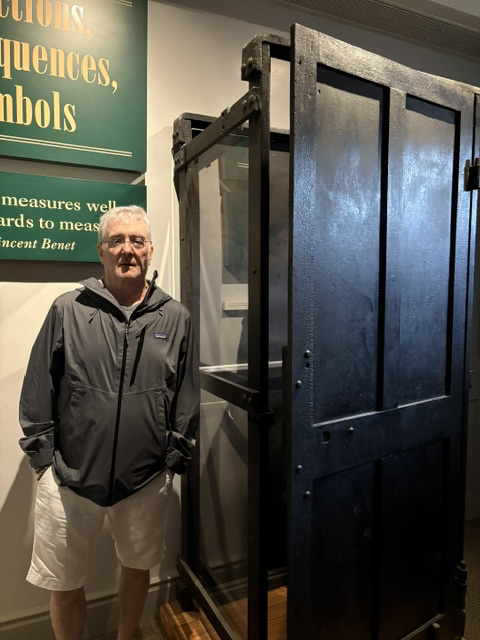
Standing beside these heavy doors brings the story unusually close. Brown’s raid is usually associated with the armory and John Brown’s Fort in Harpers Ferry, but the final chapter unfolded in Charles Town. These doors survived from the place where Brown spent those last weeks as his raid, trial and impending execution became national news.
They are a physical connection between the events at Harpers Ferry and the courtroom and jail in Charles Town—and to the extraordinary six weeks in 1859 during which John Brown went from captured raider to one of the most controversial figures in America.

Read More From Nancy
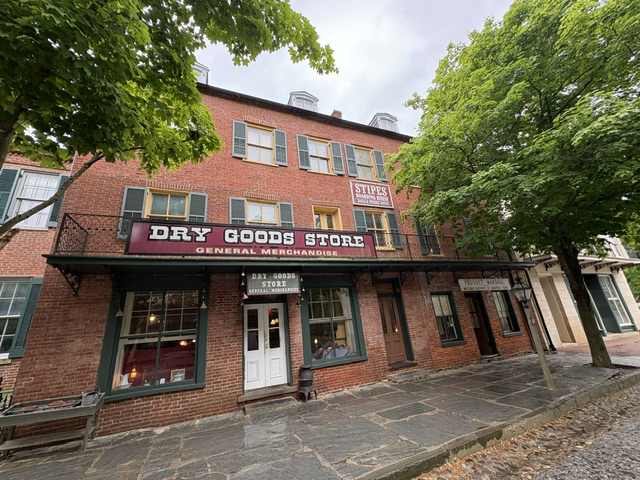
The Dry Goods Store
Walking along the streets of Lower Town Harpers Ferry, the restored Dry Goods Store offers a glimpse into something much more ordinary than the major events usually associated with the town. It gives us the experience of everyday shopping in a nineteenth-century community. A dry goods store was an important part of town life. The […]
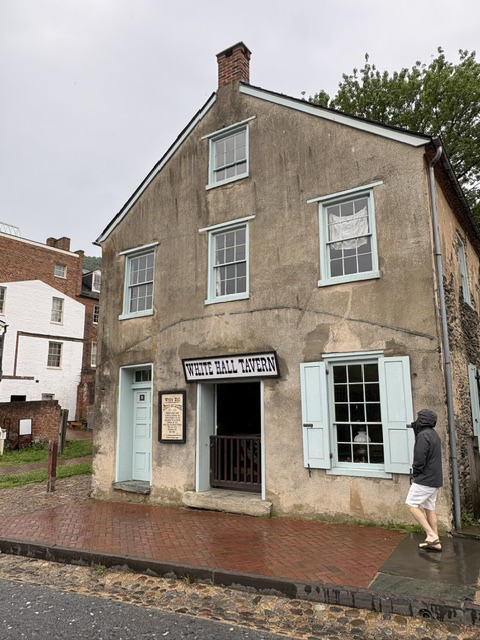
White Hall Tavern
Walking through the historic streets of Harpers Ferry, buildings like White Hall Tavern help tell another side of the town’s story. John Brown’s raid and the Civil War dominate the history here, but Harpers Ferry was also a working industrial community filled with ordinary people who needed places to eat, drink, gather and exchange news. […]
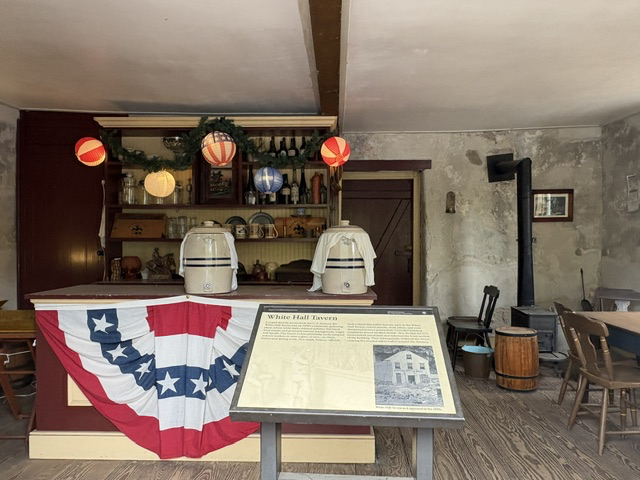
White Hall Tavern
The White Hall Tavern gives us another look at everyday life in nineteenth-century Harpers Ferry. While the armory, railroad and political events brought national importance to the town, places like this were where residents gathered, exchanged news, ate and drank, and discussed what was happening around them. White Hall Tavern was operated by Frederick Roeder, […]

