Philip Frankel & Co.
Among the restored buildings of Lower Town Harpers Ferry is Philip Frankel & Co. Philip Frankel was a German-born Jewish immigrant who came to the United States during the nineteenth century and eventually established himself as a merchant in Harpers Ferry. His story places him within the larger migration of German-speaking Jews who came to America during this period, many of whom entered commerce and established dry-goods and clothing businesses in communities across the country.
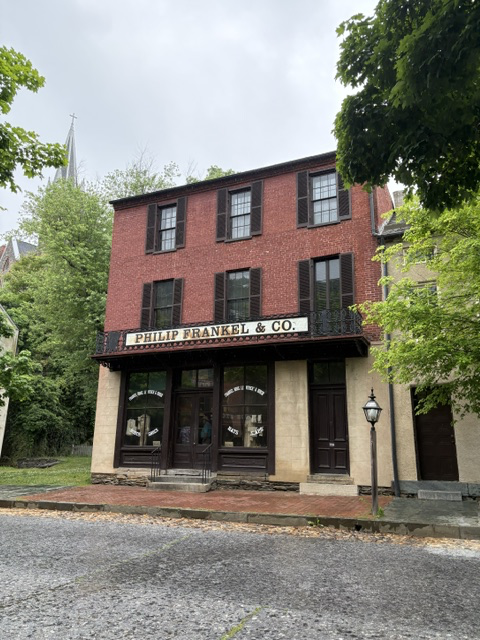
We may not know precisely what brought Frankel specifically to Harpers Ferry, but it is not difficult to understand the opportunities the town offered. By the middle of the nineteenth century, Harpers Ferry was home to the United States Armory and its workforce, while the Baltimore & Ohio Railroad, the Winchester & Potomac Railroad, and the Chesapeake & Ohio Canal connected the town with larger markets. Workers, families and travelers all created a steady demand for goods and services. For an immigrant merchant looking to establish a business, this small but busy industrial and transportation center offered opportunity.
Frankel operated a dry-goods business, selling the kinds of merchandise needed by local families and workers: clothing, fabrics and other household and personal goods. His customers would have been part of the everyday population that surrounded the federal armory and filled the streets of Lower Town.
His presence adds another dimension to Harpers Ferry’s history. Frankel’s story is part of the broader story of immigration and of the people who came to growing American communities looking for opportunity. Like many immigrants, he established a business and became part of the economic and social life of his adopted town.
The restored Philip Frankel & Co. storefront helps us imagine the everyday activity that once filled these streets. Customers came to purchase clothing, fabrics and household goods. Armory employees headed to and from work. Trains brought travelers and merchandise into town, while canal boats moved along the Potomac. Merchants like Frankel opened their doors each morning to serve this busy community.
This is another part of Harpers Ferry that I enjoy discovering. Beyond the major events recorded in history books are the individual stories of the people who lived here—the workers, shopkeepers, immigrants and families whose daily lives created the community. hometown Philip Frankel & Co. Harpers Ferry, WV
Philip Frankel & Co. preserves one of those stories. A German Jewish immigrant came to America, eventually made his way to Harpers Ferry, and established a business in a town that offered opportunity through its growing population, industry and transportation connections. His storefront remains a tangible reminder of the many individual lives that together created Harpers Ferry.
Read More From Nancy
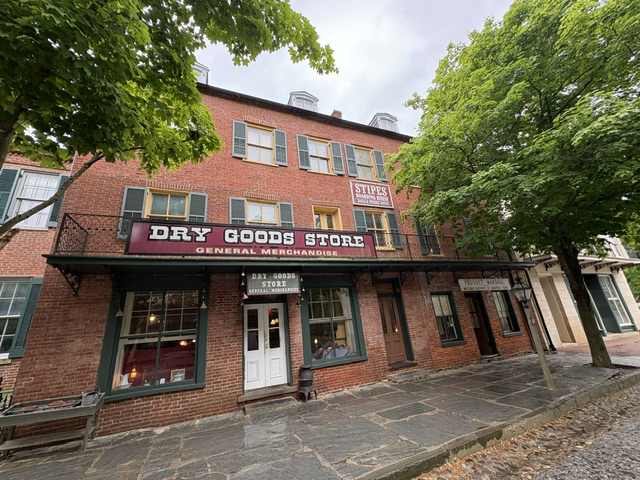
The Dry Goods Store
Walking along the streets of Lower Town Harpers Ferry, the restored Dry Goods Store offers a glimpse into something much more ordinary than the major events usually associated with the town. It gives us the experience of everyday shopping in a nineteenth-century community. A dry goods store was an important part of town life. The […]
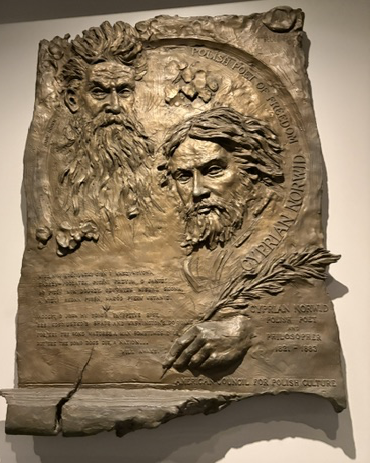
John Brown and Gerrit Smith Relief
This bronze relief brings together two men connected by the abolitionist movement but remembered for very different roles in the struggle against slavery: John Brown and Gerrit Smith. John Brown, shown at the upper left, became the militant abolitionist whose 1859 raid on Harpers Ferry was intended to seize federal weapons and help ignite a […]
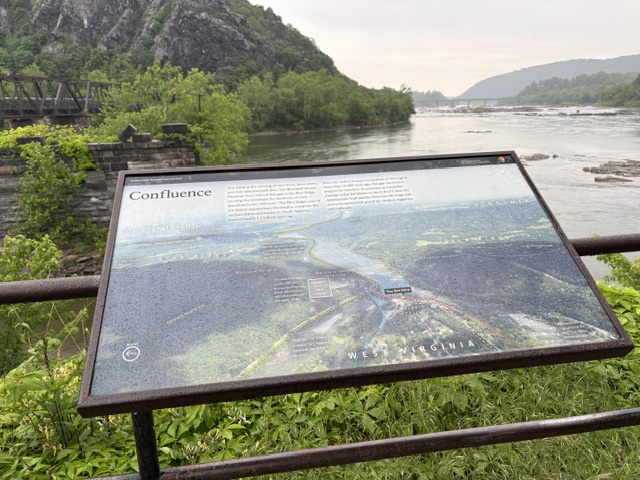
The Confluence of Two Rivers
One of the defining features of Harpers Ferry is its geography. Standing here at The Point, you can see the confluence of two great rivers: the Potomac and the Shenandoah. The Shenandoah approaches from the south and joins the Potomac, which continues east through the Blue Ridge on its journey toward the Chesapeake Bay. This meeting […]

