The Armory Fence
At first glance, these iron bars might not seem as significant as a weapon, a building or one of the personal objects associated with John Brown. But they are another surviving physical connection to the night of October 16, 1859.This is a section of the original wrought-iron fence that surrounded the United States Armory at Harpers Ferry. According to the exhibit, the fence was manufactured around 1848 and enclosed the federal armory grounds along the Potomac River.
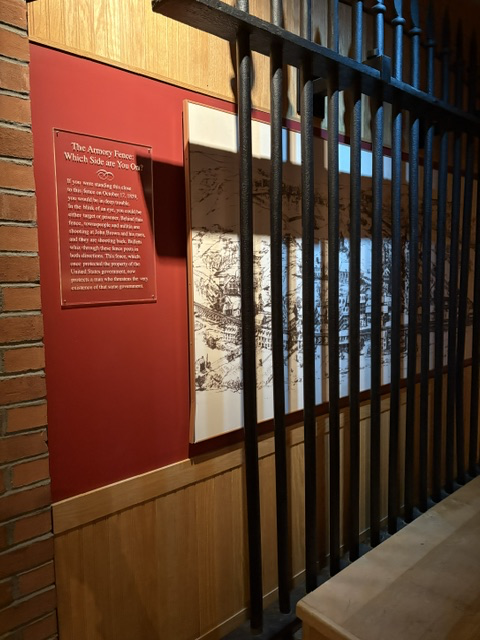
When John Brown and his small band of followers entered Harpers Ferry, gaining control of the armory was central to their plan. The complex contained federal weapons that Brown hoped to use to arm enslaved people who would join his uprising. Brown’s men seized the armory, arsenal and other strategic locations, initially encountering relatively little resistance.
These iron bars therefore stood here as the raid unfolded. Armory workers, townspeople, Brown’s raiders and eventually militia and federal troops moved through the area they enclosed. The fence also helps us visualize something that is difficult to appreciate in Harpers Ferry today. The federal armory was once an enormous industrial complex stretching along the Potomac, containing workshops, warehouses and other buildings surrounded by fences and gates. Much of that landscape disappeared during and after the Civil War.
That makes these simple iron bars particularly interesting to me. They are not a reproduction intended to help us imagine 1859. They were already standing here.
Read More From Nancy
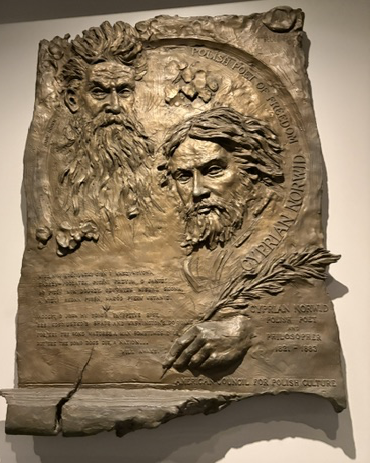
John Brown and Gerrit Smith Relief
This bronze relief brings together two men connected by the abolitionist movement but remembered for very different roles in the struggle against slavery: John Brown and Gerrit Smith. John Brown, shown at the upper left, became the militant abolitionist whose 1859 raid on Harpers Ferry was intended to seize federal weapons and help ignite a […]
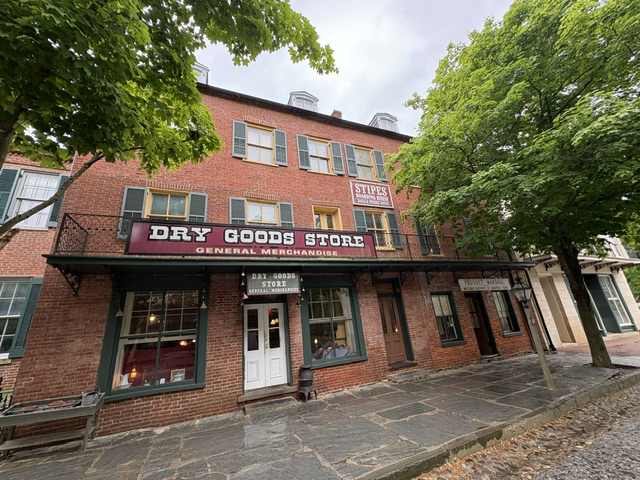
The Dry Goods Store
Walking along the streets of Lower Town Harpers Ferry, the restored Dry Goods Store offers a glimpse into something much more ordinary than the major events usually associated with the town. It gives us the experience of everyday shopping in a nineteenth-century community. A dry goods store was an important part of town life. The […]
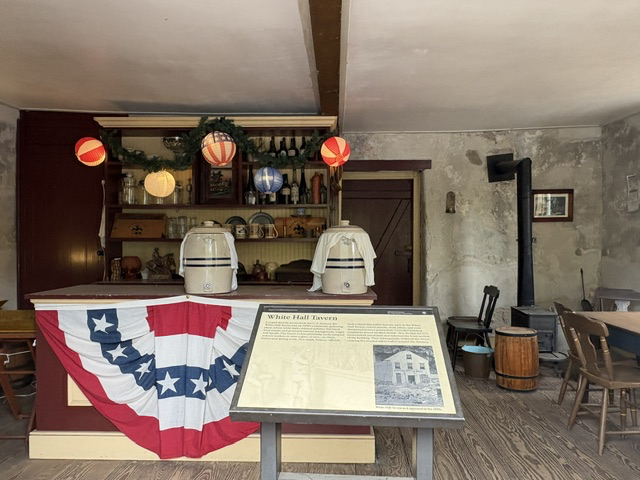
White Hall Tavern
The White Hall Tavern gives us another look at everyday life in nineteenth-century Harpers Ferry. While the armory, railroad and political events brought national importance to the town, places like this were where residents gathered, exchanged news, ate and drank, and discussed what was happening around them. White Hall Tavern was operated by Frederick Roeder, […]

