Plymouth, MA
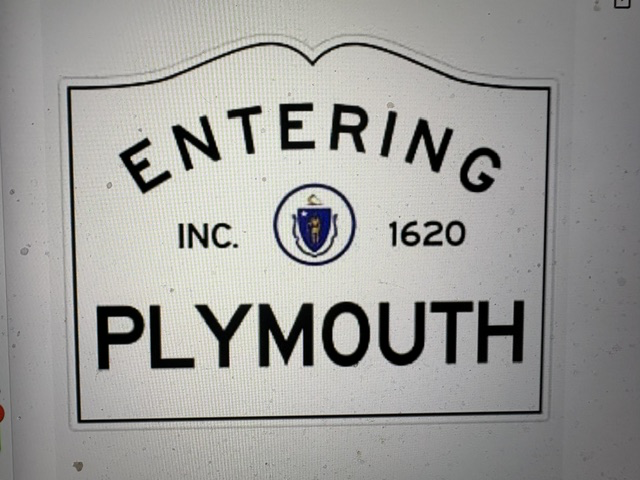
Plymouth was settled by the passengers of the Mayflower in 1620, making it one of the earliest permanent English settlements in New England. Known as “America’s Hometown”, Plymouth is forever connected to the Pilgrims, Plymouth Rock, the Mayflower, and the story of the first Thanksgiving, as well as the much older history of the Wampanoag people who inhabited this region for thousands of years before the Pilgrims arrived.
Today, its waterfront, historic homes, burial grounds, monuments, and preserved landscapes allow us to explore more than four centuries of history. Plymouth is especially meaningful to us because it is close enough to home that we have returned many times, yet there always seems to be another piece of its remarkable story waiting for us to discover.
Recent Posts
Spectator Seating
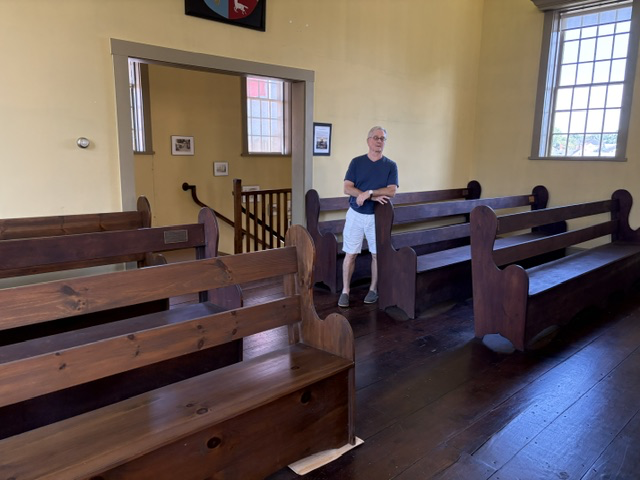
Along the sides and rear of the courtroom in Plymouth’s 1749 Court House are rows of simple wooden benches where members of the public could sit and watch the proceedings. Marty standing among them gives a good sense of just how intimate this courtroom would have been. There was very little distance between the spectators […]
Plymouth Rock
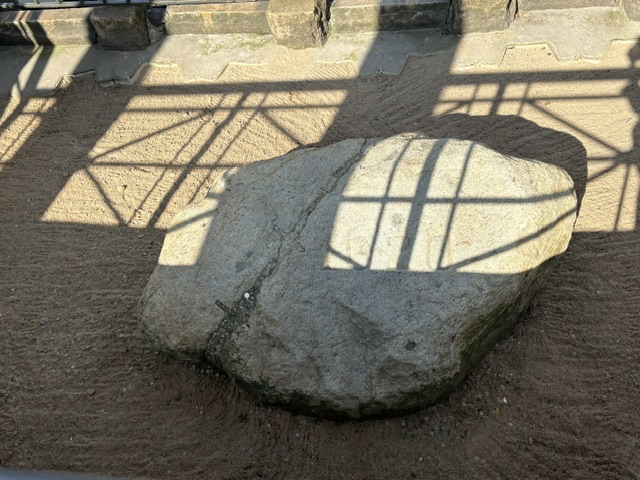
Few objects in American history are as instantly recognizable—or surrounded by as much legend—as Plymouth Rock. Sitting today beneath its granite portico on the edge of Plymouth Harbor, the rock has come to symbolize the arrival of the Mayflower passengers and the beginnings of Plymouth Colony in 1620. Yet there is no contemporary account stating […]
Pilgrim Sarcophagus
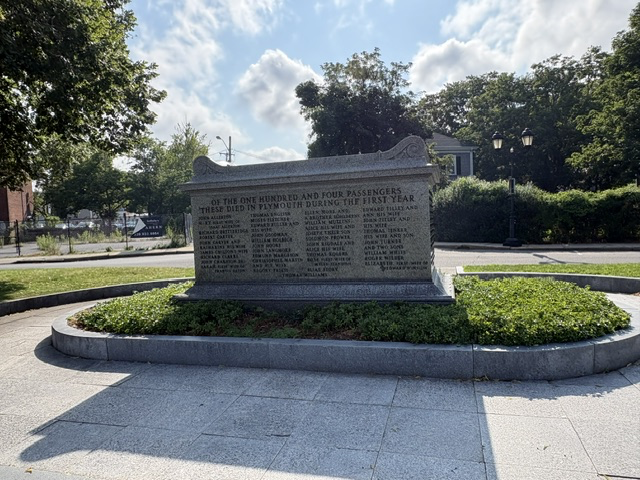
On Cole’s Hill, overlooking the harbor, stands this large granite monument containing the remains of some of the Mayflower passengers who died during Plymouth Colony’s devastating first winter. It is known as the Pilgrim Sarcophagus, and it marks the site of the colony’s first burial ground. The winter of 1620–1621 was catastrophic. Of the 102 […]
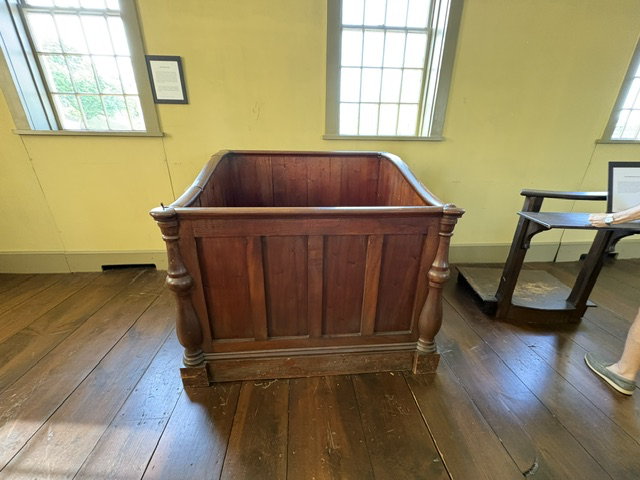
Sheriff Box
Another distinctive feature inside Plymouth’s 1749 Court House is the sheriff’s box. Its position within the courtroom reflected the important role the sheriff played in keeping the court functioning and maintaining order while the justices conducted the business of the day. The sheriff was responsible for much more than simply guarding the courtroom. He brought […]
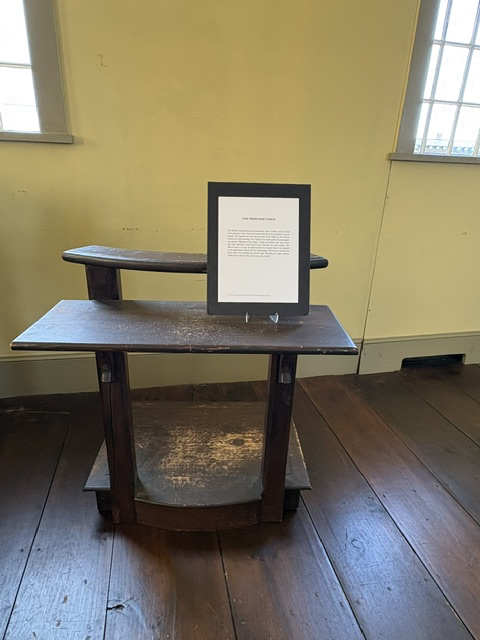
Prisoner Dock
One of the more sobering features inside Plymouth’s 1749 Court House is the prisoner’s dock. This small enclosed platform represents the place where an accused person would stand during court proceedings, physically separated from the judges, attorneys, witnesses, and spectators around them. According to the courthouse exhibit, the sheriff would bring the accused into the […]
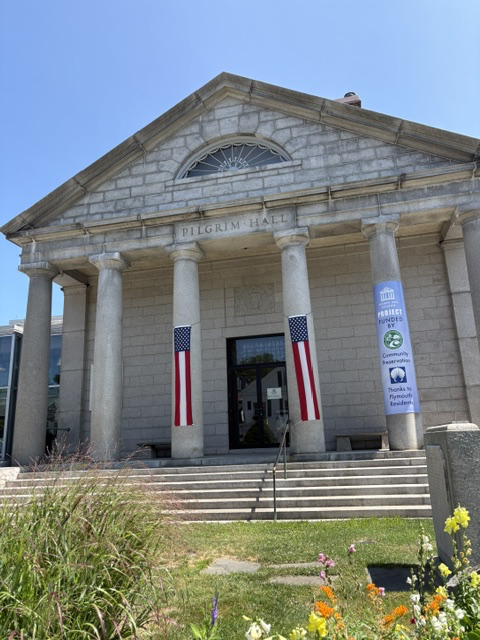
Pilgrim Hall Museum
Just a few blocks from the Plymouth waterfront stands Pilgrim Hall Museum, another place where the story of Plymouth becomes tangible. Founded by the Pilgrim Society in 1824 and opened the following year, it is the oldest continuously operating public museum in the United States. The imposing granite building was designed specifically to preserve the […]
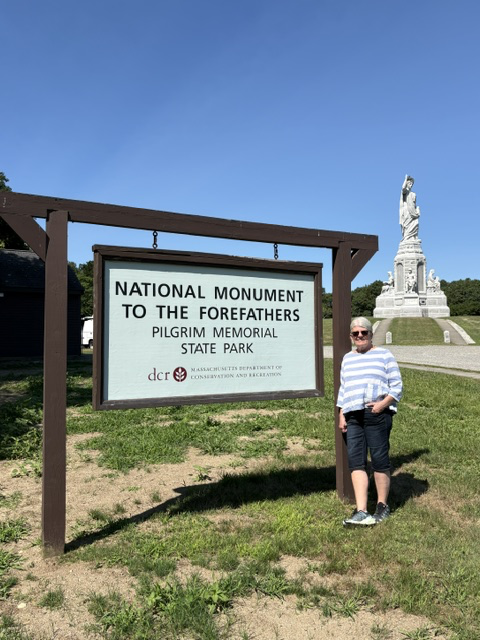
National Monument to the Forefathers
We have visited Plymouth many times over the years, so I am still amazed that it took us this long to discover the National Monument to the Forefathers. When we finally visited this year, I found it almost mind-blowing. Rising more than 80 feet above us, the monument is enormous, intricately sculpted, and filled with […]
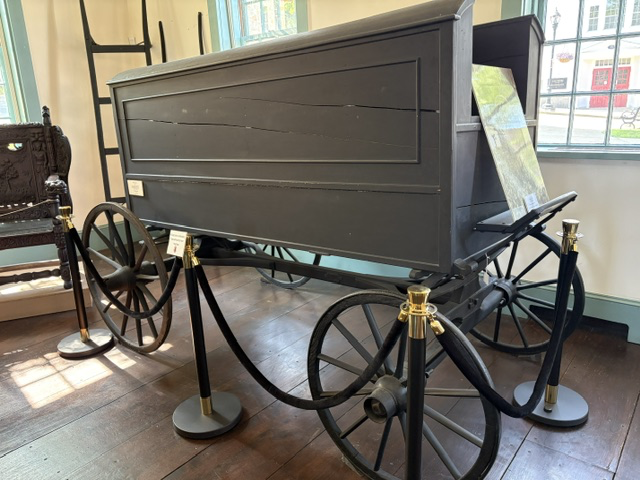
Oldest Hearse
Inside Plymouth’s historic courthouse, we came across an object that tells a very different kind of hometown story. This horse-drawn hearse dates to about 1820 and is believed to be the oldest surviving hearse in Plymouth. According to the exhibit, it was stored for many years in a small stone building behind First Church. The […]
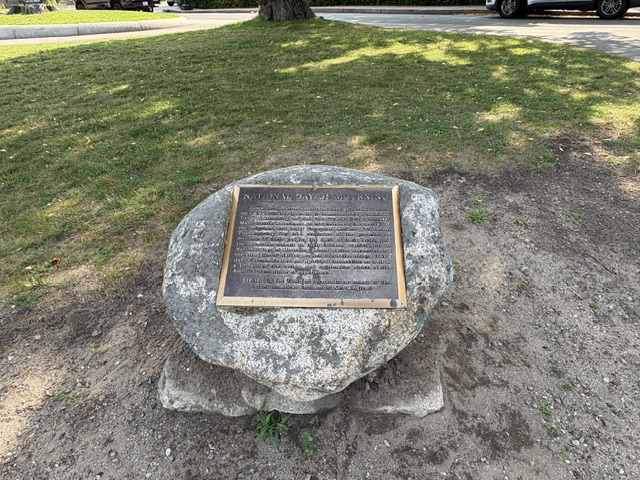
National Day of Mourning
Just a short distance from the statue of Massasoit on Cole’s Hill is this small marker recognizing the National Day of Mourning. It presents another part of Plymouth’s history and reminds us that the events of 1620 and 1621 have been remembered very differently by different people. The National Day of Mourning began in 1970, […]
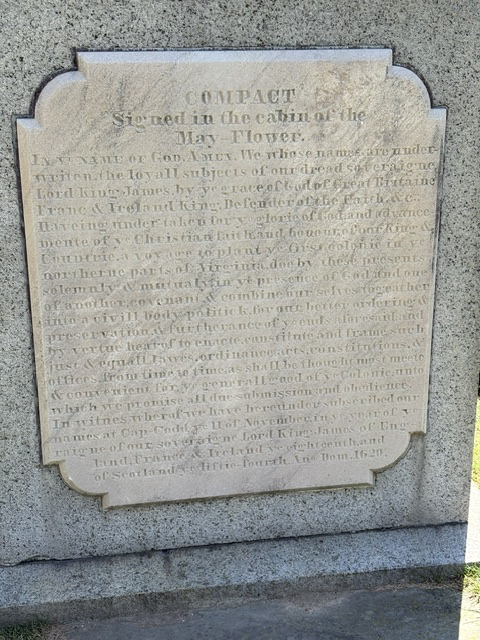
Mayflower Compact
Carved into this stone is the text of the Mayflower Compact, a remarkably short agreement created at an extraordinary moment. Long before there was a permanent settlement at Plymouth, before houses had been built or fields planted, the passengers aboard the Mayflower faced a fundamental question: how would they govern themselves once they went ashore? […]
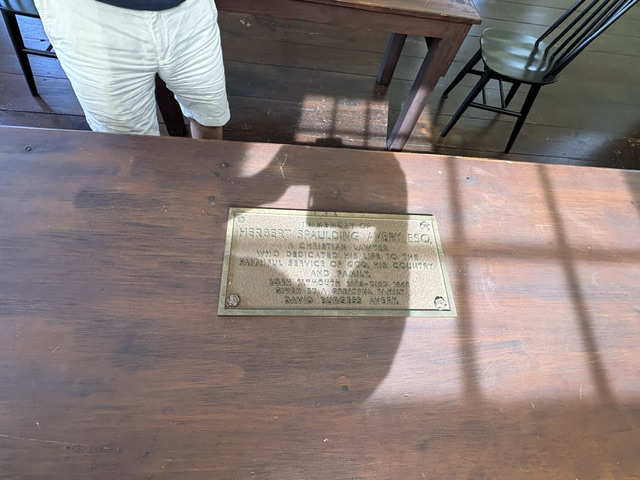
Mercy Otis Warren’s Table
Among the furnishings inside Plymouth’s 1749 Court House is this table associated with Mercy Otis Warren, one of the most remarkable women of Revolutionary-era Massachusetts. At first it appears to be simply another piece of old courtroom furniture, but the small brass plaque reveals its connection to a woman whose writing helped shape the political […]
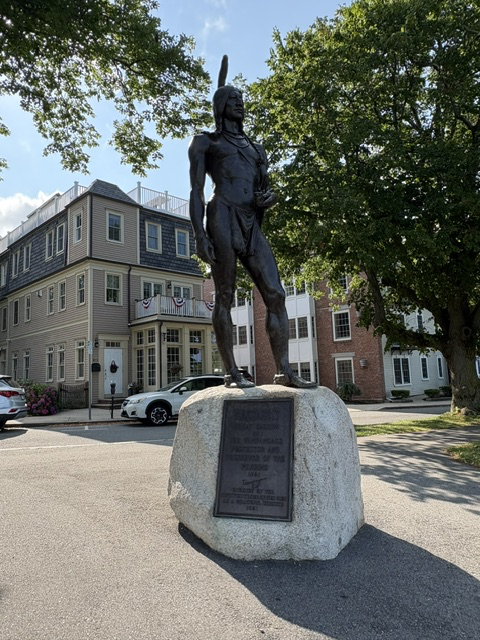
Massasoit Statue
Overlooking Plymouth Harbor from Cole’s Hill stands this bronze statue of Massasoit, also known as Ousamequin, the Pokanoket sachem whose leadership played an essential role in the survival of the newly established Plymouth Colony. He was not simply a figure who appeared in the Pilgrim story. He was the leader of a people who had […]

