Pilgrim Sarcophagus
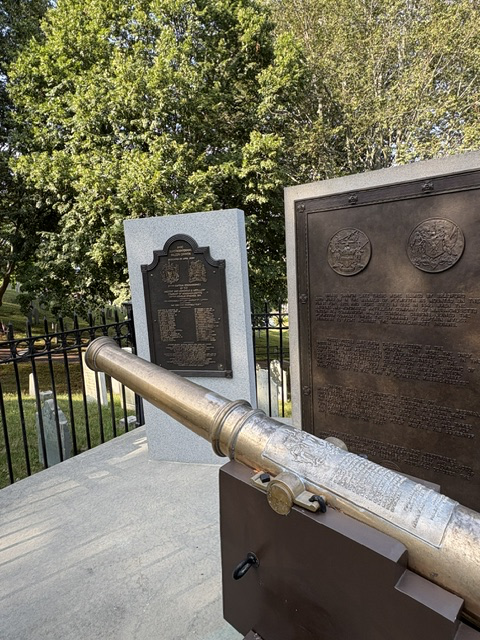
On Cole’s Hill, overlooking the harbor, stands this large granite monument containing the remains of some of the Mayflower passengers who died during Plymouth Colony’s devastating first winter. It is known as the Pilgrim Sarcophagus, and it marks the site of the colony’s first burial ground.
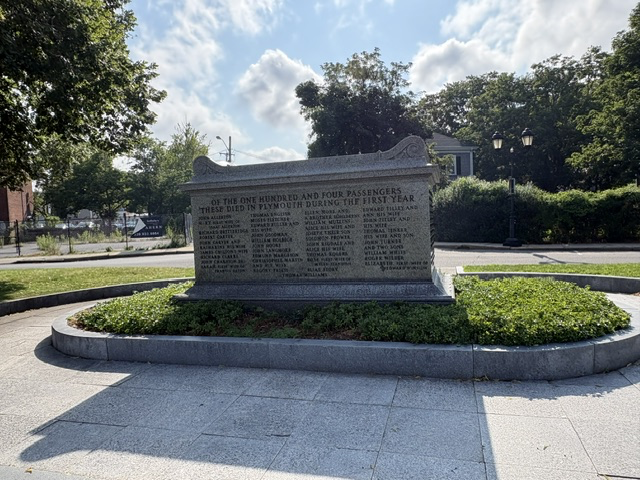
The winter of 1620–1621 was catastrophic. Of the 102 passengers who had crossed the Atlantic aboard the Mayflower, nearly half died during the first year, many during those first winter months. Disease, exposure, inadequate shelter, and poor nutrition took an enormous toll. William Bradford later described this period as the “general sickness”, when at times only a handful of people remained healthy enough to care for everyone else.
The dead were buried here on Cole’s Hill, reportedly in unmarked graves. Tradition holds that the graves were deliberately concealed so that the Wampanoag would not know how severely the colony’s population had been reduced. Over the centuries, erosion and construction exposed human remains on the hillside. Some were collected and eventually placed within this monument. The inscription tells us that the bones had been found “at various times” and preserved before being deposited here.
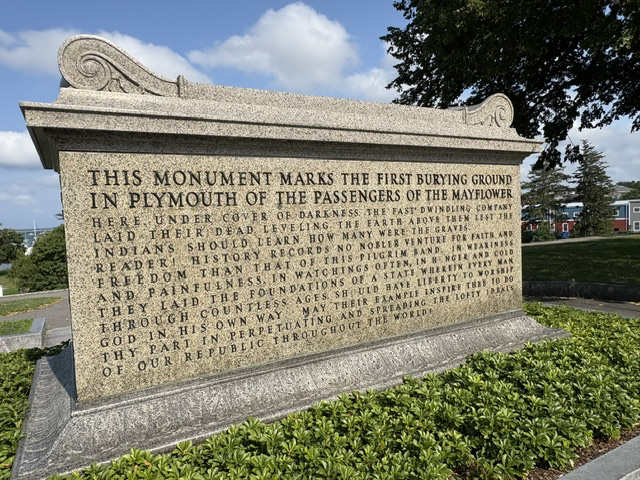
The opposite side of the monument lists the names of the Mayflower passengers who died during that first year. Reading the names together makes the scale of the loss much more personal. These were husbands and wives, parents and children who had survived the Atlantic crossing only to die shortly after reaching the place where they hoped to begin again.
From Cole’s Hill we can see Plymouth Harbor, Plymouth Rock, and the place where the Mayflower would have been anchored. Yet beneath this beautiful view is the first burial ground of the settlement. Before Plymouth became a town, before its familiar landmarks and monuments, there was this first winter and a small community struggling simply to survive. The Pilgrim Sarcophagus preserves that difficult beginning as part of the landscape where it happened.
Read More
Read More From Nancy
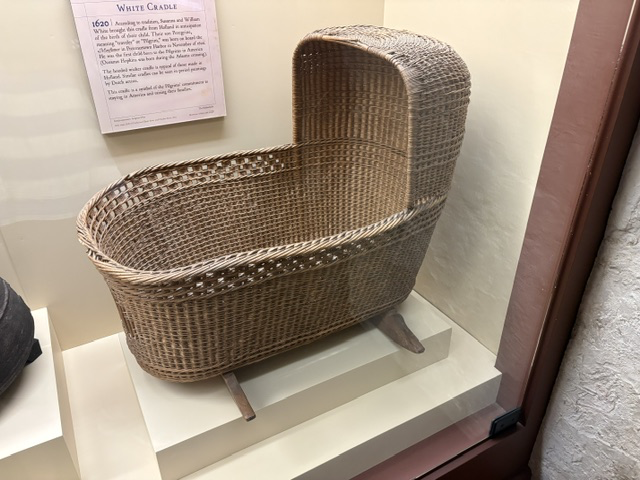
The White Cradle
Among the objects we encountered while exploring Plymouth was this simple wicker cradle. According to tradition, it belonged to Susanna and William White and was brought with them from Holland when they sailed aboard the Mayflower in 1620. Susanna White was pregnant during the Atlantic crossing. The Mayflower left Plymouth, England, in September with more […]
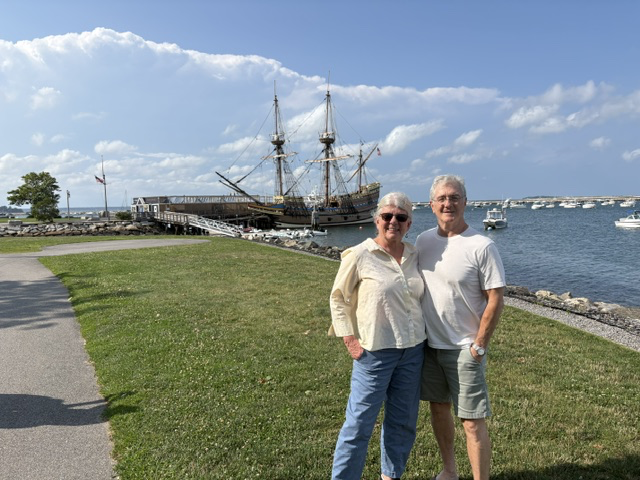
The Mayflower
Standing along the Plymouth waterfront, Mayflower II immediately connects the town to the story that has defined it for more than four centuries. The ship behind us is not the original Mayflower, but a full-scale reproduction built in England and sailed across the Atlantic in 1957 as a symbol of friendship between the United States […]
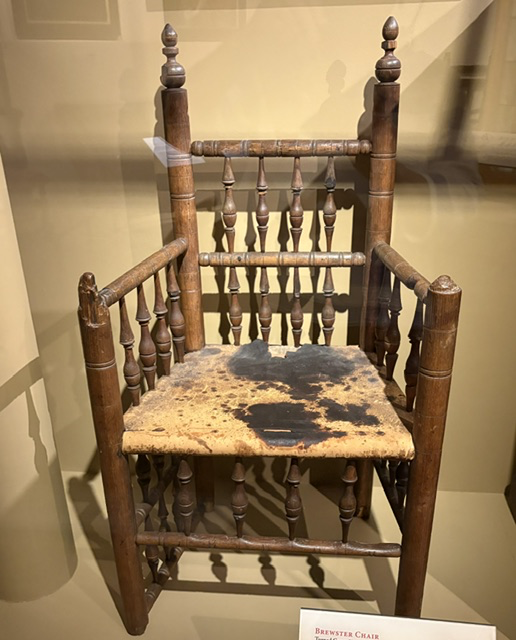
Brewster Chair
Among the objects in the Pilgrim Hall Museum, this simple wooden chair caught my attention. Known as the Brewster Chair and dating from approximately 1630–1670, it is believed to have belonged to William Brewster, one of the Mayflower passengers and the spiritual leader of Plymouth Colony. Brewster was already about 54 years old when he […]

