Mercy Otis Warren’s Table
Among the furnishings inside Plymouth’s 1749 Court House is this table associated with Mercy Otis Warren, one of the most remarkable women of Revolutionary-era Massachusetts. At first it appears to be simply another piece of old courtroom furniture, but the small brass plaque reveals its connection to a woman whose writing helped shape the political conversation surrounding American independence.
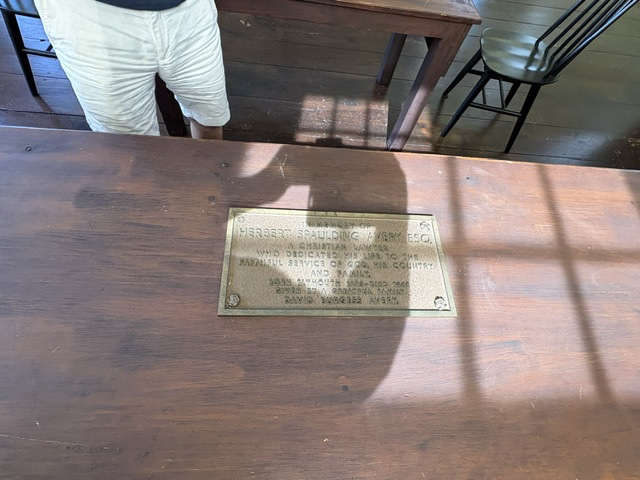
Mercy Otis Warren was born in Barnstable in 1728 into a politically active family. Her brother, James Otis Jr., became one of Massachusetts’s earliest and most outspoken critics of British policies. In 1754, Mercy married James Warren and moved to Plymouth. James became a prominent Patriot leader and served as president of the Massachusetts Provincial Congress, while their Plymouth home became a gathering place for people involved in the growing resistance to British rule.
Mercy was unusual for a woman of her generation in both the depth of her education and the public role she created for herself. Women could not vote or hold political office, but she discovered that the written word could give her a political voice. During the years before the Revolution, she wrote satirical plays and other works attacking British officials and policies. Some of these writings were published anonymously, allowing her ideas to circulate while her identity remained largely outside public view.
Her circle included some of the most important figures of the Revolution. John and Abigail Adams were close friends, and Mercy carried on extensive correspondence with both of them. Thomas Jefferson also admired her work. Through these relationships and her writing, she was not simply observing the Revolution from Plymouth. She was participating in the intellectual debates surrounding independence and the kind of government that should follow it.
After the Revolution, she undertook an even more ambitious project. In 1805, at the age of 77, she published her three-volume History of the Rise, Progress, and Termination of the American Revolution. It was one of the earliest substantial histories of the Revolution written by someone who had personally known many of its leading participants.
Her willingness to express her own judgment sometimes came at a cost. In her history she criticized John Adams for what she believed were increasingly aristocratic tendencies. Adams was deeply offended, and the disagreement damaged their long friendship. Their eventual reconciliation reminds us that these famous Revolutionary figures were not simply names in history books; they were friends, correspondents, political allies, and sometimes bitter critics of one another.
That makes this table particularly interesting to find inside Plymouth’s old courthouse. James Warren served as clerk of the court here, while Mercy developed into a political thinker, writer, and historian in her own right. The Warrens lived in a Plymouth that was becoming deeply involved in the political arguments that would eventually lead to independence.
This is simply a wooden table with a small plaque attached to it, yet the name Mercy Otis Warren takes us from this quiet courtroom into the political world of Revolutionary America. At a time when women had almost no formal place in politics, she found another way into the conversation and made certain that her voice became part of the historical record.
Read More
Read More From Nancy
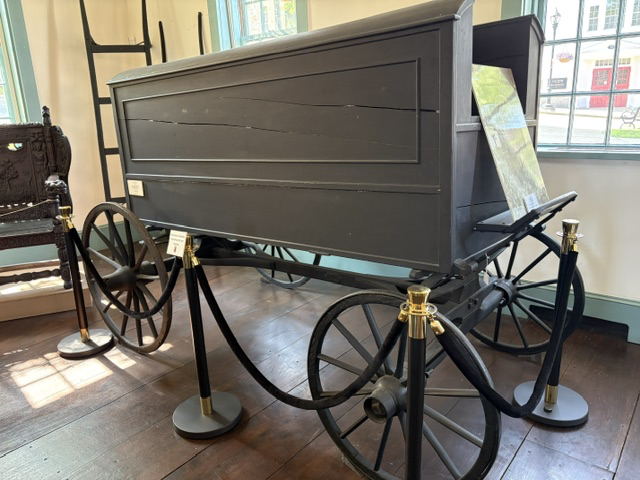
Oldest Hearse
Inside Plymouth’s historic courthouse, we came across an object that tells a very different kind of hometown story. This horse-drawn hearse dates to about 1820 and is believed to be the oldest surviving hearse in Plymouth. According to the exhibit, it was stored for many years in a small stone building behind First Church. The […]
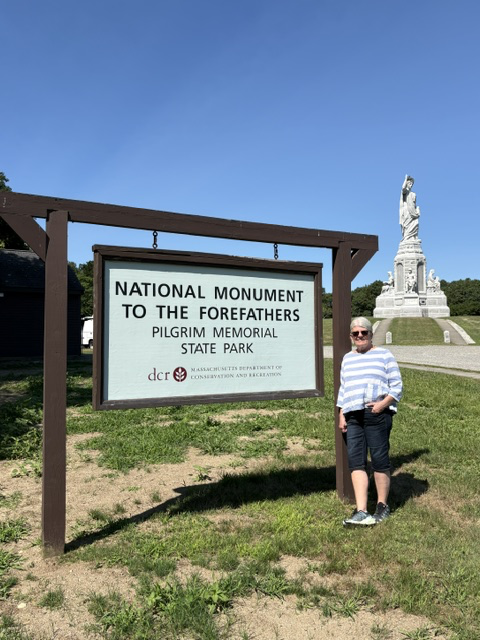
National Monument to the Forefathers
We have visited Plymouth many times over the years, so I am still amazed that it took us this long to discover the National Monument to the Forefathers. When we finally visited this year, I found it almost mind-blowing. Rising more than 80 feet above us, the monument is enormous, intricately sculpted, and filled with […]
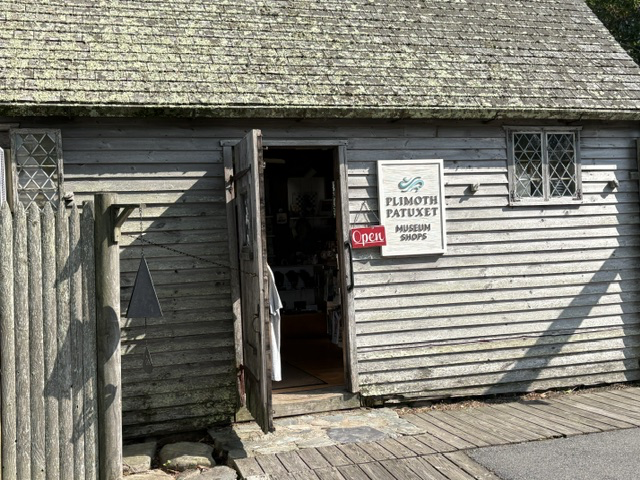
Plimouth Patuxet Museums
During my homeschooling years, we made many trips to what was then called Plimoth Plantation. It was one of those places where history became much more than something we read about in a book. As we walked through the recreated 17th-century English village, the people we met remained in character, speaking and responding as though […]

