Plymouth Rock
Few objects in American history are as instantly recognizable—or surrounded by as much legend—as Plymouth Rock. Sitting today beneath its granite portico on the edge of Plymouth Harbor, the rock has come to symbolize the arrival of the Mayflower passengers and the beginnings of Plymouth Colony in 1620. Yet there is no contemporary account stating that the Pilgrims actually stepped onto this particular rock when they came ashore.
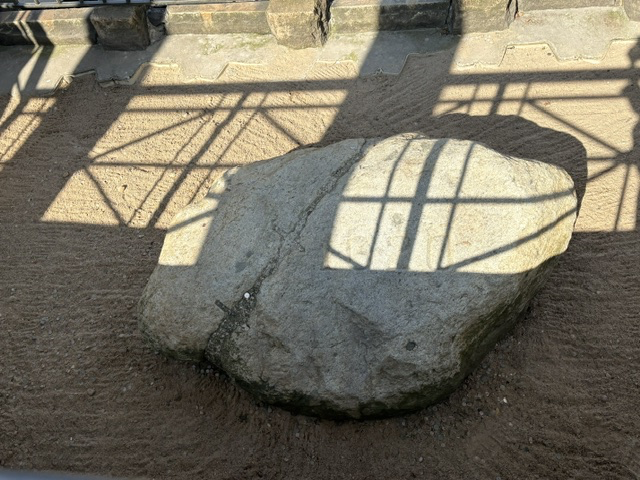
The story did not emerge until more than a century later. In 1741, when a wharf was going to be built over the site, 94-year-old Thomas Faunce reportedly identified the rock as the place where the Pilgrims had first landed. Faunce’s father had arrived in Plymouth in 1623, and according to tradition, the story had been passed down through the earliest generations of the colony. Whether his recollection was historically accurate can never be proven, but from that moment the rock became an increasingly important symbol.
Plymouth Rock itself has had quite a journey. In 1774, as revolutionary sentiment was growing, townspeople attempted to move it to Plymouth’s town square. During the effort, the rock split in two. One portion remained near the waterfront while the other was moved to the square and later to Pilgrim Hall. In 1880, the pieces were reunited at the waterfront, and the date “1620” was carved into the rock. The classical granite portico we are standing beside was completed in 1921 as part of Plymouth’s 300th anniversary commemorations.
After centuries of paintings, stories, school lessons, and mythology, the actual rock is relatively small. Perhaps that is part of what makes standing here so interesting. Its importance has never really been about its size, or even about proving that a Pilgrim stepped upon it. Plymouth Rock has endured because generations of Americans chose this simple piece of stone as a physical connection to a story that began here more than four centuries ago.
Read More From Nancy
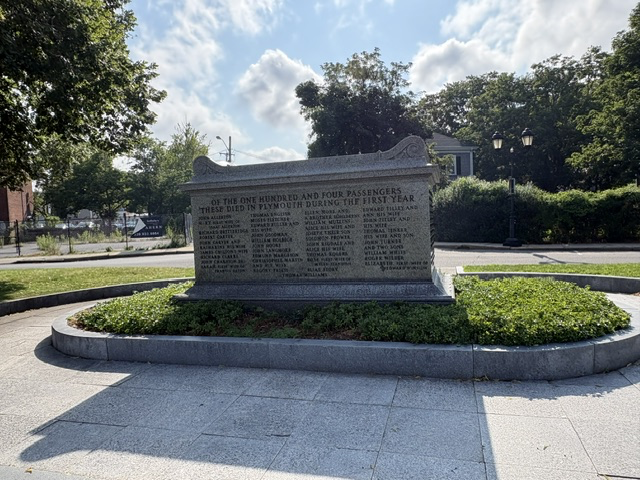
Pilgrim Sarcophagus
On Cole’s Hill, overlooking the harbor, stands this large granite monument containing the remains of some of the Mayflower passengers who died during Plymouth Colony’s devastating first winter. It is known as the Pilgrim Sarcophagus, and it marks the site of the colony’s first burial ground. The winter of 1620–1621 was catastrophic. Of the 102 […]
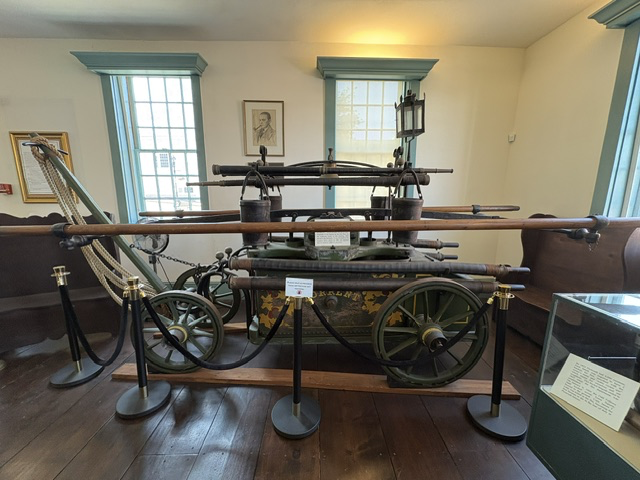
Torrent No. 4
Inside Plymouth’s historic courthouse, we found another remarkable piece of the town’s everyday history: Torrent No. 4, a hand-drawn suction fire engine built in Boston by Stephen Thayer in 1828. Long before motorized fire trucks and modern hydrants, equipment like this represented some of the best technology available to a community trying to protect its […]
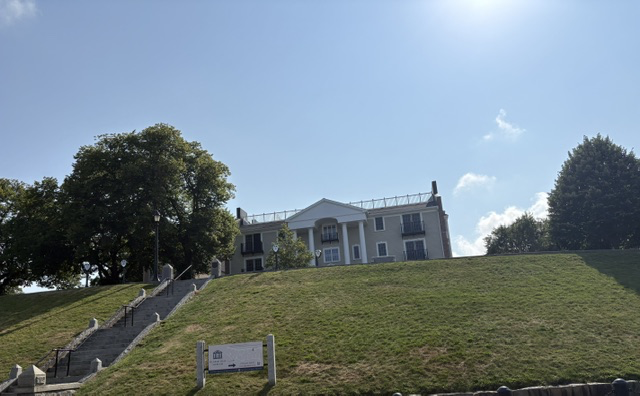
Cole’s Hill
Rising steeply above Plymouth’s waterfront, Cole’s Hill was the colony’s first burial ground. During the devastating winter of 1620–1621, nearly half of the Mayflower’s passengers died from disease, exposure, and the effects of their difficult voyage. Many were buried here in graves overlooking the harbor where their ship remained anchored. According to tradition, the settlers […]

