Prisoner Dock
One of the more sobering features inside Plymouth’s 1749 Court House is the prisoner’s dock. This small enclosed platform represents the place where an accused person would stand during court proceedings, physically separated from the judges, attorneys, witnesses, and spectators around them.
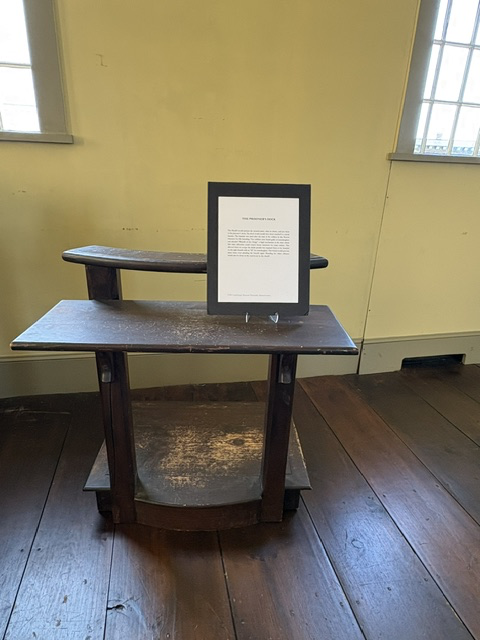
According to the courthouse exhibit, the sheriff would bring the accused into the courtroom, often in chains, and place the prisoner in the dock. The clerk would read the charges and the prisoner would enter a plea before the proceedings continued. From this confined space, the accused would listen as witnesses testified and the case against them was presented.
The records associated with this courthouse include offenses that give us an interesting glimpse into both crime and social expectations in colonial Plymouth. People could appear before the court for theft, assault, drunkenness, and other familiar crimes, but also for behavior that reflected the moral standards of the period. The exhibit notes cases involving fornication and even a woman charged with “Defamation of the Clergy”.
The physical design of the dock is particularly striking. Standing inside it would immediately set the accused apart from everyone else in the courtroom. The raised sides restricted movement while leaving the prisoner completely visible to the court and spectators. Before a verdict had even been reached, everyone in the room knew exactly who was on trial.

Read More From Nancy
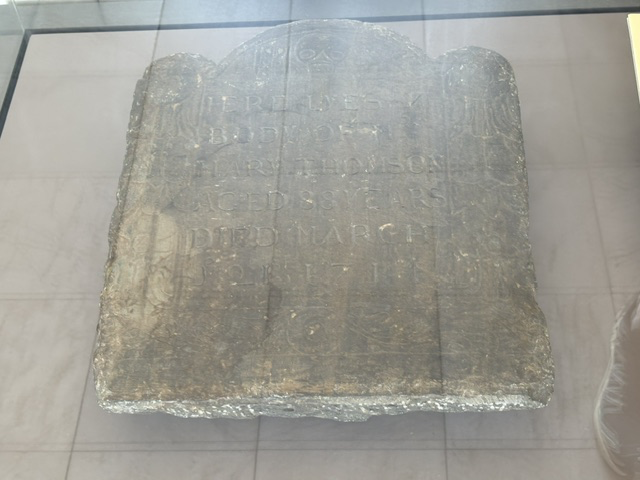
Mary Cooke Thompson Gravestone
Among the artifacts at Pilgrim Hall Museum is this early New England gravestone for Mary Cooke Thompson, a woman with a direct connection to one of the Mayflower families. Mary was the daughter of Mayflower passenger Francis Cooke and his wife, Hester Mahieu. Mary was born in Leiden in the Netherlands, where the English Separatist […]
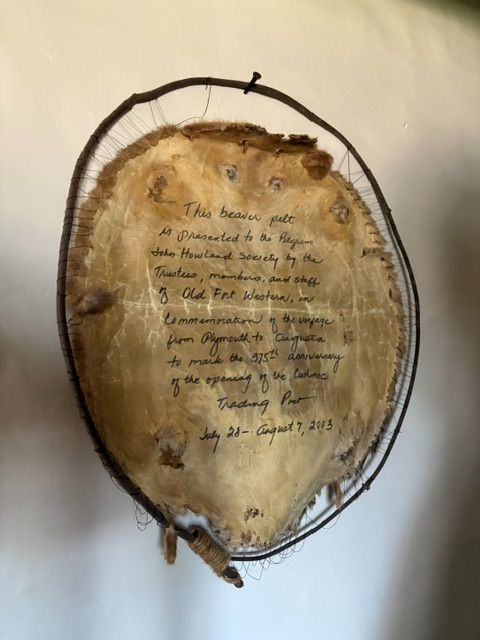
A Beaver Pelt
A beaver pelt stretched within a wooden frame commemorates a connection between Plymouth, Massachusetts, and Augusta, Maine. Its handwritten inscription records a voyage from Plymouth to Augusta in 2003, marking the 375th anniversary of the opening of the Cushnoc trading post. Presented to the Pilgrim John Howland Society by the trustees, members, and staff of […]
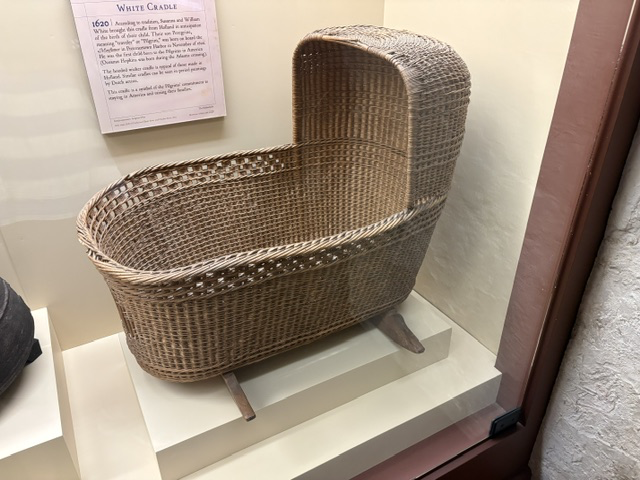
The White Cradle
Among the objects we encountered while exploring Plymouth was this simple wicker cradle. According to tradition, it belonged to Susanna and William White and was brought with them from Holland when they sailed aboard the Mayflower in 1620. Susanna White was pregnant during the Atlantic crossing. The Mayflower left Plymouth, England, in September with more […]

