National Monument to the Forefathers
We have visited Plymouth many times over the years, so I am still amazed that it took us this long to discover the National Monument to the Forefathers. When we finally visited this year, I found it almost mind-blowing. Rising more than 80 feet above us, the monument is enormous, intricately sculpted, and filled with symbolism. I found myself walking around it slowly, photographing each figure and trying to understand what every part was intended to represent.
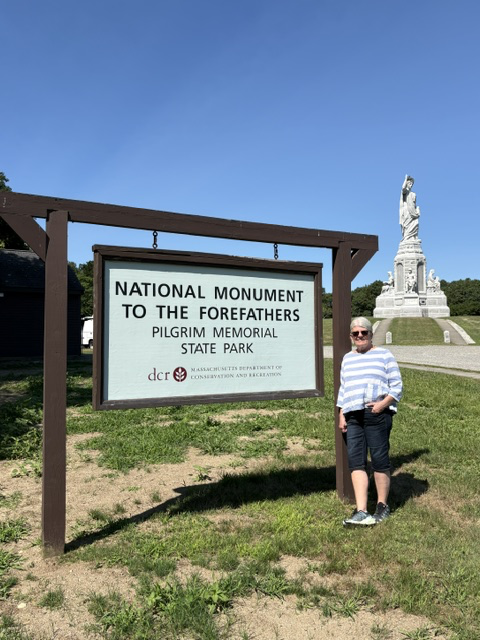
The idea for the monument came from the Pilgrim Society, which wanted to create a great national memorial to the Mayflower passengers and the principles the Society believed had shaped the Plymouth settlement. The cornerstone was laid in 1859, although the Civil War and the enormous cost and complexity of the project delayed its completion for decades. The monument was finally dedicated in 1889.
The original overall design was conceived by Boston architect and artist Hammatt Billings, who envisioned a monumental allegorical work rather than simply a statue of an individual Pilgrim. Billings died in 1874, long before the monument was completed, and other artists and sculptors continued the work. His brother, Joseph Edward Billings, helped carry the project forward, while sculptor Carl Conrads of the New England Granite Works created the great figure of Faith and other sculptural elements. The monument that emerged was therefore the product of several artists and craftsmen working over many years, but Hammatt Billings’ original concept remained at its heart.
Dedicated in 1889, the monument was created to honor the ideals that its builders believed had guided the Mayflower passengers in establishing Plymouth Colony. At the very top stands the monumental figure of Faith, one foot resting upon Plymouth Rock. She points upward toward heaven while holding an open Bible, establishing the central idea around which the rest of the monument was designed.
Below Faith are four enormous, seated figures representing Morality, Law, Education, and Liberty. Each is surrounded by additional figures and carved details that expand upon those ideas. Morality is accompanied by representations of Prophet and Evangelist; Law by Justice and Mercy; Education by Youth and Wisdom; and Liberty by Peace and Tyranny Overthrown. Together they create an extraordinary sculptural statement about the values that the monument’s 19th-century creators believed were necessary to build and sustain a successful society.
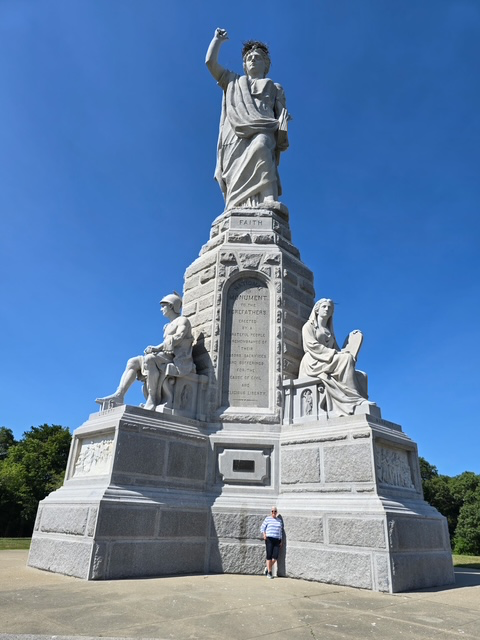
Even the monument’s scale is part of its impact. At approximately 81 feet tall, it is often described as the largest solid-granite monument in the United States. Construction began decades before its dedication, and the final work represents the efforts of several sculptors and generations of people committed to creating a permanent memorial to the Pilgrim story.
What I find particularly interesting is why they chose to build the monument this way. Rather than simply commemorating the Mayflower voyage or portraying the Pilgrims themselves, its creators attempted to express what they believed the Pilgrims had contributed to the nation. Faith stands above everything, but beneath her are the principles of Morality, Law, Education, and Liberty. Whether we interpret those ideals in exactly the same way today or not, the monument gives us an extraordinary glimpse into how Americans in the 19th century understood the Pilgrim legacy and wanted it remembered.
What surprised me almost as much as the monument itself was how quiet the park was. We seemed to be the only people there. Plymouth Rock and the waterfront attract crowds, yet only a short distance away stands this extraordinary monument with almost no one around it. After so many visits to Plymouth, we had found something completely new to us—and one of the most impressive monuments we have encountered anywhere in our travels.
Read More From Nancy
The Jabez Howland House
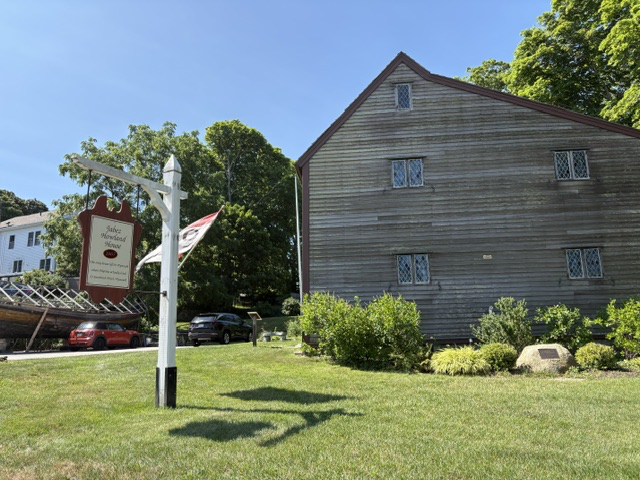
Among the many historic houses in Plymouth, the Jabez Howland House has a distinction that makes it extraordinary. Built about 1667, it is considered the only surviving building in Plymouth where people who actually arrived aboard the Mayflower are known to have spent time. Those people were John Howland and his wife, Elizabeth Tilley Howland. […]
Spectator Seating
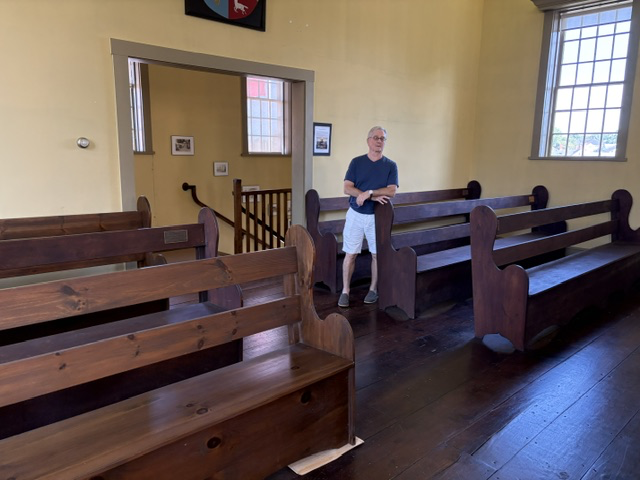
Along the sides and rear of the courtroom in Plymouth’s 1749 Court House are rows of simple wooden benches where members of the public could sit and watch the proceedings. Marty standing among them gives a good sense of just how intimate this courtroom would have been. There was very little distance between the spectators […]
Sheriff Box
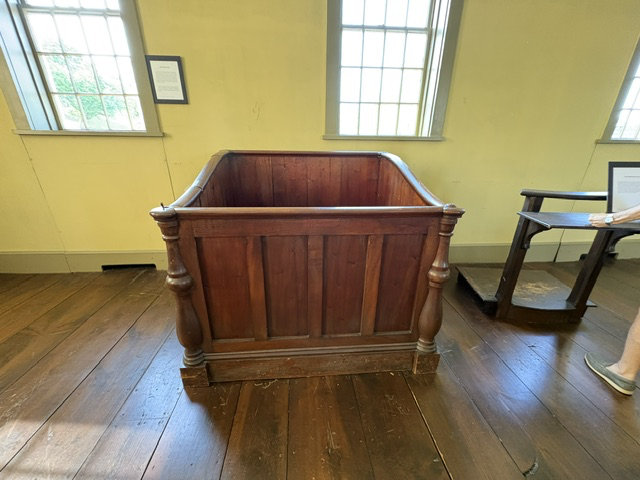
Another distinctive feature inside Plymouth’s 1749 Court House is the sheriff’s box. Its position within the courtroom reflected the important role the sheriff played in keeping the court functioning and maintaining order while the justices conducted the business of the day. The sheriff was responsible for much more than simply guarding the courtroom. He brought […]

