National Day of Mourning
Just a short distance from the statue of Massasoit on Cole’s Hill is this small marker recognizing the National Day of Mourning. It presents another part of Plymouth’s history and reminds us that the events of 1620 and 1621 have been remembered very differently by different people.
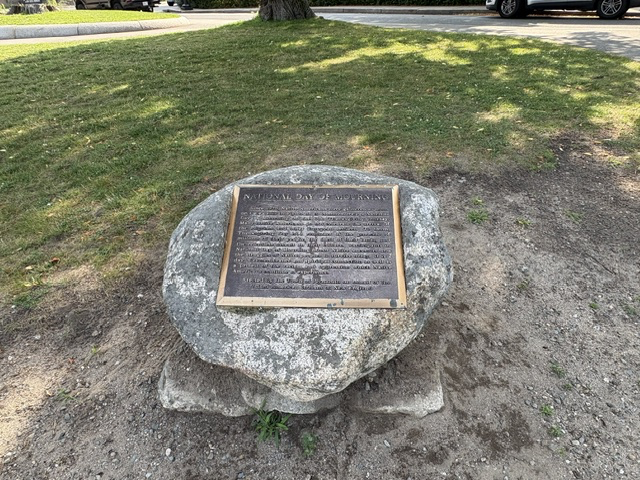
The National Day of Mourning began in 1970, when Wampanoag leader Frank James, also known as Wamsutta, was invited to speak at a banquet commemorating the 350th anniversary of the Pilgrims’ arrival. His prepared remarks offered a Native perspective on the consequences of European settlement. When organizers objected to his speech and offered a revised version, James chose not to participate in the banquet. Instead, Native people and their supporters gathered on Cole’s Hill, overlooking Plymouth Rock, for what became the first National Day of Mourning.
That gathering has continued each Thanksgiving Day since then. For participants, it is a day to remember Native ancestors, acknowledge the losses experienced by Indigenous peoples following European colonization, and affirm the survival and continuing presence of Native communities.
I find it particularly meaningful that this marker and the statue of Massasoit stand so close to one another. The Massasoit monument recalls a moment in 1621 when a visionary Native leader chose diplomacy and cooperation with the newly arrived settlers. This marker reminds us that the history that followed became far more difficult. Together, they demonstrate something important about visiting historic places: we do not have to erase one story to understand another.
Read More From Nancy
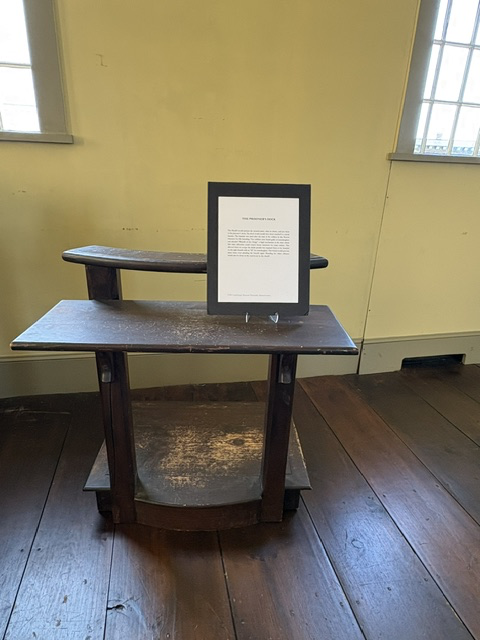
Prisoner Dock
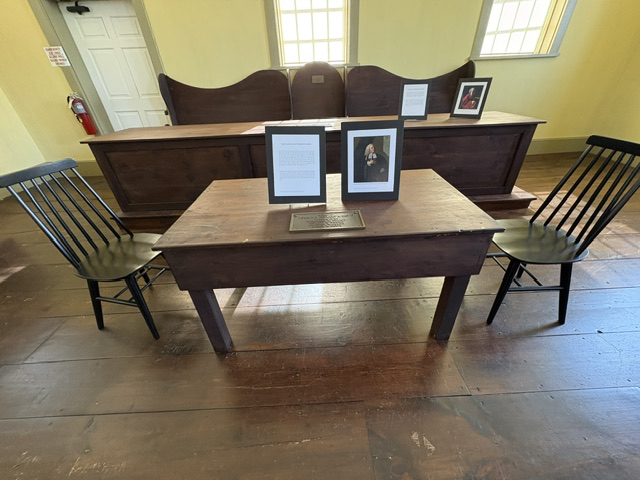
One of the more sobering features inside Plymouth’s 1749 Court House is the prisoner’s dock. This small enclosed platform represents the place where an accused person would stand during court proceedings, physically separated from the judges, attorneys, witnesses, and spectators around them. According to the courthouse exhibit, the sheriff would bring the accused into the […]
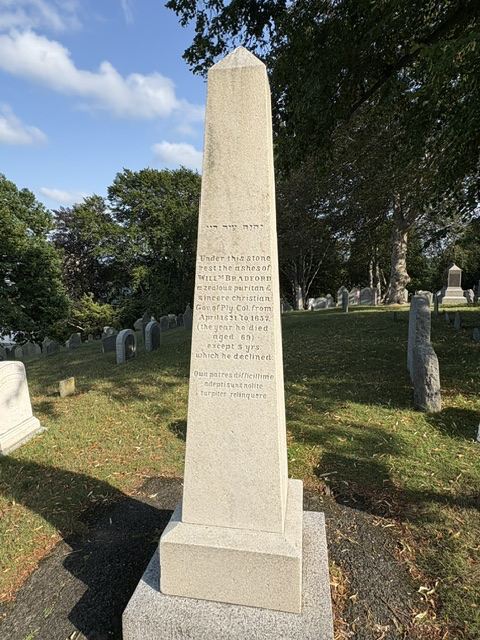
Governor William Bradford Memorial
This granite obelisk on Burial Hill honors William Bradford, one of the Mayflower passengers and a central figure in the establishment of Plymouth Colony. After Governor John Carver died in 1621, Bradford was chosen to lead the struggling colony. He continued to serve as governor for most of the years until his death in 1657, […]
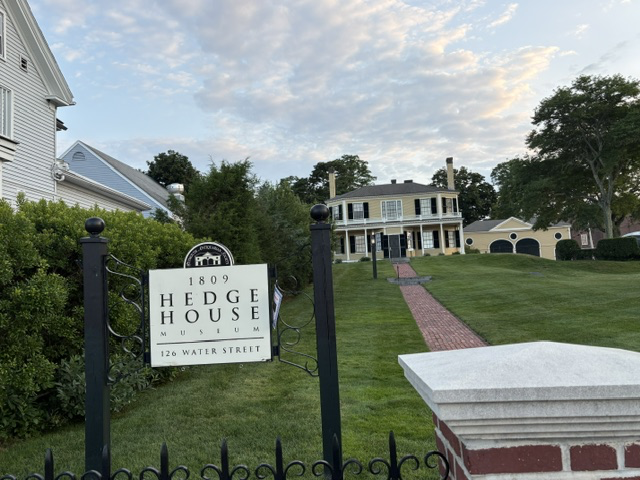
Hedge House
Along Water Street, not far from Plymouth Harbor, stands the elegant Hedge House, a reminder that Plymouth’s story extends far beyond the arrival of the Mayflower. Built in 1809, nearly two centuries after the founding of the colony, the house represents a very different period in the town’s history when Plymouth had developed into a […]

