Saint John, NB
Located where the Saint John River meets the Bay of Fundy, Saint John is a historic port city shaped by the sea. Its sheltered harbor supported fishing, shipbuilding, trade, and immigration, connecting New Brunswick with communities throughout the Atlantic world.
Thousands of Loyalists arrived here following the American Revolution, establishing the settlements of Parr Town and Carleton. In 1785, the two communities were united by royal charter to create Saint John, making it the first incorporated city in Canada. Nearly a century later, the Great Fire of 1877 destroyed more than 1,600 buildings and left approximately 13,000 people homeless. The city quickly rebuilt, filling its streets with the substantial brick and stone buildings that still give Uptown Saint John much of its historic character.
Today, Saint John is known as “The Port City,” a name that reflects the continuing importance of its waterfront. Its City Market, Loyalist House, churches, public squares, burial grounds, and restored commercial buildings preserve the stories of Loyalist settlement, immigration, maritime commerce, disaster, and recovery. Saint John is a city that has repeatedly been shaped by arrivals and departures and by the determination of those who chose to begin again.
Recent Posts
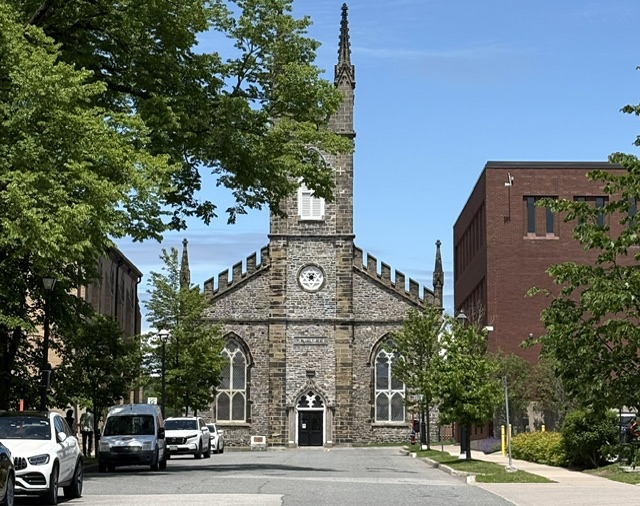
The Stone Church
At the end of Wellington Row, the narrow spire of St. John’s Anglican Church rises above one of Saint John’s oldest surviving places of worship. Commonly called the Stone Church, it has stood on Carleton Street for two centuries, witnessing the city’s growth, its devastating fires, and the many changes that have reshaped the surrounding […]
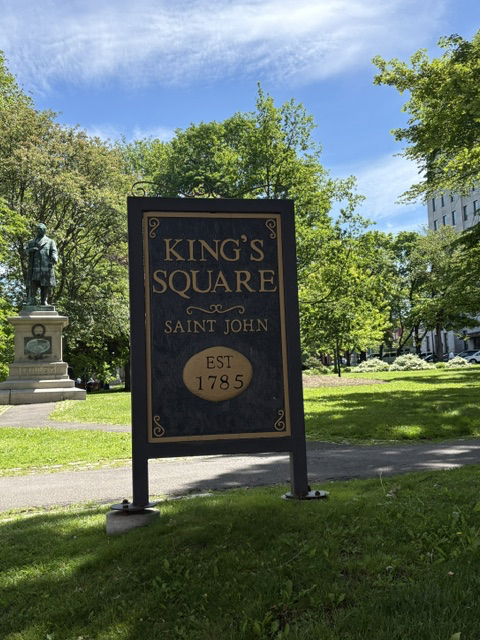
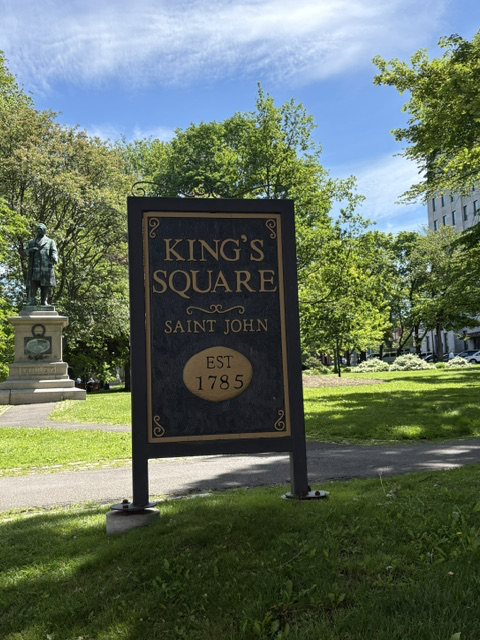
King’s Square
At the center of Uptown Saint John is King’s Square, a public space that has served the city since its earliest years. Named for King George III, the land was granted to Saint John through the royal charter that incorporated the city in 1785. Its history therefore began alongside that of Saint John itself, which […]
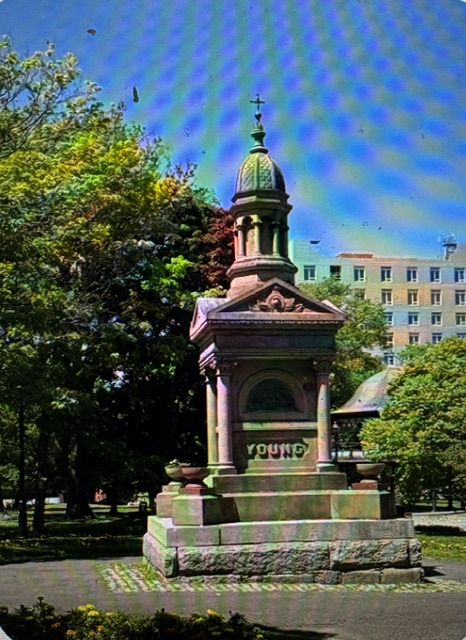
Young Memorial
The Young Memorial in King’s Square remembers an ordinary young man whose final act became part of Saint John’s civic history. John Frederick Young was only nineteen years old when he drowned in Courtenay Bay in 1890 while attempting to rescue ten-year-old Frederick E. “Freddie” Mundee. Young was a factory worker who had come to […]
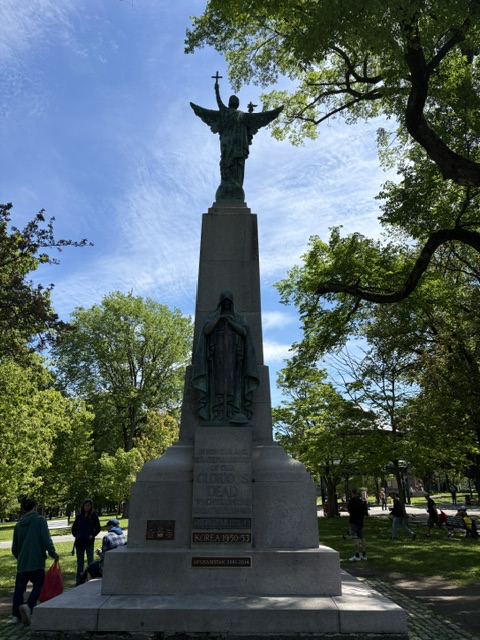
Saint John War Memorial
Standing among the trees of King’s Square, the Saint John War Memorial honors the men and women of the city who served and died in military conflicts. The monument was originally created to remember those lost during the First World War, but later inscriptions expanded its meaning to include the Second World War, the Korean […]
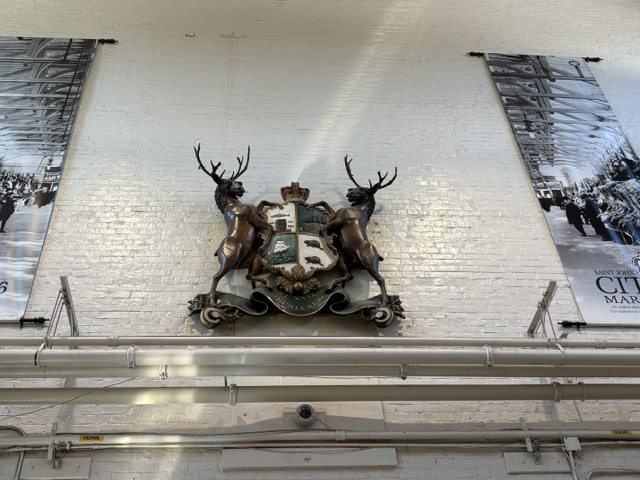
Saint John Coat of Arms
Mounted high upon the wall inside the Saint John City Market is the city’s historic coat of arms. Surrounded by two antlered moose and topped by a crown, the emblem brings together symbols representing the natural resources, maritime industries, and British institutions that shaped Saint John. The shield is divided into sections containing images associated […]
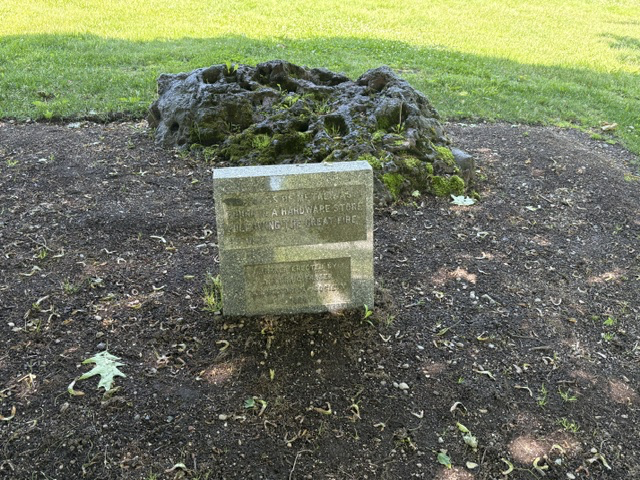
Fused Metal from the Great Fire of 1877
Resting quietly in King’s Square is a misshapen mass of metal that could easily be mistaken for an ordinary rock. It is a collection of metal objects fused together by the intense heat of the Great Fire of 1877. Recovered from the ruins of a Saint John hardware store, it provides a tangible connection to […]
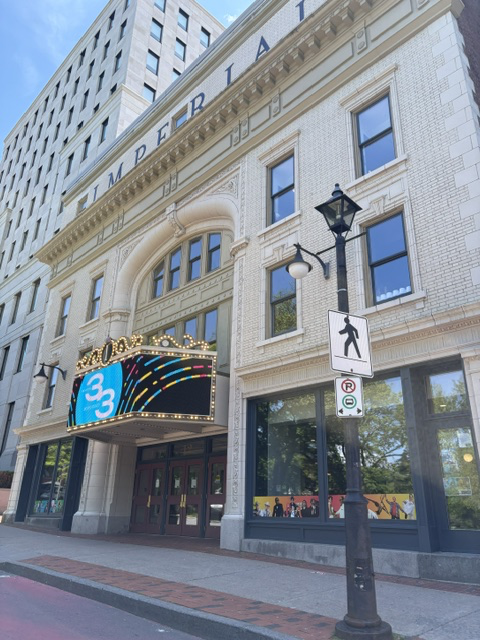
Imperial Theatre
The survival of Saint John’s Imperial Theatre depended upon an extraordinary agreement: a one dollar down payment followed by a promise to raise nearly one million dollars within a year. The community kept that promise, saving a building that had entertained generations of Saint John residents and restoring it to its original purpose. The Imperial […]
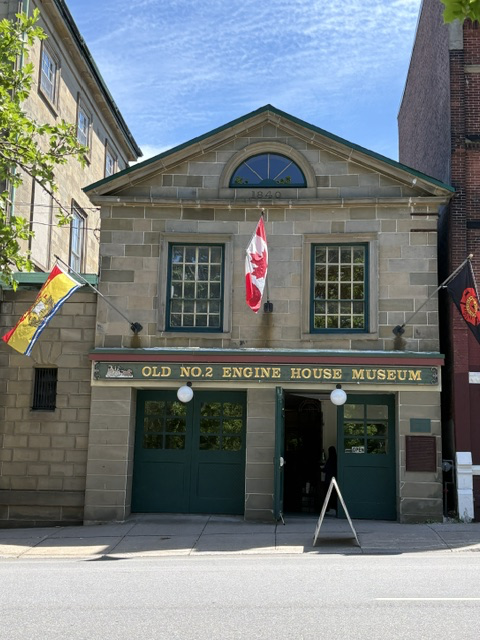
Engine House Museum
Before fire engines had motors, alarms were transmitted electronically, or firefighters were employed by the city, Saint John relied upon volunteer companies to respond when flames threatened the community. One of those companies operated from the No. 2 Engine House at 24 Sydney Street, where volunteers once pulled a hand-operated fire engine through the wide […]
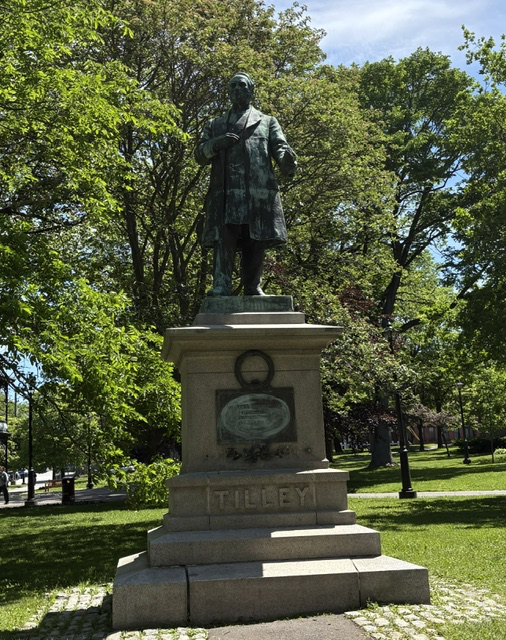
Sir Samuel Leonard Tilley
The statue standing in King’s Square honors Sir Samuel Leonard Tilley, a New Brunswick politician who helped create Canada, and who is traditionally credited with giving the new country its original title, the Dominion of Canada. Born in Gagetown in 1818, Tilley moved to Saint John as a teenager to apprentice with a pharmacist. He […]
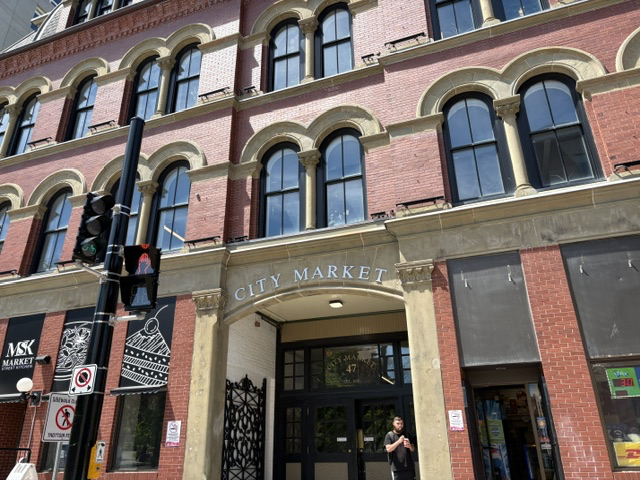
Saint John City Market
One year after the Saint John City Market opened, fire swept through the city. The Great Fire of 1877 destroyed hundreds of acres, leaving much of Saint John in ruins. Yet the new market, protected by its solid brick-and-stone construction, survived. Its exterior therefore represents more than nineteenth-century architecture. It is one of the buildings […]
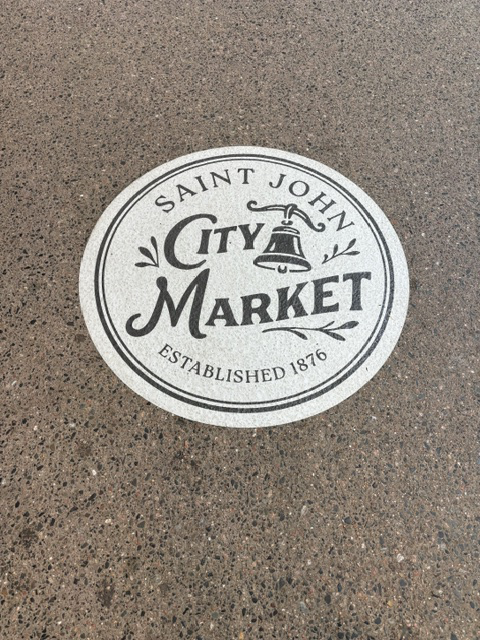
Inside the Saint John City Market
While visiting Saint John, we stopped at the City Market for lunch. What began as a place to find something to eat also allowed us to participate in a tradition that reaches back to the city’s founding. Saint John’s 1785 royal charter authorized the operation of public markets, and vendors have gathered inside the present […]
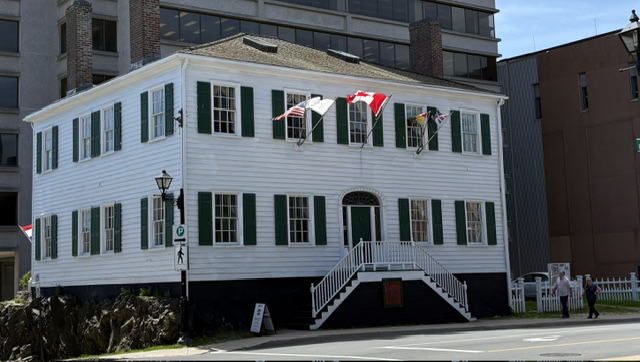
Loyalist House
Surrounded by the larger buildings of modern Saint John, Loyalist House appears almost out of place. Its white wooden walls, green shutters, and balanced rows of windows preserve the appearance of an earlier city and one that largely disappeared in the Great Fire of 1877. The story of the house begins with Thomas and Amy […]

