New Brunswick
New Brunswick is one of Canada’s three Maritime provinces and was among the four original provinces that formed the Canadian Confederation in 1867. Part of the traditional territories of the Mi’kmaq, Wolastoqiyik and Peskotomuhkati peoples, its history has also been shaped by Acadian, Loyalist, Irish, Scottish and other communities. Fishing, forestry, shipbuilding, agriculture and maritime trade have all influenced its development. New Brunswick is Canada’s only officially bilingual province.
Our travels through New Brunswick introduced us to communities shaped by their forests, rivers and relationship with the sea. My Hometown Stories explore its coastal landscapes, historic towns, cultural traditions and natural landmarks while sharing the history that gives the province its distinctive character.

Hometowns
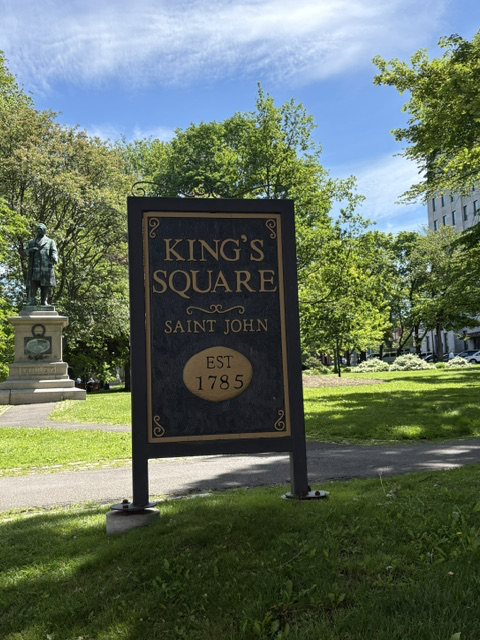
Saint John, NB
Located where the Saint John River meets the Bay of Fundy, Saint John is a historic port city shaped by the sea. Its sheltered harbor supported fishing, shipbuilding, trade, and immigration, connecting New Brunswick with communities throughout the Atlantic world. Thousands of Loyalists arrived here following the American Revolution, establishing the settlements of Parr Town and Carleton. In 1785, the two communities were united by royal charter to create Saint John, making it the first incorporated city in Canada. Nearly a century later, the Great Fire of 1877 destroyed more than 1,600 buildings and left approximately 13,000 people homeless. The city quickly rebuilt, filling its streets with the substantial brick and stone buildings that still give Uptown Saint John much of its historic character. Today, Saint John is known as “The Port City,” a name that reflects the continuing importance of its waterfront. Its City Market, Loyalist House, churches, public squares, burial grounds, and restored commercial buildings preserve the stories of Loyalist settlement, immigration, maritime commerce, disaster, and recovery. Saint John is a city that has repeatedly been shaped by arrivals and departures and by the determination of those who chose to begin again.
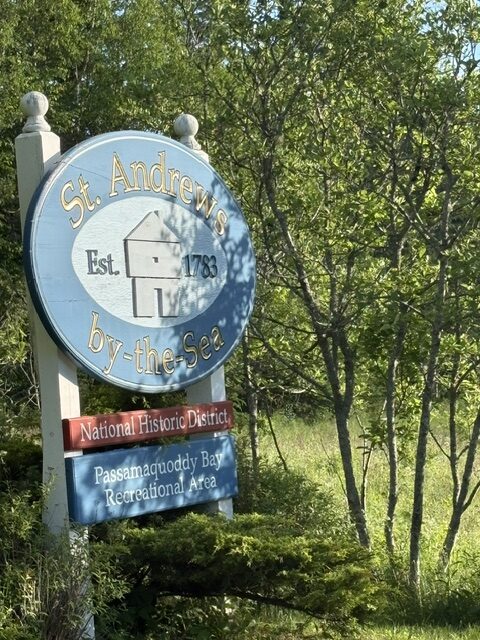
St. Andrews, NB
Located on Passamaquoddy Bay in southwestern New Brunswick, St. Andrews is a seaside town shaped by its sheltered harbour, coastal setting and Loyalist origins. Established in 1783 by people who remained loyal to Britain during the American Revolution, it became a prosperous seaport and the administrative centre of Charlotte County. Some settlers brought their wooden houses from Castine, in present-day Maine, transporting them across the bay and rebuilding them in their new community. The town developed around a carefully planned grid of streets, with spaces reserved for public buildings, defensive works and common land. That eighteenth-century layout remains visible, along with houses and commercial buildings that trace its growth from a Loyalist settlement into an established coastal community. During the late nineteenth century, St. Andrews also emerged as a summer resort, attracting visitors drawn to its seaside climate and scenery. Railway connections and resort development helped give the town a new economic role as its earlier maritime trade changed. Today, St. Andrews combines its identity as a coastal destination with an unusually well-preserved historic townscape. Its original townsite was designated a National Historic Site in 1995, recognizing the survival of its early plan and the architectural character of its streets. Along Water Street and the surrounding residential blocks, the town’s history remains part of everyday surroundings. Known widely as St. Andrews by-the-Sea, it preserves the connected stories of Loyalist resettlement, maritime commerce and the growth of seaside tourism.

