Engine House Museum
Before fire engines had motors, alarms were transmitted electronically, or firefighters were employed by the city, Saint John relied upon volunteer companies to respond when flames threatened the community. One of those companies operated from the No. 2 Engine House at 24 Sydney Street, where volunteers once pulled a hand-operated fire engine through the wide doors and into the surrounding streets.
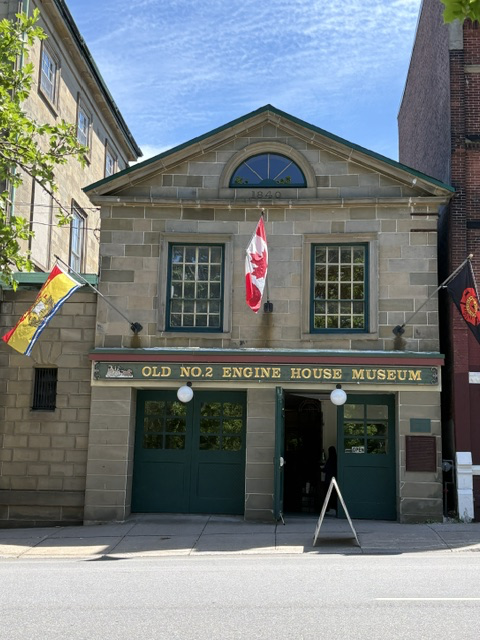
Construction of the engine house began in 1840, and the No. 2 Mechanics’ Volunteer Fire Company occupied it the following year. Its members protected a growing city in which crowded streets, wooden buildings, open flames, and limited water supplies made fire an ever-present danger. When an alarm sounded, they left their homes and businesses, rushed to the station, and hauled their equipment to the fire by hand.
Teams of firefighters operated the pump while others carried hoses, climbed ladders, obtained water, and attempted to keep the flames from spreading. Without protective clothing, breathing equipment, motorized vehicles, or modern communications, firefighting depended upon physical strength, cooperation, and the willingness of volunteers to place themselves in danger.
Volunteer fire companies were also important social and civic organizations. Their members developed strong loyalties to their individual companies, maintained their own equipment, participated in parades and public events, and sometimes competed with other companies to reach a fire first. The No. 2 Engine House represents this early period before professionally staffed municipal fire departments became standard.
Attributed to prominent Saint John architect John Cunningham, the engine house is unusually elegant for such a practical building. Its symmetrical stone façade, classical proportions, triangular pediment, and fan-shaped upper window make it resemble a small civic temple. The two broad doors at street level provide the clearest evidence of its original purpose, allowing the fire engine and equipment to be moved quickly into the street.
Few cities understood the danger of fire more clearly than Saint John. Numerous fires struck the community during the nineteenth century, culminating in the Great Fire of 1877, which destroyed a large section of the city and left thousands of residents without homes. Although firefighting equipment and organization continued to improve, the disaster demonstrated how quickly flames could overwhelm even the determined efforts of local fire companies.
The building remained in fire-service use until 1949, more than a century after it opened. It later became the Old No. 2 Engine House Museum, where historic equipment, photographs, uniforms, tools, and other objects preserve the development of firefighting in Saint John. The museum also remembers the firefighters who risked, and sometimes lost, their lives protecting the community.
Read More From Nancy
Inside the Saint John City Market
While visiting Saint John, we stopped at the City Market for lunch. What began as a place to find something to eat also allowed us to participate in a tradition that reaches back to the city’s founding. Saint John’s 1785 royal charter authorized the operation of public markets, and vendors have gathered inside the present […]
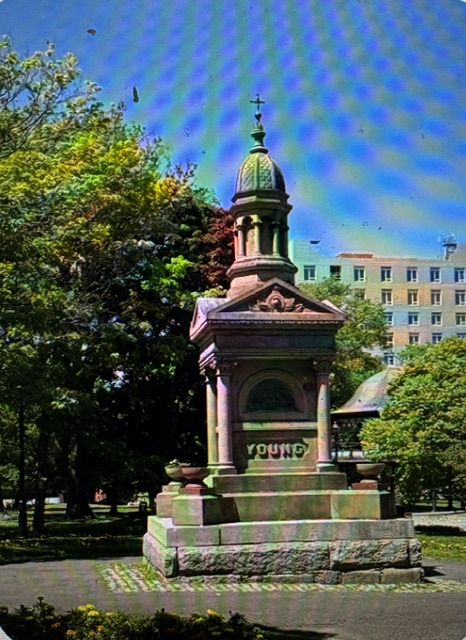
Young Memorial
The Young Memorial in King’s Square remembers an ordinary young man whose final act became part of Saint John’s civic history. John Frederick Young was only nineteen years old when he drowned in Courtenay Bay in 1890 while attempting to rescue ten-year-old Frederick E. “Freddie” Mundee. Young was a factory worker who had come to […]
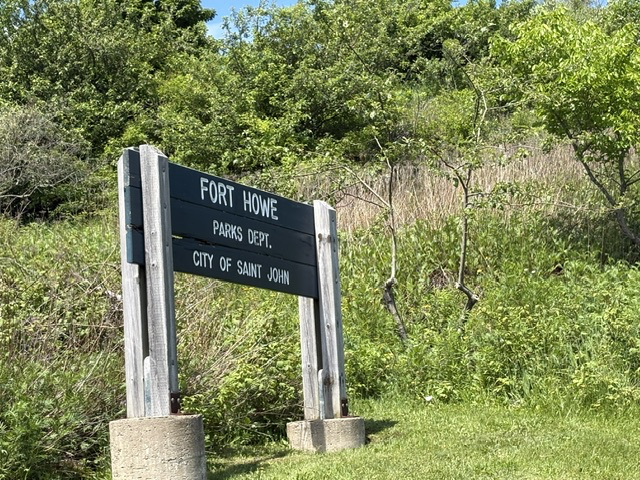
Fort Howe
From its position high above Saint John, Fort Howe once guarded the entrance to the Saint John River and the harbor below. The location offered British soldiers an expansive view of approaching ships and made the ridge a natural place from which to defend the settlement. The fort was constructed in 1777 during the American […]

