Sir Samuel Leonard Tilley
The statue standing in King’s Square honors Sir Samuel Leonard Tilley, a New Brunswick politician who helped create Canada, and who is traditionally credited with giving the new country its original title, the Dominion of Canada.
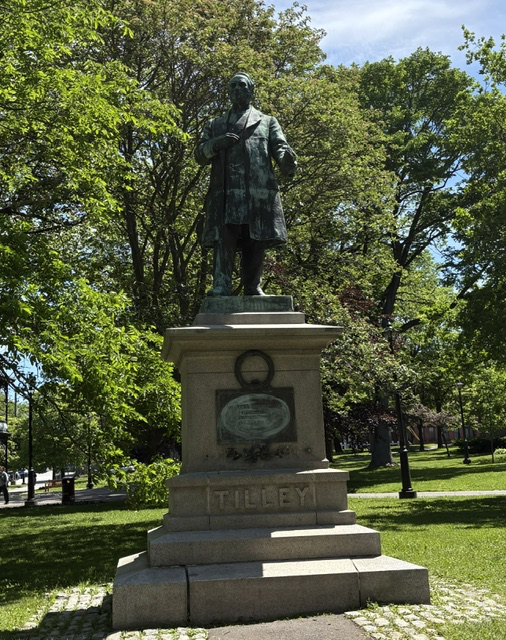
Born in Gagetown in 1818, Tilley moved to Saint John as a teenager to apprentice with a pharmacist. He eventually opened his own drugstore and became active in the temperance movement after witnessing the effects of alcohol abuse in the community. His interest in social reform led him into provincial politics, where he advocated for responsible government, public education, and greater control over New Brunswick’s finances.
During the 1860s, Tilley became one of the strongest supporters of uniting the British North American colonies. He represented New Brunswick at the Charlottetown, Quebec, and London conferences that led to Canadian Confederation. The proposal was controversial at home, however, and his government was defeated in 1865 by voters concerned about the terms of union. Tilley continued campaigning, returned to power the following year, and helped bring New Brunswick into Canada in 1867.
According to a story long associated with Tilley, the Fathers of Confederation were debating what to call the new nation when he read Psalm 72:8 during his morning devotions: “He shall have dominion also from sea to sea.” He proposed the title “Dominion of Canada,” which appeared in the British North America Act creating the country. Although historians debate how directly the verse influenced the final choice, the phrase “From Sea to Sea” eventually became Canada’s national motto.
After Confederation, Tilley served in the federal government, including two periods as minister of finance. He later served twice as lieutenant governor of New Brunswick before retiring from public life. He died in Saint John in 1896.
Tilley’s monument stands only a short distance from the City Market and the commercial streets where he began his working life as a young pharmacist. From that modest beginning, he rose to help shape both New Brunswick and the new Canadian nation. His statue in King’s Square remembers a local businessman whose ideas became part of the language and identity of Canada.
Read More From Nancy
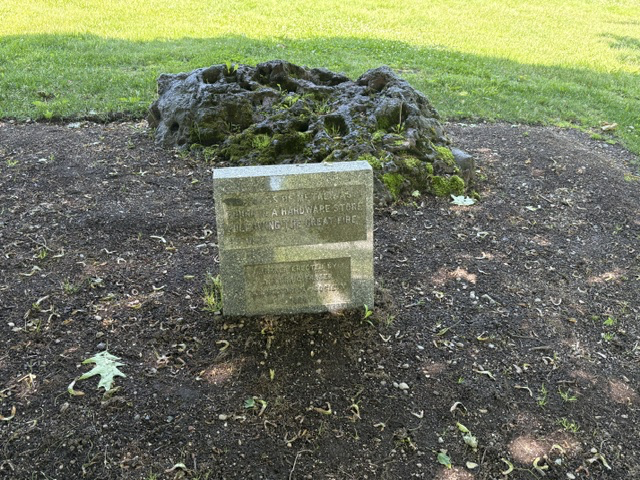
Fused Metal from the Great Fire of 1877
Resting quietly in King’s Square is a misshapen mass of metal that could easily be mistaken for an ordinary rock. It is a collection of metal objects fused together by the intense heat of the Great Fire of 1877. Recovered from the ruins of a Saint John hardware store, it provides a tangible connection to […]
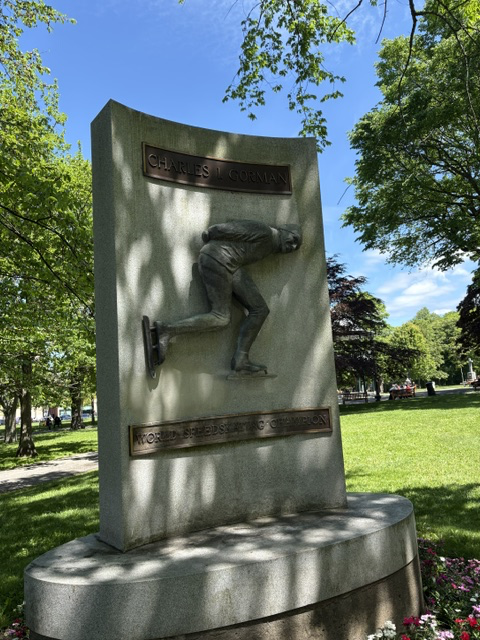
Charles Gorman Memorial
The figure on this monument is not shown standing triumphantly on a podium. Instead, Charles Gorman is captured at the beginning of a race with his body bent forward, one skate braced behind him, and every muscle prepared for the explosive first stride that made him one of the fastest skaters of his generation. Born […]
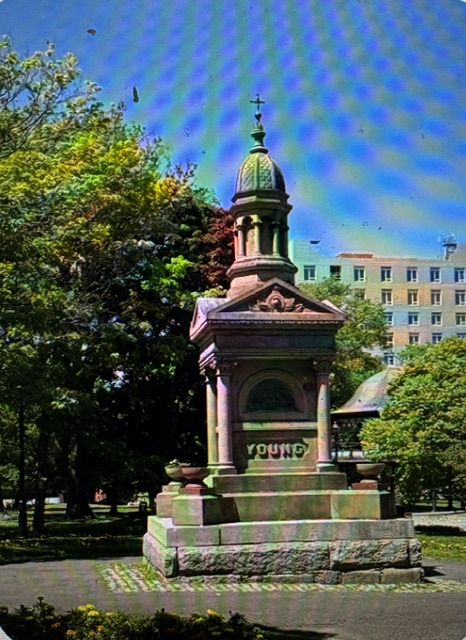
Young Memorial
The Young Memorial in King’s Square remembers an ordinary young man whose final act became part of Saint John’s civic history. John Frederick Young was only nineteen years old when he drowned in Courtenay Bay in 1890 while attempting to rescue ten-year-old Frederick E. “Freddie” Mundee. Young was a factory worker who had come to […]

