Imperial Theatre
The survival of Saint John’s Imperial Theatre depended upon an extraordinary agreement: a one dollar down payment followed by a promise to raise nearly one million dollars within a year. The community kept that promise, saving a building that had entertained generations of Saint John residents and restoring it to its original purpose.
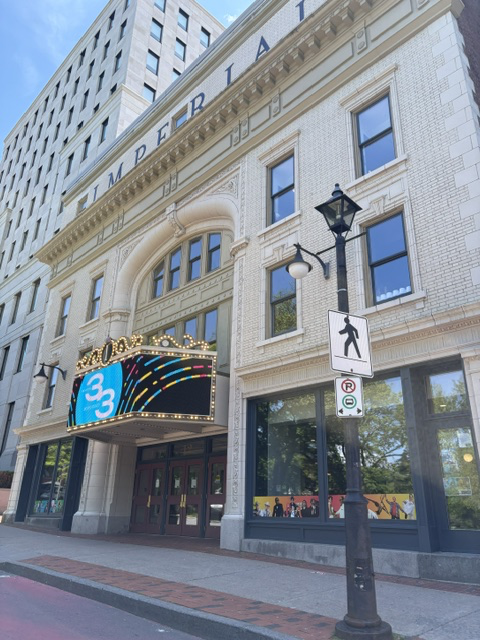
The Imperial Theatre was built between 1912 and 1913 on the site of the former Lyceum Theatre, which had been destroyed during the Great Fire of 1877. Designed by Philadelphia architect Albert E. Westover, it was constructed by the Keith-Albee vaudeville organization and its Canadian subsidiary, the Saint John Amusements Company.
When the theatre opened on September 19, 1913, it was promoted as the finest theatre in Eastern Canada. Its opening performance was a charity benefit supporting Protestant and Catholic orphanages in Saint John. The theatre offered elaborate surroundings and the latest theatrical equipment, bringing major touring productions and performers to a city already known for its strong cultural life.
During its early years, the Imperial presented drama, music, comedy, and vaudeville. Performers associated with the theatre included actress Ethel Barrymore and bandleader John Philip Sousa. The building represents a transitional period when traditional stage performances, vaudeville, silent films, and eventually motion pictures all shared the same theatre.
As movies became increasingly popular, the Imperial was leased to Famous Players and RKO and renamed the Capitol Theatre. Motion pictures became its principal attraction, although live performances continued. In 1928, the building also became home to one of the early commercial radio stations operated by Acadia Broadcasting.
Competition from television contributed to the Capitol’s closure during the 1950s. In 1957, two American sisters purchased the building and donated it to the Full Gospel Assembly. Extensive alterations were made, and the former theatre served as a place of worship for the next twenty-five years.
In 1982, local theatre supporters began working to return the building to the performing arts. The Full Gospel Assembly agreed to sell it for one million dollars, accepting a one-dollar down payment with the remainder due within a year. Saint John residents responded through donations and fundraising, allowing the purchase to be completed.
Restoring the theatre required eleven years of work. Original decorative elements were repaired whenever possible, while lost plasterwork and architectural details were carefully reproduced. On May 24, 1994, the building reopened under its original name, once again welcoming audiences as the Imperial Theatre.
The theatre’s white-brick façade, arched entrance, classical ornamentation, and illuminated marquee continue to distinguish it along King Square South. It has been recognized as a National Historic Site of Canada for its place in the development of Canadian theatre architecture and for representing the transition from nineteenth-century playhouses to twentieth-century movie palaces.
Read More From Nancy
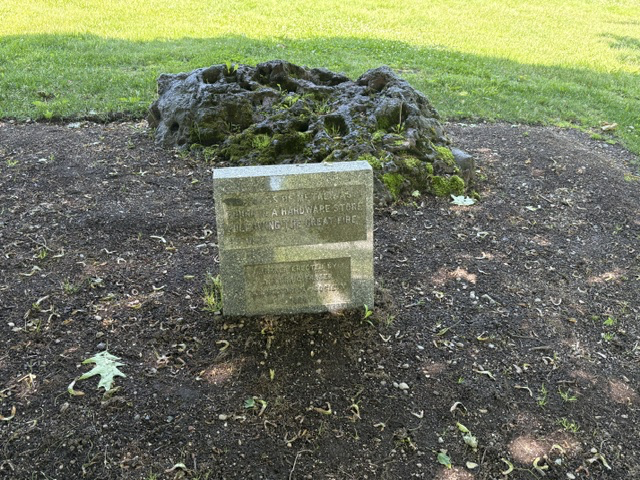
Fused Metal from the Great Fire of 1877
Resting quietly in King’s Square is a misshapen mass of metal that could easily be mistaken for an ordinary rock. It is a collection of metal objects fused together by the intense heat of the Great Fire of 1877. Recovered from the ruins of a Saint John hardware store, it provides a tangible connection to […]
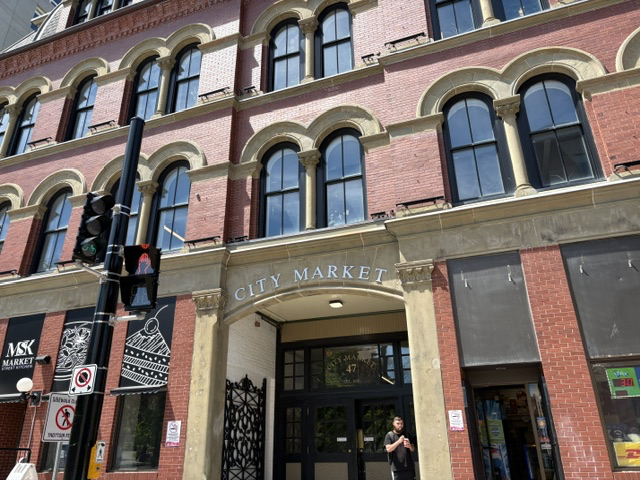
Saint John City Market
One year after the Saint John City Market opened, fire swept through the city. The Great Fire of 1877 destroyed hundreds of acres, leaving much of Saint John in ruins. Yet the new market, protected by its solid brick-and-stone construction, survived. Its exterior therefore represents more than nineteenth-century architecture. It is one of the buildings […]
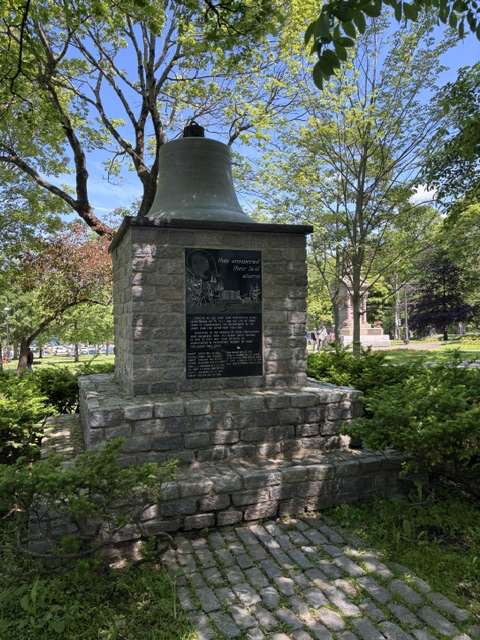
Last Alarm Bell Monument
A large bronze bell stands silently in King’s Square as a memorial to Saint John firefighters who died while serving their community. Known as the Last Alarm Bell Monument, it was erected in 1986 to commemorate the two-hundredth anniversary of the Saint John Fire Department. The department was established in 1786, only one year after […]

