Boston, MA
Boston was founded in 1630 by Puritan settlers led by John Winthrop and quickly became the political, economic, and cultural center of colonial New England. It was here that events such as the Boston Massacre, the Boston Tea Party, and the Siege of Boston ignited the movement for American independence, earning the city its title as the "Cradle of Liberty." Beyond the Revolution, Boston has continued to shape the nation through its leadership in education, medicine, literature, and innovation. For me, Boston has always been more than a historic city. Living nearby and returning countless times over the years, it has been a place where history comes alive, reminding me that the story of America can be found on nearly every street corner.
Recent Posts
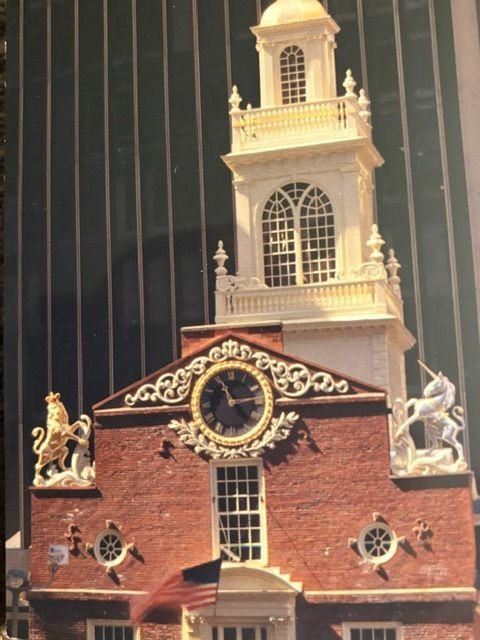
The Lion and Unicorn
The lion and unicorn above Boston’s Old State House recall the building’s origins as a seat of British colonial government. Positioned on either side of its eastern façade, the figures represented royal authority in a town that would become a center of resistance to it. The crowned lion represents England, while the unicorn represents Scotland. […]
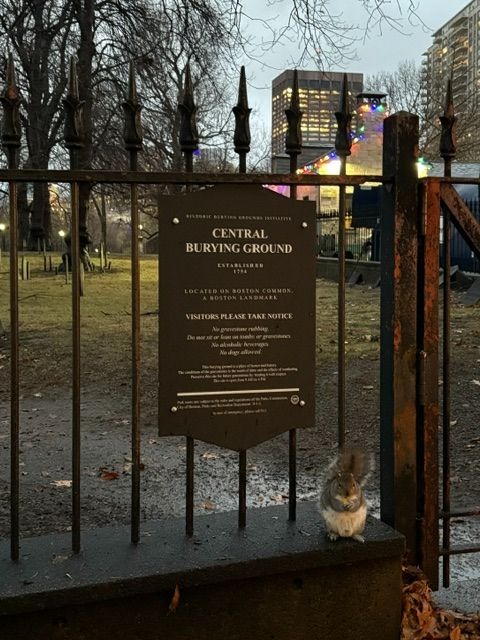
Central Burying Ground
Along the Boylston Street edge of Boston Common, Central Burying Ground preserves a quiet part of the city’s history. Established in 1756, it became a resting place for people whose lives connected Boston to commerce, the arts, and the upheaval of the American Revolution. Those buried here include British soldiers who died during the Revolutionary […]
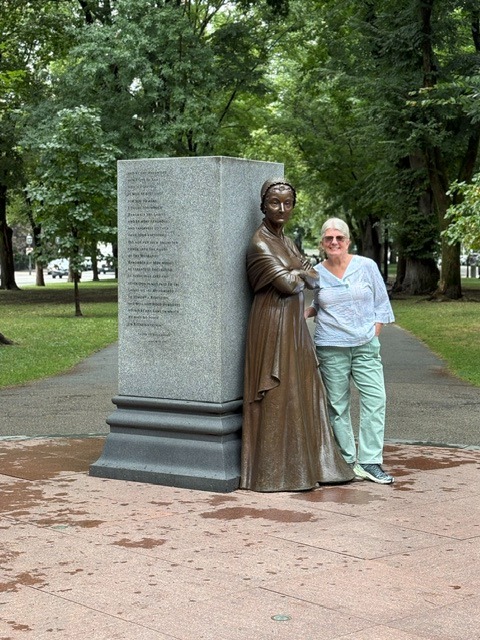
Abigail Adams: Wife of a President, Mother of Another
On Boston’s Commonwealth Avenue Mall, Abigail Adams stands beside a granite pedestal, her arms folded and her expression resolute. Part of the Boston Women’s Memorial, her figure honors a woman whose life connected the American Revolution with two generations of presidential leadership. She was the wife of John Adams, the second president of the United […]
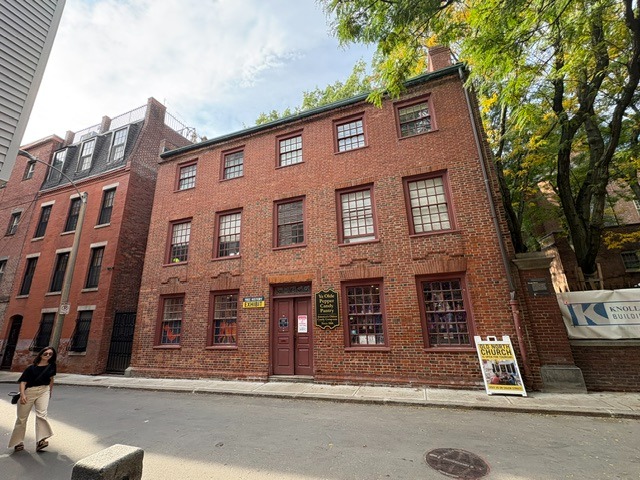
The Clough House
Walking through Boston’s North End, we stopped at the Clough House on Unity Street, behind Old North Church. Its brick exterior holds a history that reaches beyond colonial Boston into the lives of immigrant families who later made this neighborhood their home. Built around 1715, the house was the home of master bricklayer Ebenezer Clough, […]
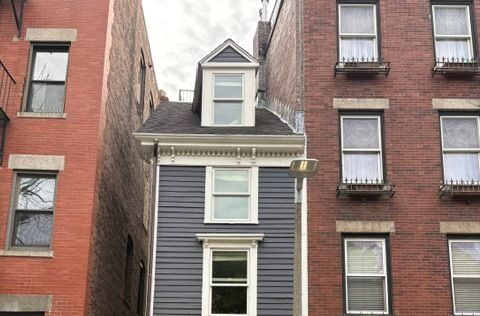
The Skinny House
Across from Copp’s Hill Burying Ground, a remarkably narrow wooden house stands among the larger brick buildings of Boston’s North End. At 44 Hull Street, the Skinny House rises four stories while measuring only about ten feet across its street-facing exterior. Its entrance is tucked into the alley beside it, allowing the slender front to […]
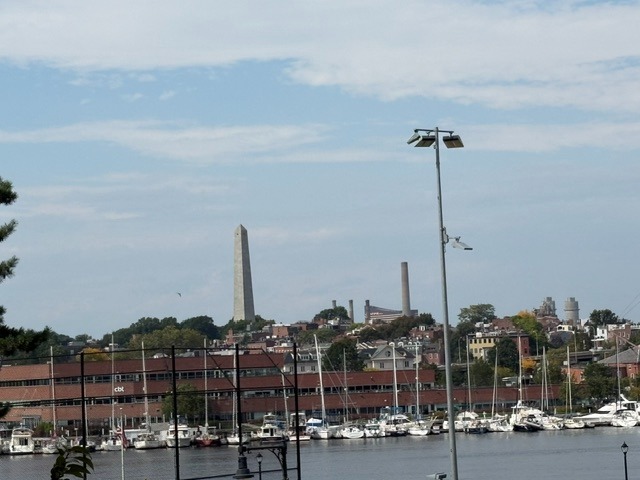
Bunker Hill Monument
Looking across the water from Boston’s North End, we could see the Bunker Hill Monument rising above Charlestown. Its granite obelisk marks a battlefield that helped demonstrate the determination of the colonial forces during the opening months of the American Revolution. Despite its name, the monument stands on Breed’s Hill, where much of the Battle […]
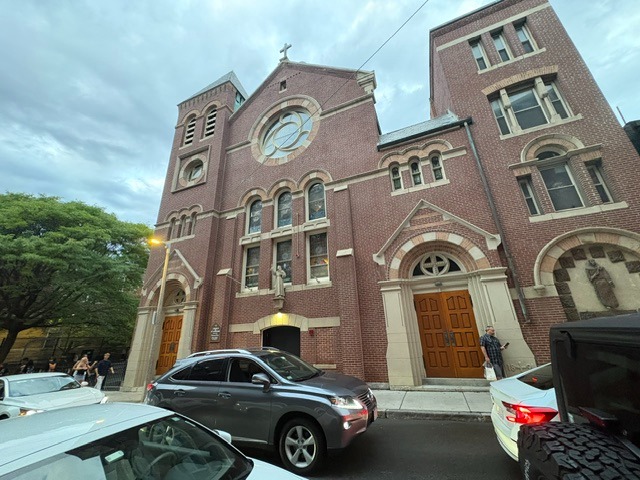
Saint Leonard’s Church
During our walk through Boston’s North End, we stopped at Saint Leonard’s Church. Its brick façade, arched entrances, and circular window draw attention from the street, but its history also reveals how Italian immigrants established a community in their new country. The parish began in 1873, when Archbishop John Williams called upon Franciscan friars to […]
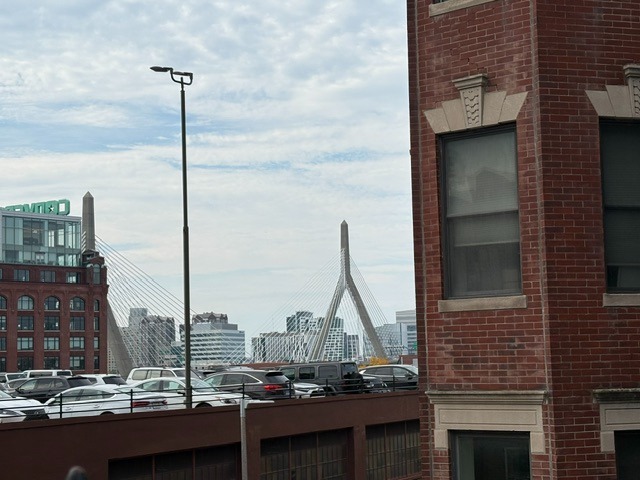
The Leonard P. Zakim Bunker Hill Memorial Bridge
During our walk through Boston’s North End, the towers and cables of the Zakim Bridge appeared between the surrounding buildings. Its shape is immediately recognizable, but the design and name carry connections to Boston’s history that are easy to miss when simply driving across it. The bridge opened to traffic in 2003 as part of […]
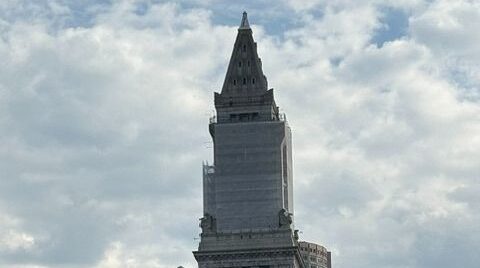
The Custom House Tower
During our walk around Boston, the Custom House Tower rose above the surrounding buildings, its pointed roof making it recognizable from a distance. This landmark connects two periods of the city’s history: the nineteenth-century seaport and the early twentieth-century skyline. The original Custom House opened in 1847. Designed by architect Ammi Burnham Young, its Greek […]
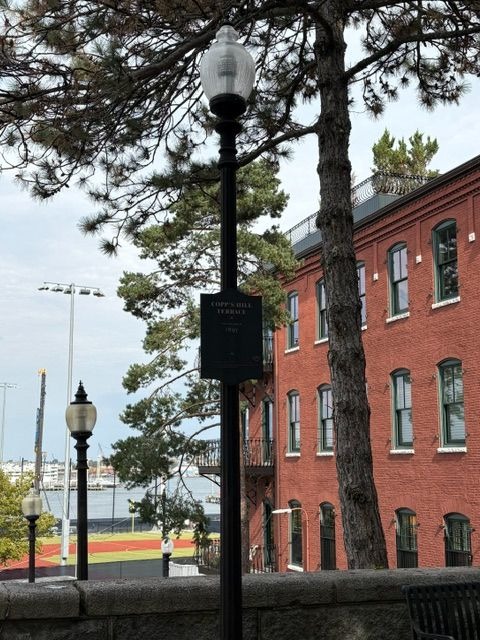
Copp’s Hill Terrace
During our walk through Boston’s North End, we stopped at Copp’s Hill Terrace to look across the waterfront toward Charlestown. The elevated setting offers room to pause, with trees, benches, and views beyond the closely built neighborhood streets. That opportunity for breathing space was central to the terrace’s creation. By the 1890s, the North End […]
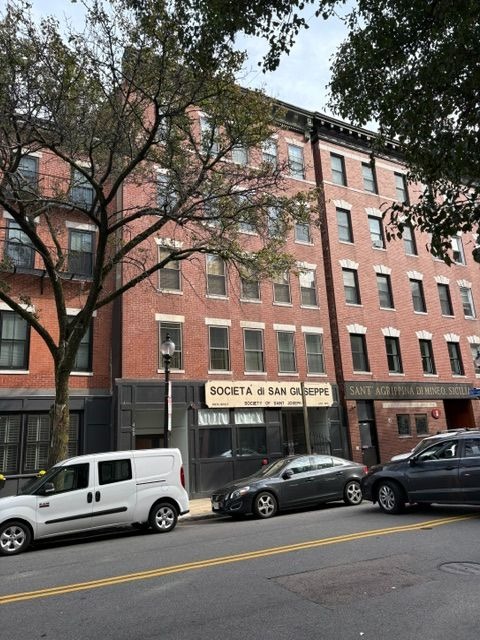
Italian Societies
Walking along Hanover Street, we passed the neighboring entrances of the Saint Joseph Society and the Sant’Agrippina di Mineo Society. Their Italian names preserve connections to particular towns in Sicily and to traditions that immigrants brought with them to Boston. The Saint Joseph Society was founded in 1915 by immigrants from Riesi, Sicily, and formally […]
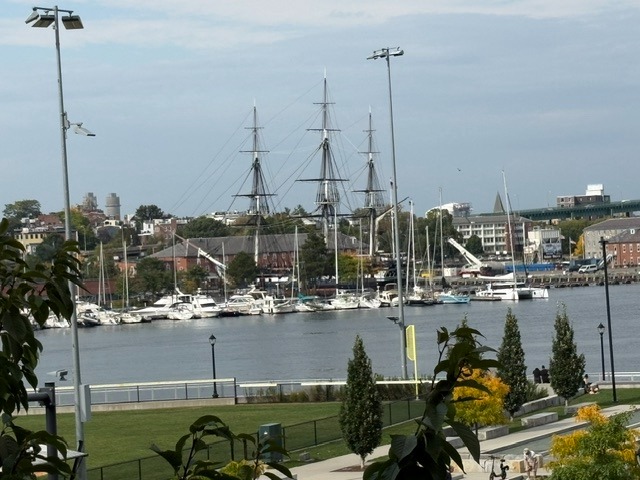
USS Constitution: Old Ironsides
Looking across the harbor during our walk through Boston’s North End, we could see the tall masts of USS Constitution at the Charlestown Navy Yard. From this distance, the ship connects the modern waterfront with the era when wooden sailing vessels carried the nation’s commerce and defended its interests at sea. Constitution was launched on […]

