Copp’s Hill Terrace
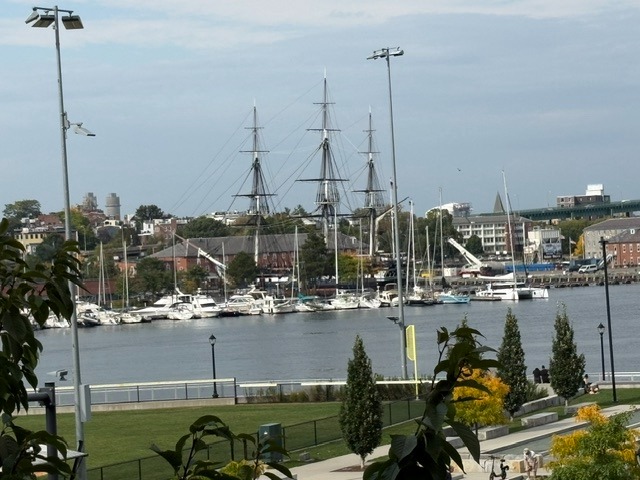
During our walk through Boston’s North End, we stopped at Copp’s Hill Terrace to look across the waterfront toward Charlestown. The elevated setting offers room to pause, with trees, benches, and views beyond the closely built neighborhood streets.
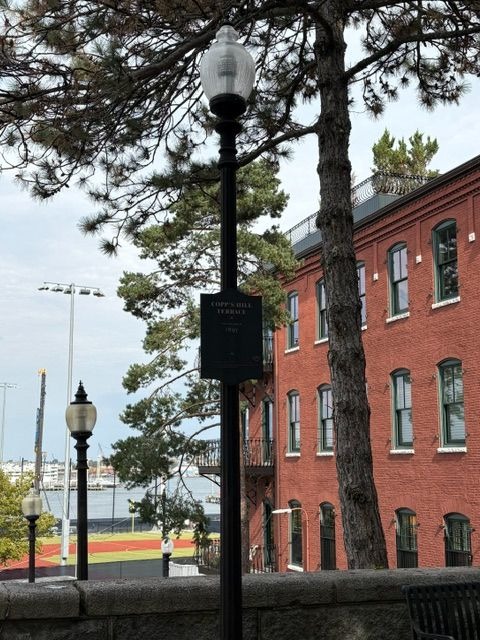
That opportunity for breathing space was central to the terrace’s creation. By the 1890s, the North End was among the most densely populated urban districts in the country. Councilman John “Honey Fitz” Fitzgerald advocated for a public park where residents could find recreation and relief from crowded living conditions. In 1893, the Boston Park Commission commissioned landscape architect Charles Eliot to design it.
Eliot had trained with Frederick Law Olmsted and became a partner in the firm Olmsted, Olmsted and Eliot. His work helped establish Greater Boston’s regional park system, connecting protected woodlands, river landscapes, and beaches. Alongside those larger reservations, he recognized the need for smaller parks within city neighborhoods.
At Copp’s Hill, the steep hillside became a series of granite terraces and stairways connecting the neighborhood above with the waterfront below. Beside the historic burying ground, the park provided a place to sit and enjoy the outlook. Across Commercial Street, Eliot also designed North End Park, which included a bathing beach. Together, these spaces brought different kinds of recreation into a neighborhood where open land was scarce.
The terrace’s view also placed it near moments of tragedy. In January 1919, crowds gathered here overlooking the destruction caused by the Great Molasses Flood along the waterfront. A space created for everyday recreation became a vantage point over one of Boston’s most devastating industrial disasters.
Copp’s Hill Terrace was added to the National Register of Historic Places in 1990. Its significance lies in both its landscape design and its role in neighborhood life. Stopping here for the view continues the purpose behind its creation: giving people a place to rest, gather, and experience the waterfront within a busy city.
Read More From Nancy
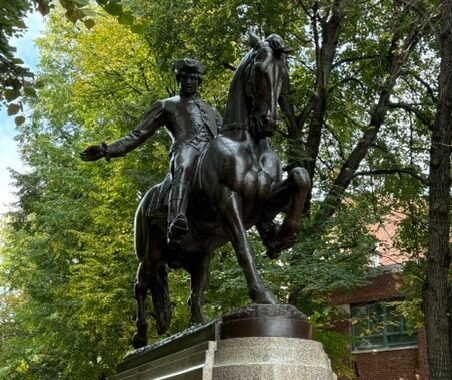
Paul Revere Mall and Statue
Walking through Boston’s North End, I stopped at Paul Revere Mall to spend more time with a familiar landmark. The bronze figure of Revere on horseback stands above the brick walkway, surrounded by trees and the buildings of the neighborhood he once called home. His extended arm and the horse’s raised foreleg give the monument […]
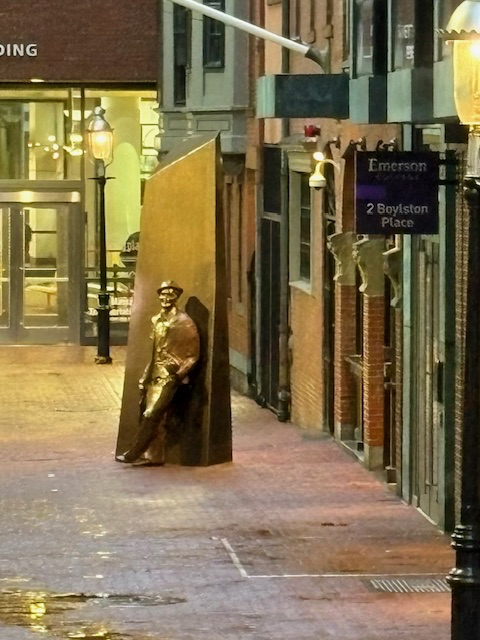
Norman Lear Statue
Heading back to our car, I stopped to grab this photo in the alley near Emerson College. It is one of those narrow Boston passageways that I might have easily walked past without a thought but tucked into this space is something special: a life-size bronze statue of Norman Lear. Lear attended Emerson in the early 1940s, enrolling […]
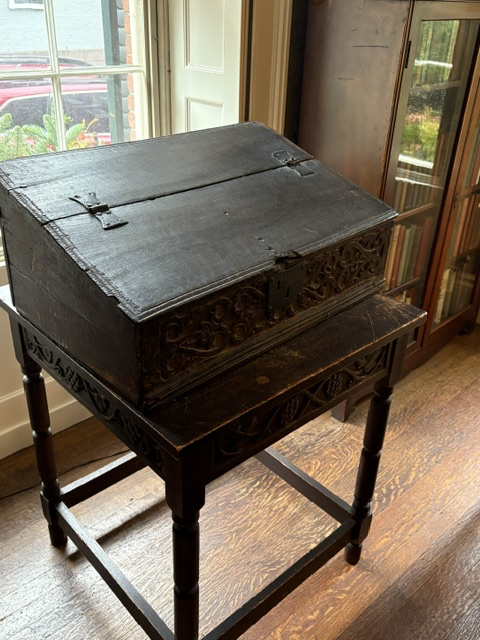
Bible Box
While touring the Nichols House Museum in Boston, one piece in Dr. Arthur Nichols’ office immediately caught my attention. Resting on its stand was a beautifully carved oak Bible box, a reminder that even a physician’s office could contain objects that reflected an appreciation for history and craftsmanship. Although often called a “Bible box,” this […]

