The Lion and Unicorn
The lion and unicorn above Boston’s Old State House recall the building’s origins as a seat of British colonial government. Positioned on either side of its eastern façade, the figures represented royal authority in a town that would become a center of resistance to it.
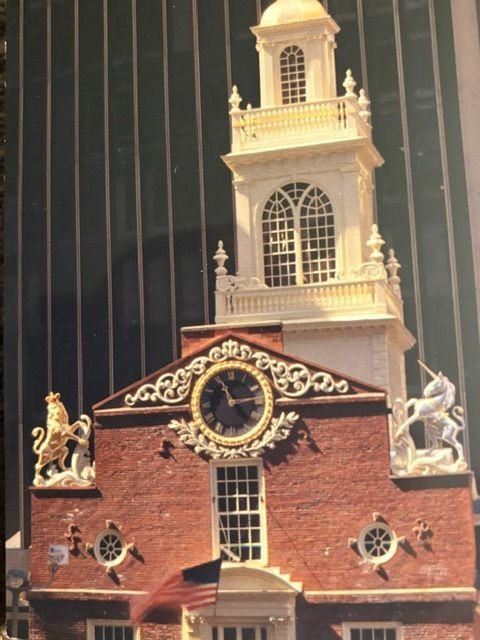
The crowned lion represents England, while the unicorn represents Scotland. Together, these heraldic animals are associated with the British royal coat of arms. Their placement on the building made its connection to the Crown visible to people gathering in the streets below.
On July 18, 1776, Bostonians assembled outside the Old State House to hear the Declaration of Independence read from its balcony. Later that day, the lion and unicorn were pulled down, along with other emblems of royal authority, and burned in a bonfire in Dock Square.
Their destruction gave physical expression to the political break announced in the Declaration. Symbols that had identified the government’s authority became targets for people celebrating independence.
The figures remained absent for more than a century. In 1882, replicas were installed as part of the restoration of the Old State House to its colonial appearance. The originals had been destroyed, so the returning animals were newly made representations.
Their return served a different purpose from their original installation. Once emblems of an active monarchy, they became historical features on a building preserved to explain Boston’s past.
The lion and unicorn consequently tell two connected stories: the rejection of royal rule in 1776 and the later decision to preserve evidence of the colonial world from which the Revolution emerged. Their presence helps visitors recognize what the building represented before independence changed its meaning.

Read More From Nancy
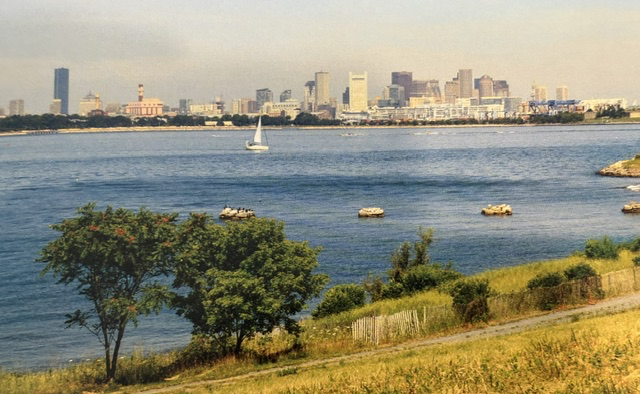
Boston Harbor Islands National Recreation Area
Boston Harbor Islands National Recreation Area is one of the more unusual units of the National Park System. Established in 1996, it preserves a collection of more than 30 islands scattered throughout Boston Harbor, each with its own unique history. Together they tell the story of Boston’s maritime heritage, military defenses, immigration, public recreation, and […]
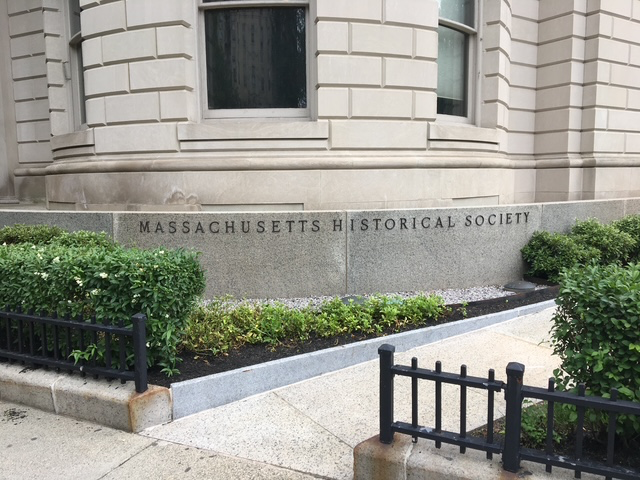
The Massachusetts Historical Society
I have passed countless historic buildings in Boston, but on this visit I had a particular reason for walking through the doors of the Massachusetts Historical Society. I had come to see a special exhibition devoted to the history of the Irish in Boston. A story that is inseparable from the history of the city itself. […]
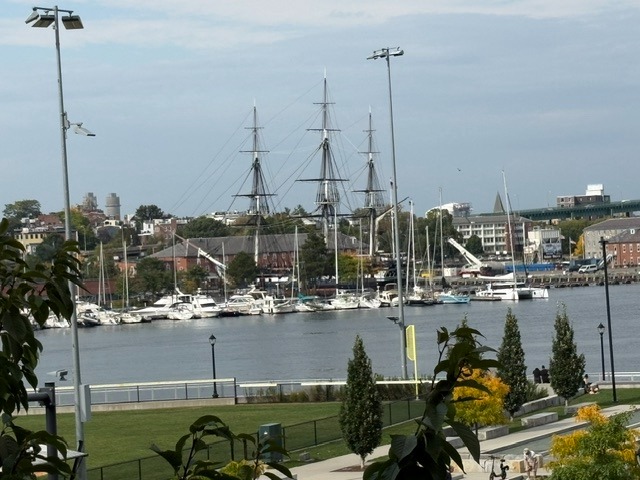
USS Constitution: Old Ironsides
Looking across the harbor during our walk through Boston’s North End, we could see the tall masts of USS Constitution at the Charlestown Navy Yard. From this distance, the ship connects the modern waterfront with the era when wooden sailing vessels carried the nation’s commerce and defended its interests at sea. Constitution was launched on […]

