Central Burying Ground
Along the Boylston Street edge of Boston Common, Central Burying Ground preserves a quiet part of the city’s history. Established in 1756, it became a resting place for people whose lives connected Boston to commerce, the arts, and the upheaval of the American Revolution.
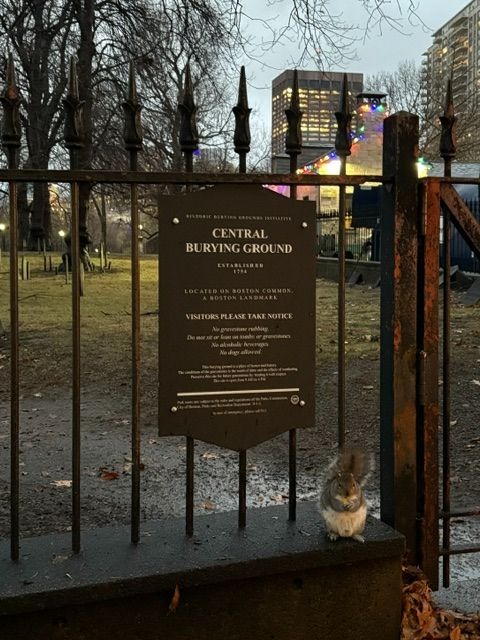
Those buried here include British soldiers who died during the Revolutionary period, American patriots, and travelers who died far from home. Among them was Chow Manderien, a young Chinese sailor who died in Boston Harbor. His presence offers a reminder that the port brought people from distant places into the life of the colonial town.
The artist Gilbert Stuart is also buried here. His portraits helped establish the familiar image of George Washington, including the likeness adapted for the one-dollar bill. Composer William Billings, another notable figure associated with the burial ground, contributed to the development of an American tradition of choral music.
As Boston grew, the cemetery’s boundaries came under pressure. In 1895, workers excavating for the subway along Boylston Street uncovered human remains. These were gathered and reburied within Central Burying Ground, where a marker commemorates their relocation. The discovery revealed how earlier burials extended into land being reshaped for modern transportation.
The cemetery consequently holds two connected histories: the lives of those buried there and the changing city around them. Its gravestones and tombs belong to an earlier Boston, while the nearby streets and subway reflect the demands of a growing metropolis.
Within the Common, this small enclosure preserves a place for people whose individual stories might otherwise disappear beneath the city’s better-known landmarks. Soldiers, artists, sailors, and ordinary residents share a landscape that has survived nearly three centuries of change.
Read More From Nancy
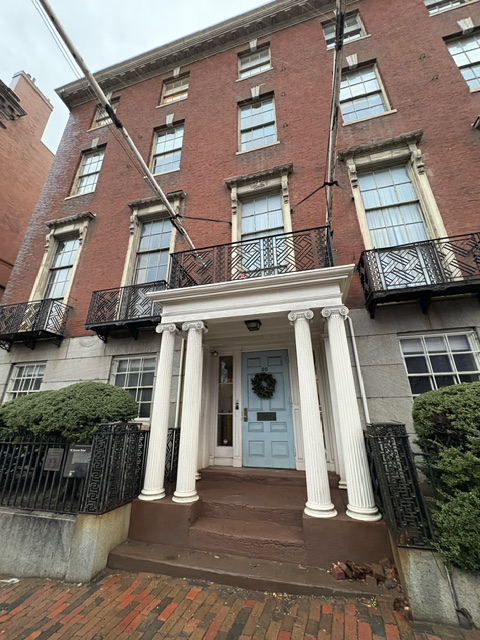
The Third Harrison Gray Otis House
When I came across this house at 45 Beacon Street, I recognized the Otis name because I had already visited the Harrison Gray Otis House near Massachusetts General Hospital. What I didn’t realize was that the Cambridge Street house was only the beginning of the family’s story. Harrison Gray Otis eventually built three Boston houses, […]
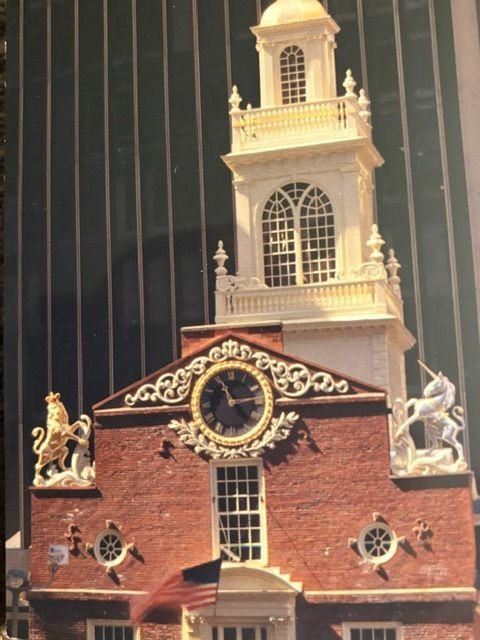
The Lion and Unicorn
The lion and unicorn above Boston’s Old State House recall the building’s origins as a seat of British colonial government. Positioned on either side of its eastern façade, the figures represented royal authority in a town that would become a center of resistance to it. The crowned lion represents England, while the unicorn represents Scotland. […]
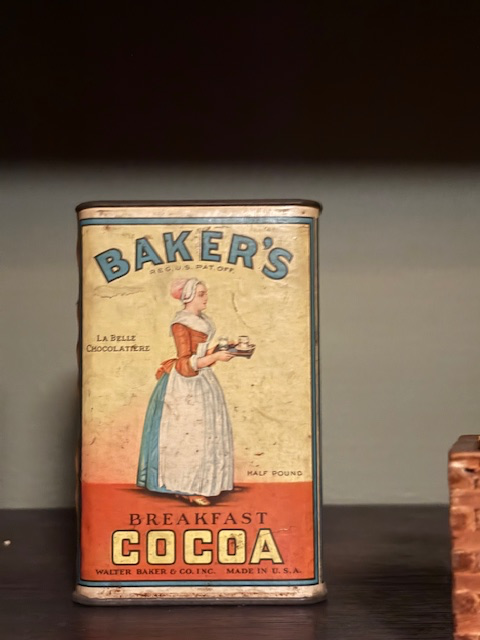
Gibson House Museum – Baker’s Breakfast Cocoa
When visiting the Gibson House Museum in Boston, this colorful tin caught my eye in the kitchen. Baker’s Breakfast Cocoa, the title sparked my curiosity. The tin was produced by Walter Baker & Co, the oldest continuously operating chocolate manufacturer in the United States. Founded in the late 1700s, in Massachusetts, Baker’s became a household […]

