Italian Societies
Walking along Hanover Street, we passed the neighboring entrances of the Saint Joseph Society and the Sant’Agrippina di Mineo Society. Their Italian names preserve connections to particular towns in Sicily and to traditions that immigrants brought with them to Boston.
The Saint Joseph Society was founded in 1915 by immigrants from Riesi, Sicily, and formally incorporated in 1925. Its members established a place where religious devotion, cultural traditions, and service to their neighbors could continue in their new home. The society still holds a Saint Joseph’s Table in March and a summer feast and procession
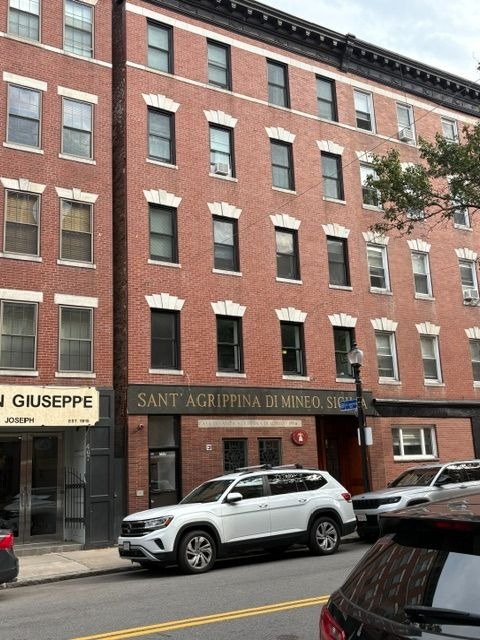
Nearby, the Sant’Agrippina society maintains a connection to Mineo, Sicily, whose patron saint is Agrippina. Boston’s celebration dates to 1914. For generations, families have carried this tradition forward, keeping the name of their ancestral town visible on a street thousands of miles away.
During the annual feast, members carry a statue of Saint Agrippina through the North End. Children take part in their own procession, giving the next generation an active role in the celebration. Music, food, and gatherings accompany the religious observances, bringing residents and visitors into the streets.
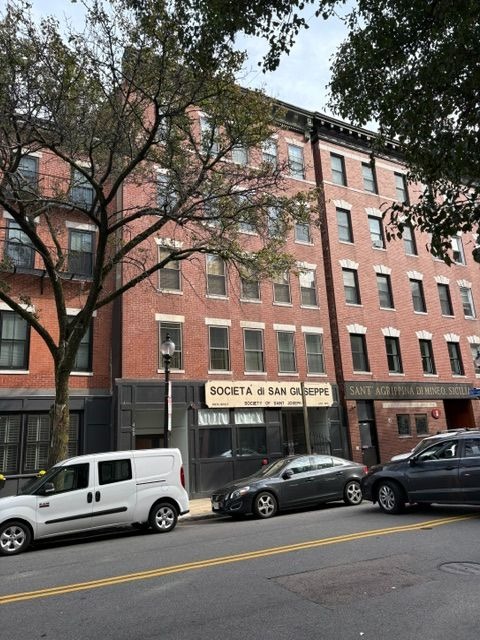
These societies also serve the community beyond their feast days. The volunteer-run Saint Joseph Society supports charitable organizations and families in need, shares its meeting space, and delivers Thanksgiving meals to elderly residents and veterans. In 2018, it contributed $1 million toward the restoration of Saint Leonard’s Church, helping preserve another important part of the neighborhood’s Italian heritage.
The entrances we passed belong to a history that is still being practiced. Through processions, shared meals, charitable work, and the participation of children, these societies have sustained ties between generations. Their presence along Hanover Street helps explain how the North End’s Italian identity has endured through the work of families and neighbors.
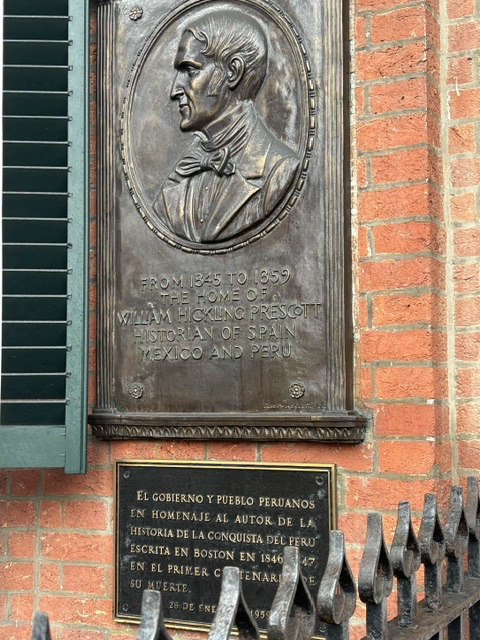
Read More From Nancy
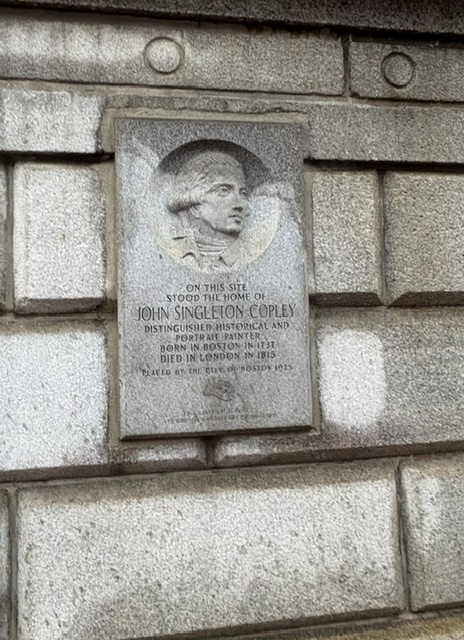
John Singleton Copley
Walking through Boston, I came across this plaque marking the site where the home of John Singleton Copley once stood. The house itself is gone, but the plaque preserves the connection between this location and one of the most important artists of colonial America. Copley was born in Boston in 1738, although the plaque gives […]
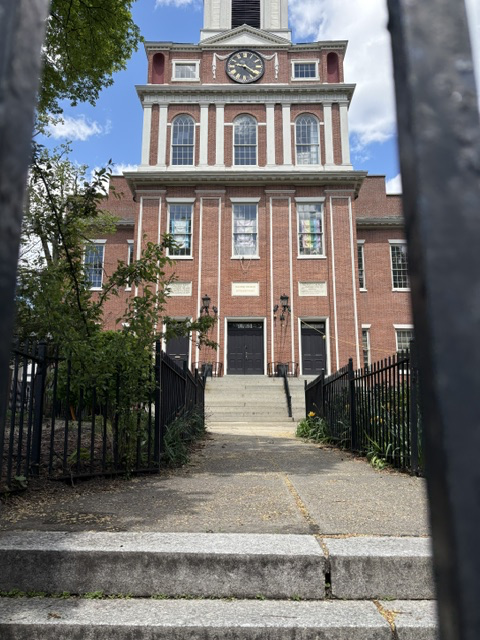
Old West Church
Walking through the streets around Massachusetts General Hospital, Marty and I kept stopping to photograph buildings that caught our attention. Old West Church was one of them. Behind an iron fence on Cambridge Street stands this handsome red-brick church with its tall arched windows, clock tower and white steeple. The plaques along the fence revealed […]
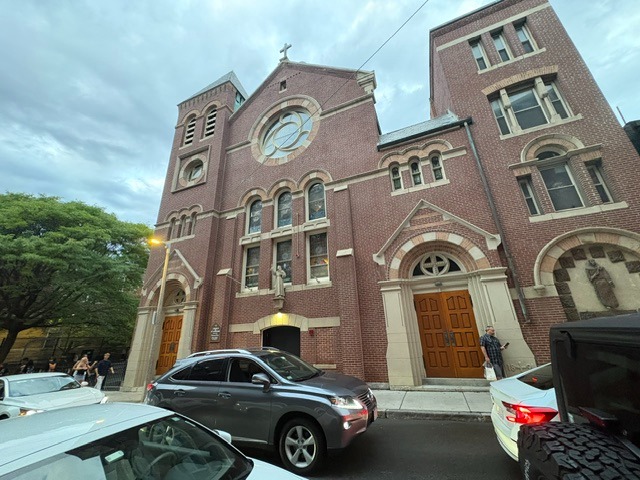
Saint Leonard’s Church
During our walk through Boston’s North End, we stopped at Saint Leonard’s Church. Its brick façade, arched entrances, and circular window draw attention from the street, but its history also reveals how Italian immigrants established a community in their new country. The parish began in 1873, when Archbishop John Williams called upon Franciscan friars to […]

