The Clough House
Walking through Boston’s North End, we stopped at the Clough House on Unity Street, behind Old North Church. Its brick exterior holds a history that reaches beyond colonial Boston into the lives of immigrant families who later made this neighborhood their home.
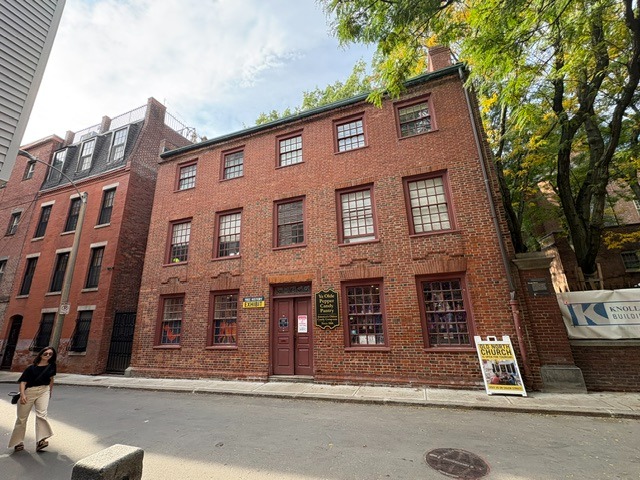
Built around 1715, the house was the home of master bricklayer Ebenezer Clough, his wife Thankful, and their family. Clough later helped construct Old North Church. His surviving residence is one of Boston’s oldest buildings, preserving a connection to the skilled craftsmen who helped build the colonial town.
Clough built several similar houses along Unity Street. One belonged to Benjamin Franklin and was occupied by his sister, Jane Franklin Mecom. Those neighboring houses disappeared, leaving the Clough House as a rare survivor of the street’s early development.
As the North End changed, the house changed with it. In the early nineteenth century, a third story was added, and the building was divided into rental apartments. A residence built for one household became home to several families at a time. Irish immigrants moved in during the late nineteenth century, followed by Italians; by the early twentieth century, its residents were Italian and Italian American. The 1920 census recorded twenty-nine people from eight families living here.
The evidence of their daily lives remained beneath the backyard. In 2013, Boston’s archaeology team excavated more than 36,000 artifacts spanning three centuries. Ceramics and animal bones revealed patterns of household life, while marbles and doll fragments offered glimpses of children playing in this small urban space. These discoveries helped recover the experiences of people whose lives were less often recorded in written histories.
The building’s survival was not assured. By the twentieth century, its deteriorating condition raised concerns about fire and the safety of nearby Old North Church. Preservation efforts eventually secured its future, and the Old North Foundation acquired the property in 1959. Today, it provides space for historical interpretation, including an exhibit about childhood in the North End.
The Clough House allows us to follow a neighborhood’s history through the changing use of a single home. Its story includes craftsmanship, crowded apartments, children’s play, and the decision to preserve a building that had sheltered generations of Bostonians.
Read More From Nancy
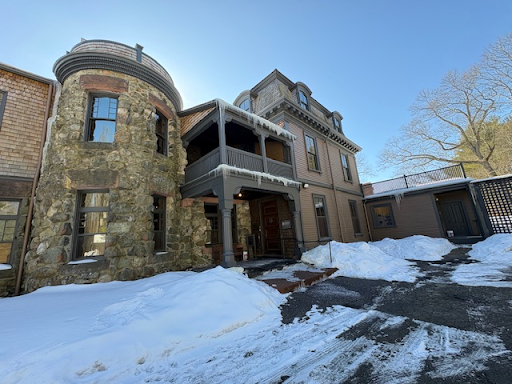
Stonehurst: The Robert Treat Paine Estate
Tucked away in Waltham, Massachusetts, Stonehurst is one of the region’s architectural treasures. The estate was created between 1883 and 1888 for Robert Treat Paine Jr., a prominent Boston lawyer and philanthropist whose father had helped found the Museum of Fine Arts, Boston. Paine envisioned the property not simply as a house, but as a […]
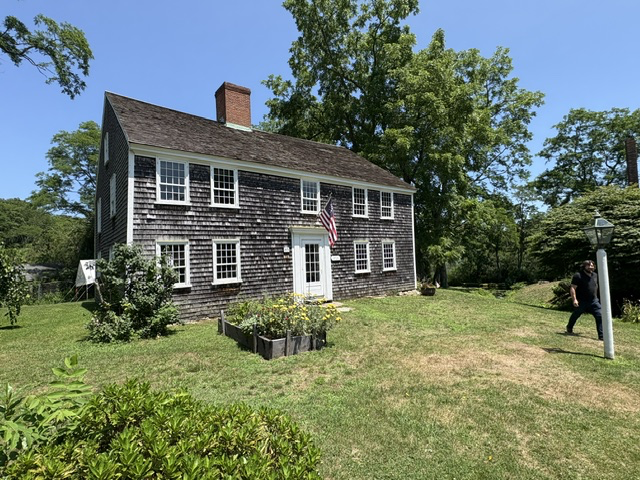
The Benjamin Nye Homestead
While exploring East Sandwich, I stopped at the Benjamin Nye Homestead. From the outside it looks like the kind of weathered, shingled house that seems completely at home on Cape Cod. What I didn’t initially appreciate was just how old it is. The earliest portion of this house was built in 1678, making it one […]
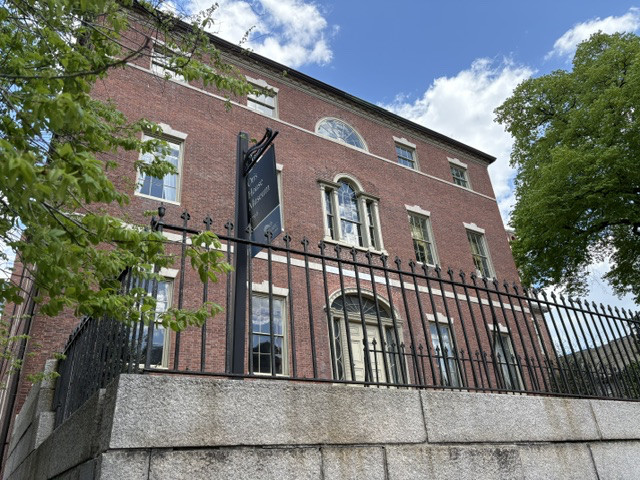
The Otis House
Perched at the top of Boston’s historic Beacon Hill stands the Otis House, one of the finest surviving examples of Federal style architecture in the city. Designed by renowned architect Charles Bullfinch in 1796 for Harrison Gray Otis, the house reflected the growing prestige and sophistication of Boston’s wealthiest citizens. Otis was a lawyer, politician, real estate developer […]

