Bunker Hill Monument
Looking across the water from Boston’s North End, we could see the Bunker Hill Monument rising above Charlestown. Its granite obelisk marks a battlefield that helped demonstrate the determination of the colonial forces during the opening months of the American Revolution.
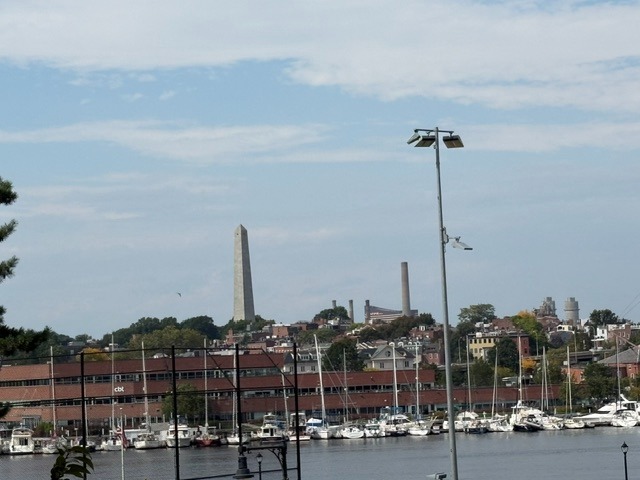
Despite its name, the monument stands on Breed’s Hill, where much of the Battle of Bunker Hill took place on June 17, 1775. The night before, colonial soldiers built an earthen fort on the hill overlooking Boston. Their position challenged British control of the surrounding area and prompted an assault the following day.
The colonial defenders resisted repeated attacks, but dwindling ammunition left them increasingly vulnerable. British troops eventually captured the position, securing a victory at a heavy cost. The battle showed that the colonial forces could mount a formidable defense against trained British soldiers, even though they ultimately withdrew.
Nearly fifty years later, the Bunker Hill Monument Association formed in 1823 to preserve the battlefield and build a permanent memorial. Completing that ambition required years of fundraising and construction. Work on the granite obelisk began in 1827, then stopped when the association ran out of money.
Women played a decisive role in finishing the monument. In 1840, writer and editor Sarah Josepha Hale helped organize a week-long fair at Quincy Market that raised approximately $30,000. Those funds, together with additional contributions, allowed construction to continue to the intended height. The obelisk reached 221 feet in 1842 and was formally dedicated on June 17, 1843, the anniversary of the battle.
The monument therefore carries two connected histories: the struggle fought on this hill and the later public effort to preserve its memory. Its presence above Charlestown makes the battlefield visible from across the water, placing a reminder of the Revolution within the everyday landscape of Boston.
Read More From Nancy
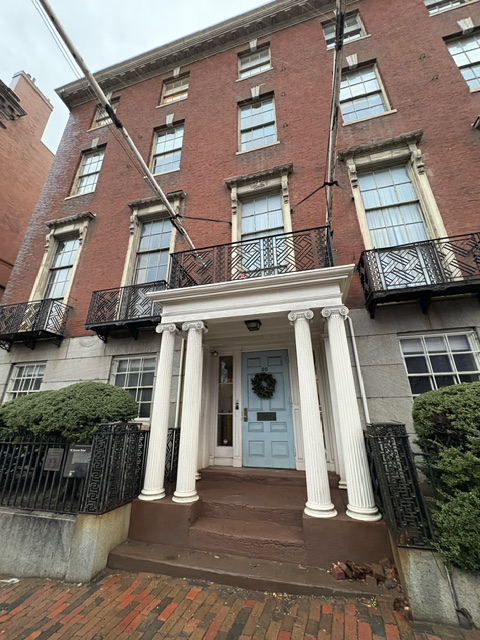
The Third Harrison Gray Otis House
When I came across this house at 45 Beacon Street, I recognized the Otis name because I had already visited the Harrison Gray Otis House near Massachusetts General Hospital. What I didn’t realize was that the Cambridge Street house was only the beginning of the family’s story. Harrison Gray Otis eventually built three Boston houses, […]
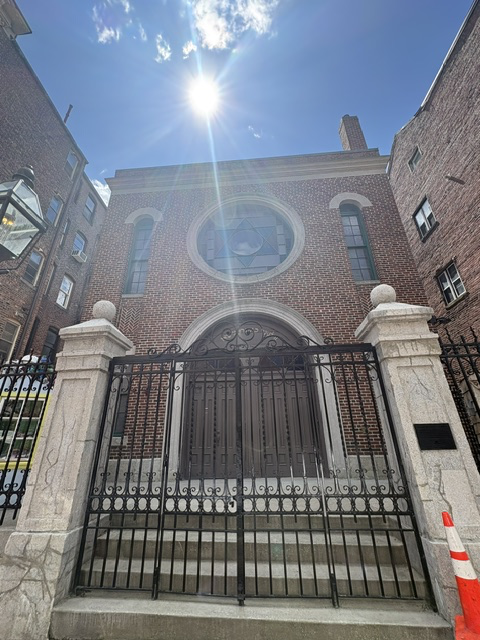
The Vilna Shul
Tucked into the north slope of Beacon Hill is a building that preserves a part of Boston history that has almost completely disappeared. The Vilna Shul is the last surviving purpose-built immigrant-era synagogue in downtown Boston and a reminder of the once-thriving Jewish community of the West End. The congregation was founded in 1893 by […]
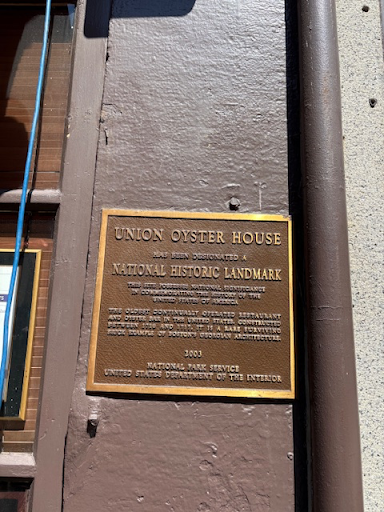
Union Oyster House
Walking along the Freedom Trail in Boston, it is easy to miss the plaque outside the Union Oyster House. But if you pass it by, you are missing not only a good meal, but an extraordinary chapter in American history. The Union Oyster House is the oldest continuously operating restaurant in the United States, serving diners […]

