Soldiers and Sailors Monument
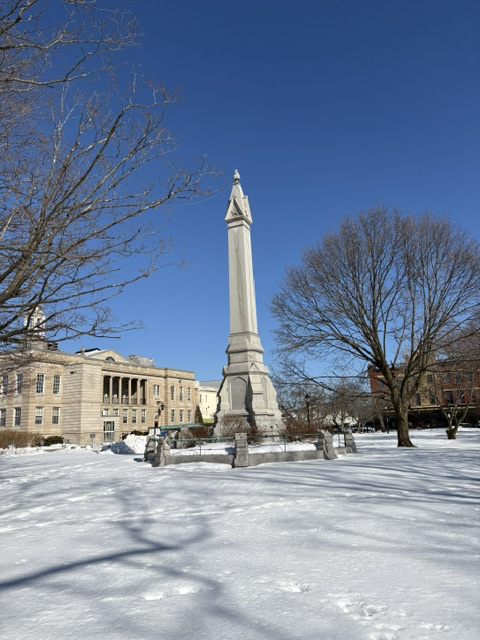
Standing prominently on Waltham Common is the Soldiers and Sailors Monument, one of the city’s oldest public memorials and one of the earliest Civil War monuments erected in Massachusetts. The monument was dedicated on May 29, 1868, only three years after the end of the Civil War, at a time when the memories of the conflict and the grief of losing loved ones were still very fresh within the community.
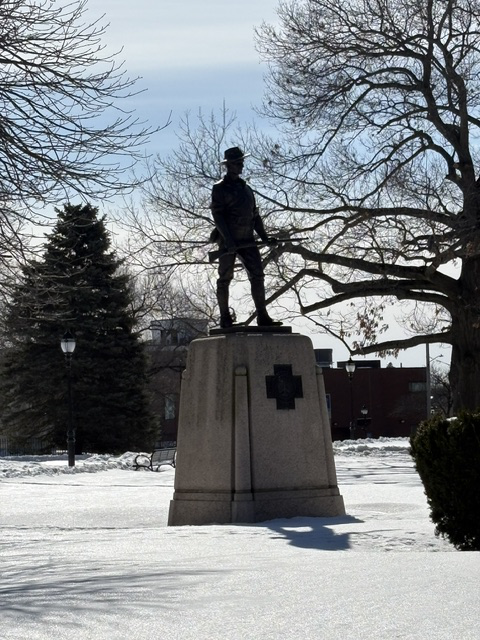
The monument was designed by George F. Meacham, a noted Boston architect who also contributed to the design of the Boston Public Garden and numerous parks and public buildings throughout Massachusetts. It honors the fifty-four men from Waltham who lost their lives while serving in the Union Army during the Civil War.
The dedication ceremony itself reflected the monument’s importance to the city. The keynote speaker was General Nathaniel P. Banks, a native of Waltham who served as Governor of Massachusetts, Speaker of the U.S. House of Representatives, and later as a Union major general during the Civil War. More than forty years later, Waltham would honor Banks with another statue on the Common, placing his monument only a short distance from the Soldiers and Sailors Memorial.
Among the names commemorated on this monument are two brothers whose story illustrates the personal cost of the war. First Lieutenant George F. Brown and Sergeant Charles L. Brown both served in the 16th Massachusetts Infantry and fought at the Battle of Gettysburg in July 1863. Lieutenant George Brown was killed during the fighting on July 2 and was buried on the battlefield. His brother Charles survived the battle despite being wounded three times and was expected to recover. However, several days later, his condition worsened, and he died in a field hospital before he could return home. The two brothers were buried together in Waltham’s Mount Feake Cemetery, where a large public procession accompanied them to their final resting place despite heavy rain and strong winds.
Interestingly, not everyone agreed that the monument belonged on Waltham Common. During the planning process, at least one resident argued in the local newspaper that such a memorial should stand in a cemetery or churchyard rather than in the center of the town. He believed the memories of war, sacrifice, and loss were too solemn to share space with the everyday activities of community life. Ultimately, the city chose the Common, ensuring that remembrance would become part of daily life rather than something visited only on special occasions.
More than 150 years later, the monument continues to fulfill that purpose. Thousands of people cross Waltham Common each year, often without realizing they are passing one of the city’s most important historical landmarks. It remains a lasting tribute not only to the fifty-four men whose names are engraved upon it, but also to the generations of Waltham families whose lives were forever changed by the Civil War.
Today, the Soldiers and Sailors Monument serve as both a historical landmark and a reminder that the Civil War touched communities throughout Massachusetts. Behind each name carved into the monument was an individual who once lived, worked, and walked the streets of Waltham before answering the nation’s call to serve.


Read More From Nancy

Stonehurst: The Robert Treat Paine Estate
Tucked away in Waltham, Massachusetts, Stonehurst is one of the region’s architectural treasures. The estate was created between 1883 and 1888 for Robert Treat Paine Jr., a prominent Boston lawyer and philanthropist whose father had helped found the Museum of Fine Arts, Boston. Paine envisioned the property not simply as a house, but as a […]

Gore Place
Surrounded by open lawns and mature trees, the Gore Place remains one of the finest surviving Federal-era estates in New England and offers a glimpse into the aspirations of the young American republic. Gore Place was built between 1804 and 1806 for Christopher Gore and his wife, Rebecca Amory Payne Gore. Christopher Gore was one of […]
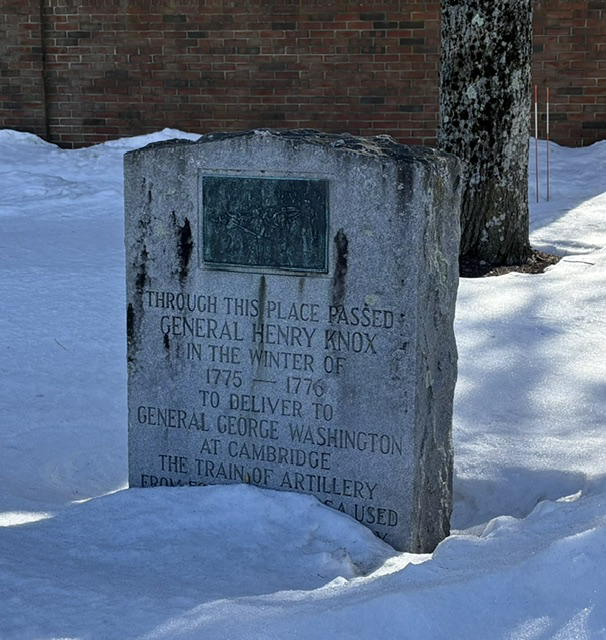
Henry Knox Marker
I have written about General Henry Knox and his remarkable journey across Massachusetts with the “Noble Train of Artillery.” Whenever I come across one of the historical markers commemorating this expedition, I make it a point to stop and photograph it. Although each marker tells the same story, each represents another community that played a […]

