Henry Knox Marker
I have written about General Henry Knox and his remarkable journey across Massachusetts with the “Noble Train of Artillery.” Whenever I come across one of the historical markers commemorating this expedition, I make it a point to stop and photograph it. Although each marker tells the same story, each represents another community that played a role in one of the greatest logistical achievements of the American Revolution.
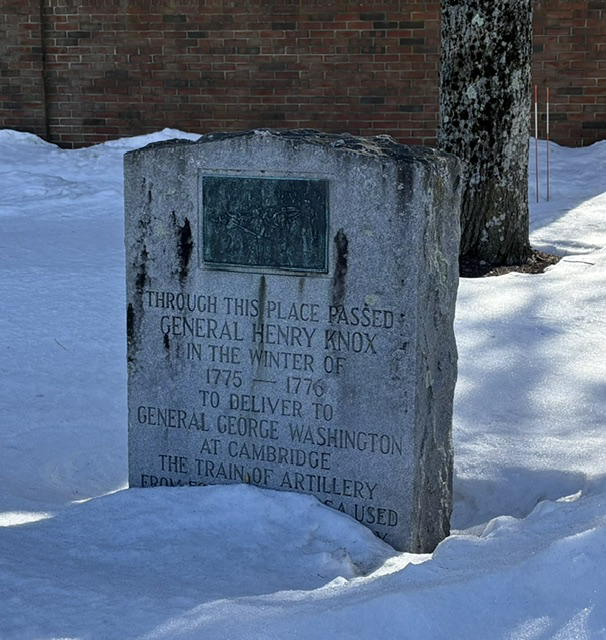
This marker stands along Main Street in Waltham and marks the route taken by Henry Knox during the winter of 1775–1776 as he transported the artillery captured at Fort Ticonderoga to General George Washington’s army assembled in Cambridge.
The inscription reads:
“Through this place passed General Henry Knox in the winter of 1775–1776 to deliver to General George Washington at Cambridge the train of artillery from Ticonderoga that caused the British to evacuate Boston.”
At only twenty-five years of age, Colonel Henry Knox was entrusted with moving fifty-nine cannons, mortars, and howitzers weighing nearly sixty tons over approximately 300 miles of frozen rivers, mountain trails, and snow-covered roads. Using teams of oxen, horses, and heavy wooden sleds, Knox completed what many considered an impossible assignment.
When the artillery finally reached Cambridge in late January 1776, Washington positioned the cannon on Dorchester Heights overlooking Boston. Faced with American artillery commanding both the city and Boston Harbor, British General William Howe concluded that Boston could no longer be defended. On March 17, 1776, British forces evacuated the city, marking one of the first major American successes of the Revolutionary War.
The Waltham marker was erected by the Massachusetts Society of the Sons of the American Revolution, one of many markers placed throughout the Commonwealth to commemorate Knox’s route. The bronze relief mounted at the top of the monument depicts the arduous winter journey of the artillery train, reminding visitors of the determination required to accomplish this historic feat.
Although I have photographed several Henry Knox markers across Massachusetts, I enjoy finding each one because it places another community into the larger story. The expedition did not happen in a single location. It unfolded town by town, mile by mile, as Knox and his men slowly worked their way toward Cambridge.
This modest granite marker on Main Street is one more reminder that Waltham played a small but significant part in a journey that helped change the course of the American Revolution.
Read More From Nancy
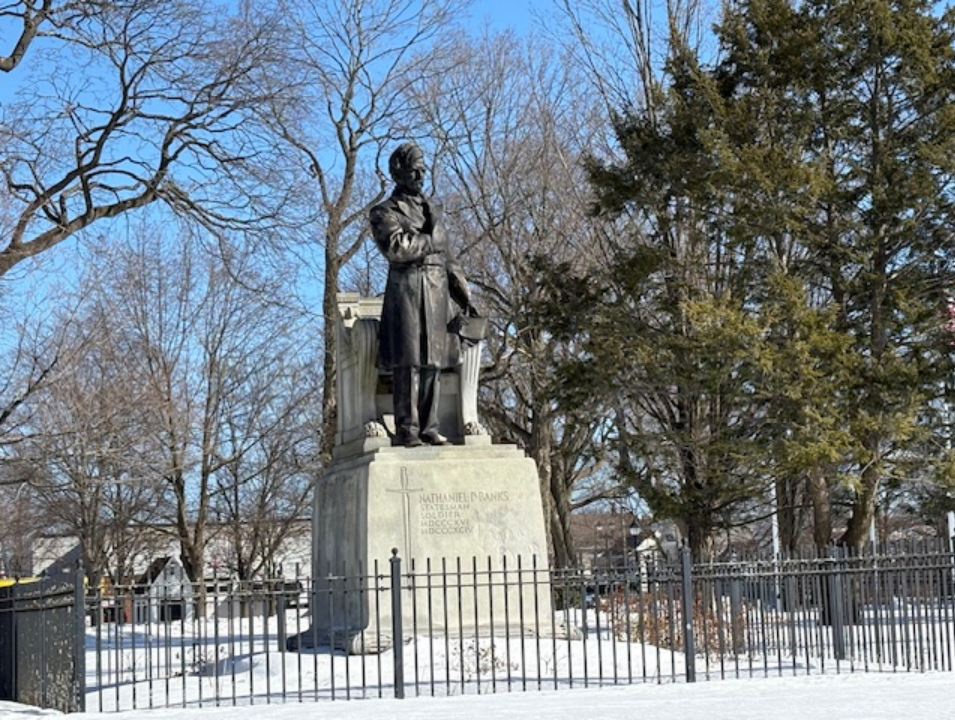
Nathan P. Banks Statue
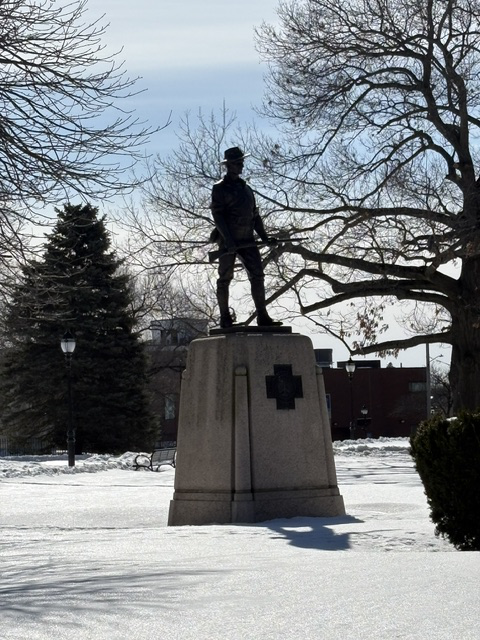
I stop at statues, sometimes to admire the sculpture itself, but always to ask what about this person’s life was so memorable that a town or community would place their image in such a prominent location. That was certainly true for the large, prominent sculpture I found on the Waltham Common. There, standing in bronze, is […]
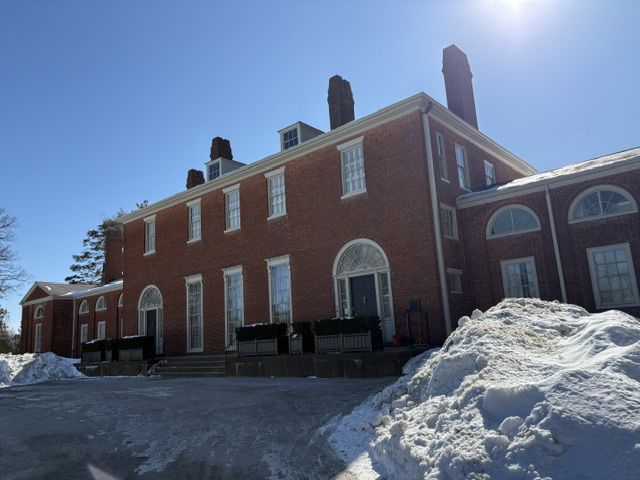
Gore Place
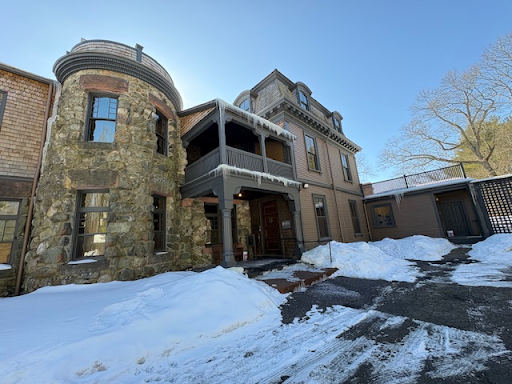
Surrounded by open lawns and mature trees, the Gore Place remains one of the finest surviving Federal-era estates in New England and offers a glimpse into the aspirations of the young American republic. Gore Place was built between 1804 and 1806 for Christopher Gore and his wife, Rebecca Amory Payne Gore. Christopher Gore was one of […]
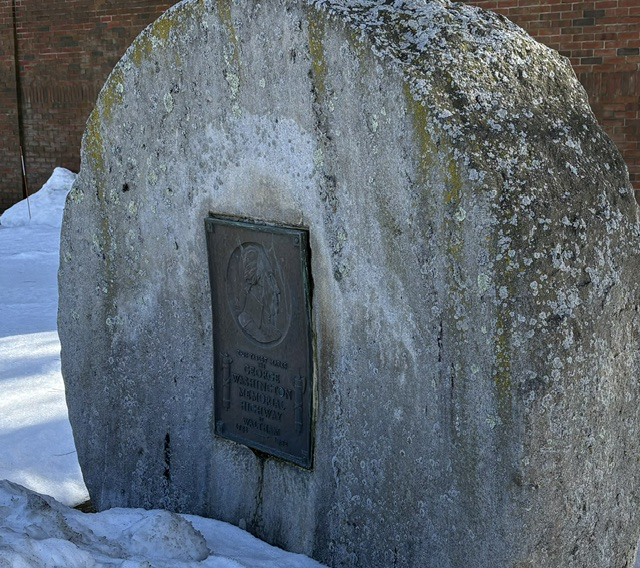
George Washington Memorial Highway Marker
Throughout my travels in New England, I have frequently come across bronze markers identifying the route traveled by General George Washington. They appear in many towns and cities across Massachusetts, commemorating the roads Washington followed as he journeyed to assume command of the Continental Army in 1775 and later as President of the United States […]

