George Washington Memorial Highway Marker
Throughout my travels in New England, I have frequently come across bronze markers identifying the route traveled by General George Washington. They appear in many towns and cities across Massachusetts, commemorating the roads Washington followed as he journeyed to assume command of the Continental Army in 1775 and later as President of the United States during his New England tour in 1789.
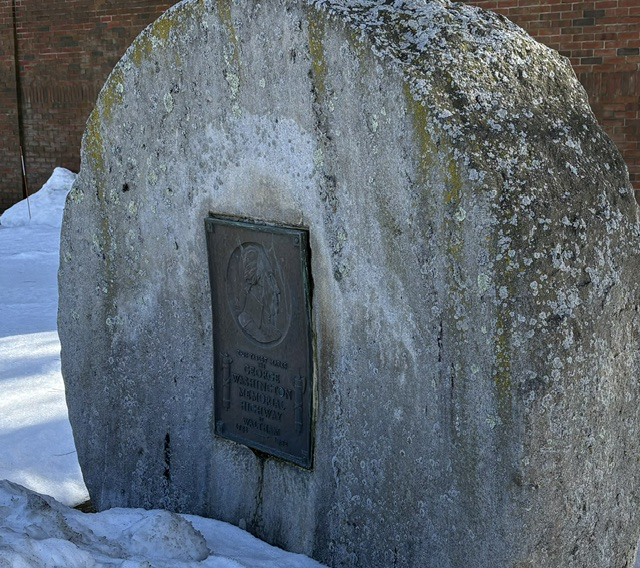
This marker stands along Main Street in Waltham, just a short distance from Waltham Common and immediately beside the Henry Knox Trail marker. Together, they commemorate two of the most significant journeys associated with the American Revolution.
The George Washington Memorial Highway was established in 1932 during the national celebration marking the 200th anniversary of Washington’s birth. Massachusetts placed a series of bronze markers in communities across the Commonwealth to identify portions of the historic route traveled by Washington. Rather than honoring a single event, these markers preserve the memory of the roads he followed through Massachusetts during two very different periods of his life.
Washington first passed through Waltham in June 1775 after being appointed Commander-in-Chief of the Continental Army by the Second Continental Congress. Traveling from Philadelphia to Cambridge, he came to take command of the colonial forces surrounding British-occupied Boston. It was in nearby Cambridge that he began the enormous task of transforming local militia into a unified Continental Army.
Fourteen years later, Washington again traveled through Waltham, but under very different circumstances. In 1789 he returned to New England as the first President of the United States during a month-long tour of the region. Communities throughout Massachusetts welcomed him as both the victorious commander of the Revolution and the nation’s first chief executive.
I have made it a habit to photograph these Washington Memorial Highway markers whenever I encounter them. Each one is similar in appearance, yet each represents another stop along Washington’s historic travels. Collectively they create a geographic record of his journeys through Massachusetts and remind us how many communities can claim a direct connection to the nation’s first president.
The Waltham marker is especially meaningful because it stands beside the Henry Knox Trail marker. Together they tell two parallel stories: Washington’s leadership of the Continental Army and Henry Knox’s remarkable transport of artillery from Fort Ticonderoga. Those two journeys converged near Boston in the winter of 1776 and ultimately led to the British evacuation of the city, one of the first great successes of the American Revolution.
While these modest roadside monuments are easy to overlook, they quietly preserve the routes traveled by two men whose leadership helped shape the birth of the United States. Each marker adds another piece to the larger historical landscape that continues to connect communities throughout Massachusetts.
Read More From Nancy
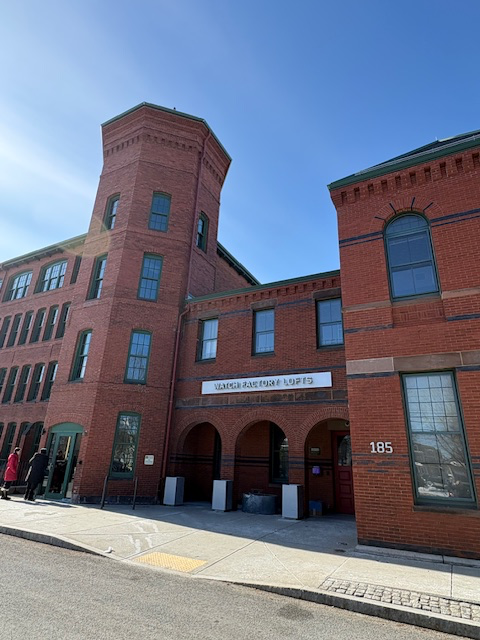
Waltham Watch Company
The great brick factory along the Charles River was once the heart of the Waltham Watch Company, founded in 1850 as the American Horologe Company. It became the first company in the United States to successfully manufacture watches using interchangeable parts, pioneering precision mass production and helping launch the American Industrial Revolution. At its height in […]
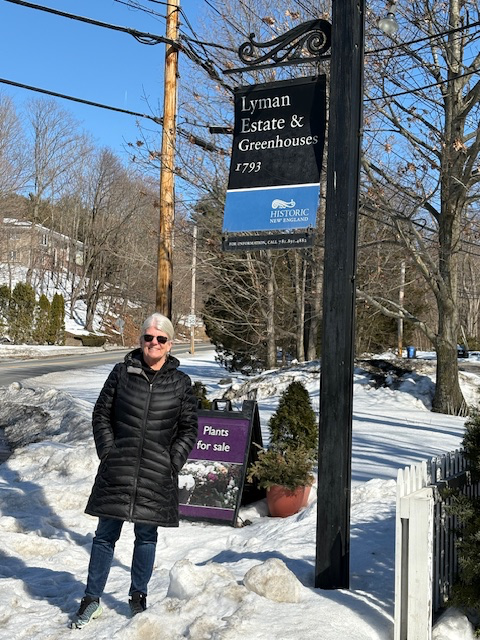
Lyman Estates
In Waltham stands another remarkable site connected to early American horticulture and estate life: The Lyman Estate. This estate preserves one of the finest surviving country houses of the Federal period as well as one of the oldest continuously operating greenhouse complexes in the United States. The estate was built in 1793 for Theodore Lyman, a wealthy Boston […]
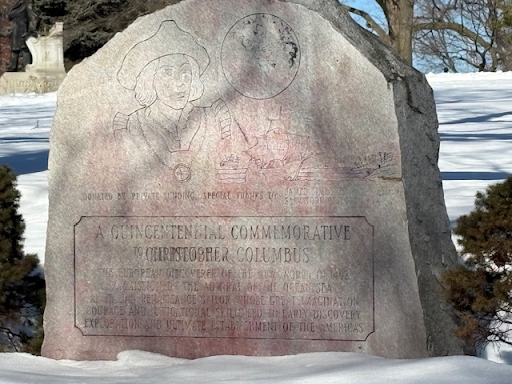
Monument to Columbus
On the Common in Waltham, there is a granite stone set quietly among the other memorials that mark the town’s history. It does not rise high but if you stop and read it, the inscription reads: “A Quincentennial Commemorative to Christopher Columbus. The European discoverer of the New World in 1492…….” The wording continues in a […]

