The Music Hall
The ornate facade of the Music Hall rises above the storefronts below with decorative brickwork, pointed finials, and the vertical “Music Hall” sign still prominently centered on the building. This building reflects a period in the late 19th and early 20th centuries when prosperous manufacturing cities built halls like this for concerts, lectures, theatre prosecutions, dances, political meetings and later silent films.
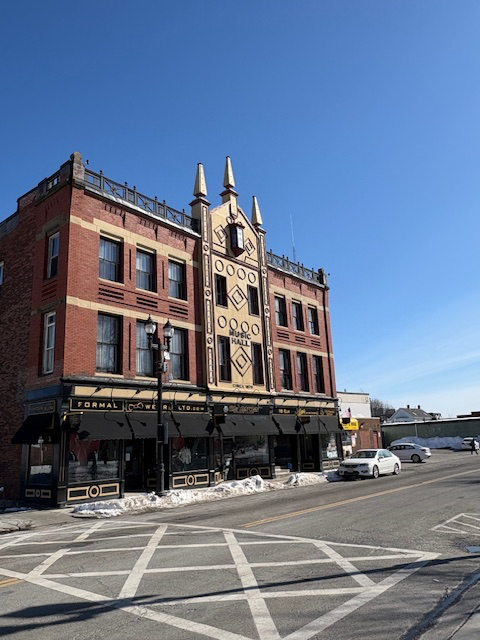
During Waltham’s industrial peak, the city was known as “Watch City” because of the Waltham Watch Company, whose factories helped transform Waltham into one of the important manufacturing centers of New England. Workers filled the streets, trolley lines connected neighborhoods to downtown. Buildings like the Music Hall were once the cultural heart of cities like Waltham.
What makes the building especially meaningful is that it survived. Many local music halls and opera houses across New England disappeared through fire, demolition or redevelopment. Yet this structure still stands as a reminder of the era when downtown Waltham was not only an industrial center, but also a vibrant social and cultural destination.

Read More From Nancy
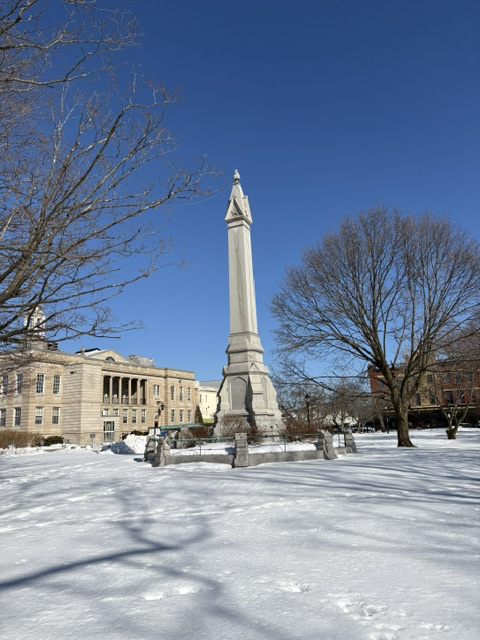
The Soldiers’ Monument
Rising above Waltham Common is the city’s Civil War Soldiers’ Monument, erected in May 1868, only three years after the end of the Civil War. Its prominent location was intentional. Like Civil War monuments on town commons throughout New England, it placed the memory of those who served directly at the center of community life. […]
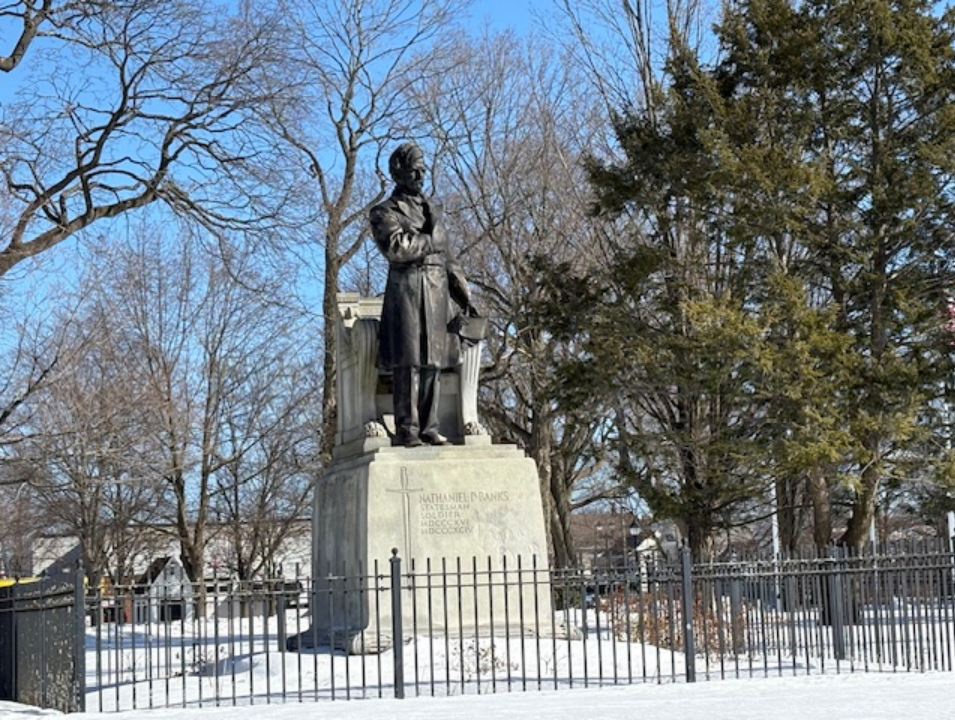
Nathan P. Banks Statue
I stop at statues, sometimes to admire the sculpture itself, but always to ask what about this person’s life was so memorable that a town or community would place their image in such a prominent location. That was certainly true for the large, prominent sculpture I found on the Waltham Common. There, standing in bronze, is […]
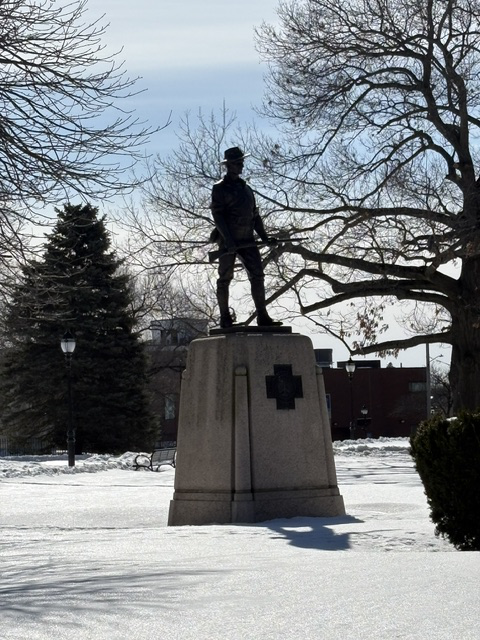
Soldiers and Sailors Monument
Standing prominently on Waltham Common is the Soldiers and Sailors Monument, one of the city’s oldest public memorials and one of the earliest Civil War monuments erected in Massachusetts. The monument was dedicated on May 29, 1868, only three years after the end of the Civil War, at a time when the memories of the conflict […]

