Old South Meeting House
Our daughters were standing in the snow outside the Old South Meeting House on a particularly meaningful day. We had come to Boston for the annual reenactment of the meeting that led to the Boston Tea Party. Rather than simply reading about what happened on December 16, 1773, we were able to experience the story in the place where it began.
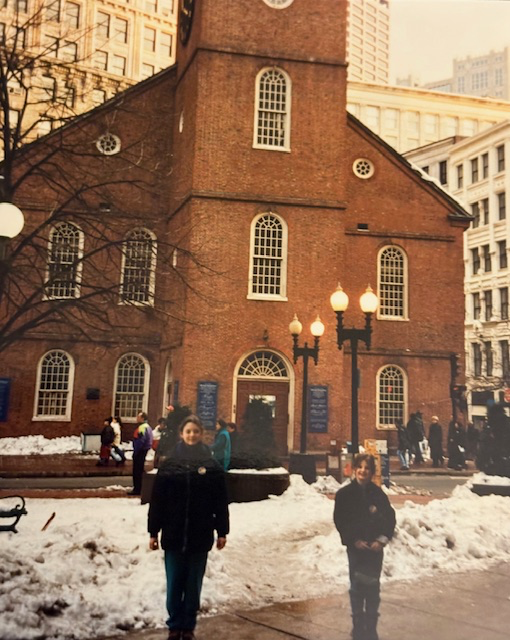
Built in 1729, Old South Meeting House served as both a Puritan house of worship and a forum where residents assembled to discuss issues affecting their community. Because it was the largest building in colonial Boston, it became the natural setting for public meetings when crowds grew too large for Faneuil Hall.
Many people associated with Boston’s early history worshipped or gathered here. Benjamin Franklin was baptized in the congregation’s earlier meetinghouse on this site. Phillis Wheatley, the first published African American woman poet, was a member of the congregation. Patriots including James Otis, Thomas Cushing, and William Dawes attended meetings within its walls as tensions increased between Britain and the colonies.
The meeting house is best remembered for the events of December 16, 1773. Three ships carrying East India Company tea waited in Boston Harbor. The colonists objected to the tax on the tea and insisted that the ships return to England without unloading their cargo. Thousands of people crowded into Old South Meeting House and the surrounding streets while representatives attempted to obtain permission for the ships to leave.
The meeting continued for hours until word arrived that Governor Thomas Hutchinson would not allow the tea to be returned. The gathering came to an end, and a group of men proceeded toward the waterfront. That evening, they boarded the ships and emptied 342 chests of tea into Boston Harbor. The protest became known as the Boston Tea Party and helped move the colonies closer to revolution.
The reenactment allowed us to follow the sequence of events rather than encounter them as isolated facts. We gathered at Old South Meeting House as actors recreated the arguments surrounding the tea crisis. The story then moved from the meeting house toward the waterfront, retracing the path taken by the colonists. History unfolded through voices, movement, and place, allowing our daughters to experience how a public debate inside one building became an act of resistance beside the harbor.
The British occupation of Boston brought retaliation against the meeting house. In 1775, British soldiers gutted the building, covered its floor with dirt, and used the interior for horseback riding. After the war, the congregation restored the building and continued worshipping there until moving to a new church in Copley Square during the 1870s.
The survival of the Old South Meeting House was not assured. It narrowly escaped the Great Boston Fire of 1872 and was later sold and threatened with demolition. A determined preservation campaign, led largely by Boston women, raised the money necessary to save it. In 1877, it opened as a museum and public meeting place, becoming one of the earliest successful historic-preservation projects in the United States.
Read More From Nancy
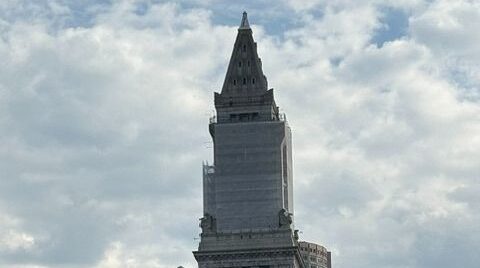
The Custom House Tower
During our walk around Boston, the Custom House Tower rose above the surrounding buildings, its pointed roof making it recognizable from a distance. This landmark connects two periods of the city’s history: the nineteenth-century seaport and the early twentieth-century skyline. The original Custom House opened in 1847. Designed by architect Ammi Burnham Young, its Greek […]
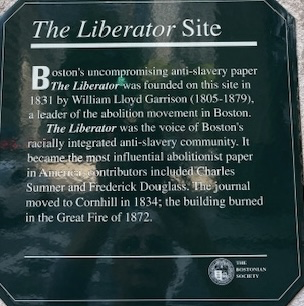
The Liberator Site
I had just stepped away from the busy Freedom Trail, when I came across the bronze plaque on a quiet Boston street. It read: “The Liberator Site – Boston uncompromising anti-slavery paper. The Liberator was founded on this site in 1831 by William Lloyd Garrison…..“ Standing at this spot, I realized that this was the birthplace […]
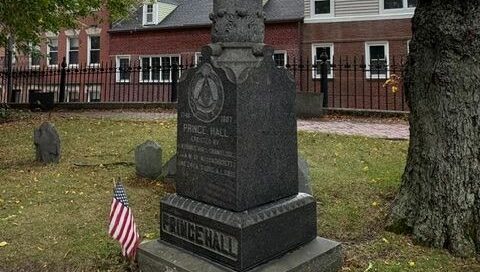
Prince Hall at Copp’s Hill Burying Ground
Among the graves at Copp’s Hill Burying Ground is the monument to Prince Hall, a leader in Boston’s Black community whose work connected abolition, education, and the establishment of Black Freemasonry. His life unfolded during the American Revolution and the early republic, when declarations of liberty existed alongside slavery and racial exclusion. Hall helped bring […]

