The Liberator Site
I had just stepped away from the busy Freedom Trail, when I came across the bronze plaque on a quiet Boston street. It read: “The Liberator Site – Boston uncompromising anti-slavery paper. The Liberator was founded on this site in 1831 by William Lloyd Garrison…..“
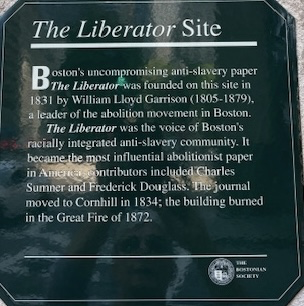
Standing at this spot, I realized that this was the birthplace of one of America’s most, courageous voices for justice. In 1831, William Lloyd Garrison, a young printer, established “The Liberator” with the sole purpose of demanding the immediate and unconditional emancipation of all enslaved people. The first issue opened with the famous declaration: “I will be as harsh as truth, and as uncompromising as justice.“
From this space, Garrison published what became the most influential abolitionist newspaper in America. Its contributors included Frederick Douglass, Charles Sumner and Wendell Philllips. Its words were reprinted, read aloud and debated in homes and churches throughout the country.
The Liberator continued its work for three decades, chronicling the growing conflict over slavery until December 1865 when Garrison published its final issue after the ratification of the 13th Amendment. He closed the paper with the words: “My vocation as an abolitionist is ended.“
The Liberator gave voice to the abolitionist community and helped ignite the moral awakening that would lead to freedom for millions.
Read More From Nancy
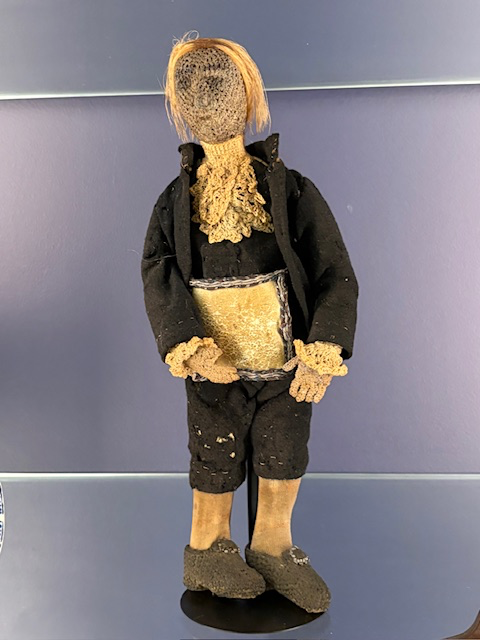
Washington Doll
In the years immediately following the American Revolution, George Washington became a living symbol of a new nation. Across the young republic, admiration for him inspired countless small acts of devotion. This rare type of commemorative doll is an example of this admiration. It was crafted from wool in 1790. These were not toys but expressions of patriotism, Washington’s image […]
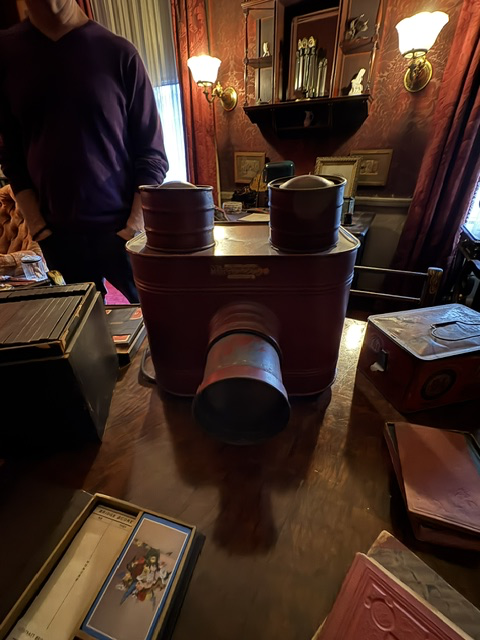
The Mirroscope
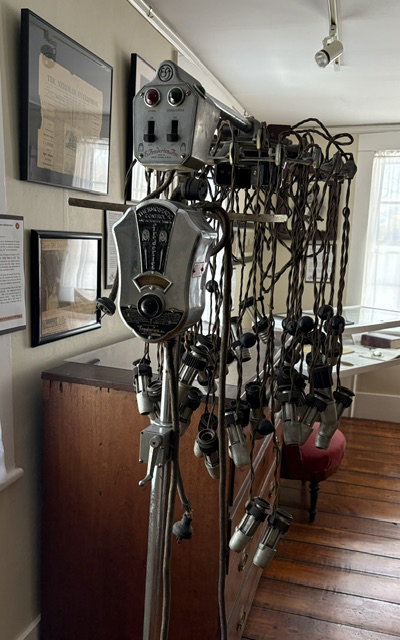
Among the objects that caught my attention while visiting the Gibson House Museum in Boston was this unusual piece of photographic equipment. At first glance, with its large projecting lens and boxlike body, I assumed it was an early camera. Looking more closely, however, I discovered that it worked in exactly the opposite direction. It […]
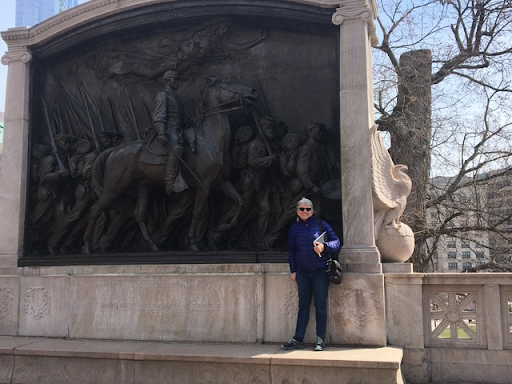
Shaw Memorial
Every time I visit Boston Common, I find myself stopping to admire this remarkable relief by Augustus Saint-Gaudens. Not only is it one of the finest works of public art in America, but it captures its subject with extraordinary power and dignity. Rather than glorifying war, the sculpture honors the courage, sacrifice, and determination of […]

