The Eliot School
During our walk through Boston’s North End, we passed the Eliot School on Charter Street. Its substantial brick building represents a history of public education that reaches back more than three centuries, long before this particular schoolhouse was built.
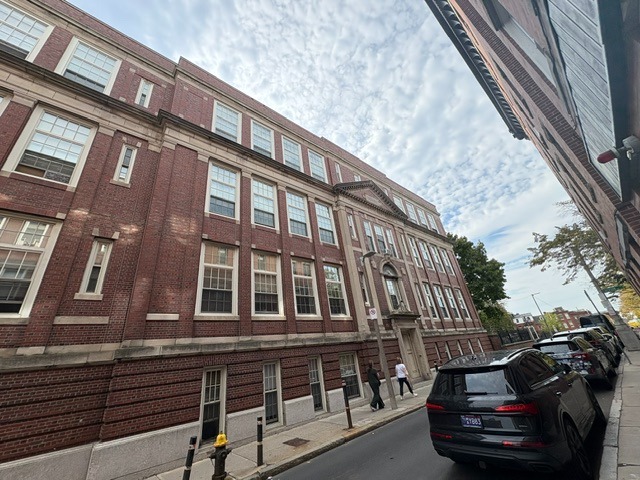
The institution traces its beginnings to the North Writing School, which opened in 1713. In 1790, it merged with the North Latin School and became the John Eliot School, named for a pastor of Boston’s North Church. The school identifies itself as Boston’s oldest continuously operating school and counts Samuel Adams and Paul Revere among its former pupils.
The Charter Street building dates to 1932. Its tall windows, symmetrical façade, and prominent central entrance belong to a later chapter in the school’s development. The distinction matters: the institution’s colonial origins have continued through successive buildings and generations of students.
The school also participated in civic life beyond the classroom. Its earlier facilities served as a meeting place for the women’s suffrage movement in 1917, connecting its history with the campaign to expand voting rights.
Continuity has required change. In 2007, the Eliot faced possible closure because of low performance. Under principal Traci Walker Griffith, teachers, families, and community members helped rebuild the school’s academic and social environment. That recovery led to expansion and its designation as an Innovation School in 2012.
Among the North End’s churches, memorials, and historic homes, the Eliot represents another form of neighborhood history: a school that continues to educate children. Its story connects colonial lessons with the ongoing responsibility of preparing each new generation.
Read More From Nancy
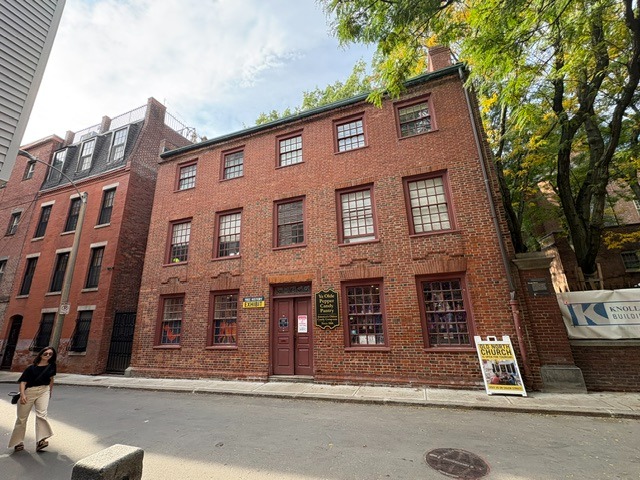
The Clough House
Walking through Boston’s North End, we stopped at the Clough House on Unity Street, behind Old North Church. Its brick exterior holds a history that reaches beyond colonial Boston into the lives of immigrant families who later made this neighborhood their home. Built around 1715, the house was the home of master bricklayer Ebenezer Clough, […]
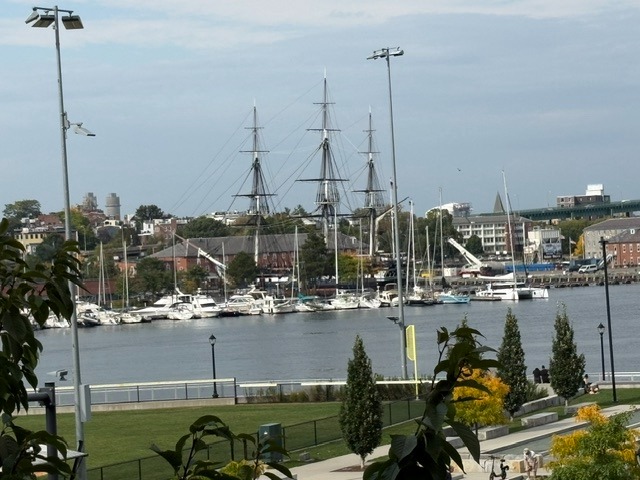
USS Constitution: Old Ironsides
Looking across the harbor during our walk through Boston’s North End, we could see the tall masts of USS Constitution at the Charlestown Navy Yard. From this distance, the ship connects the modern waterfront with the era when wooden sailing vessels carried the nation’s commerce and defended its interests at sea. Constitution was launched on […]
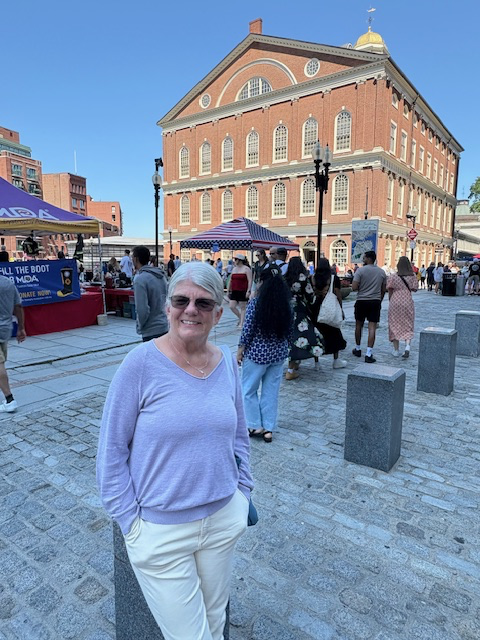
Boston National Historical Park
Standing here in front of Faneuil Hall, you feel both the energy of the present and the weight of the past at the same time. Built in 1742 as a marketplace and meeting hall, it quickly became something more. This is where the people of Boston gathered to speak openly about their future, and where […]

