Bible Box
While touring the Nichols House Museum in Boston, one piece in Dr. Arthur Nichols’ office immediately caught my attention. Resting on its stand was a beautifully carved oak Bible box, a reminder that even a physician’s office could contain objects that reflected an appreciation for history and craftsmanship.
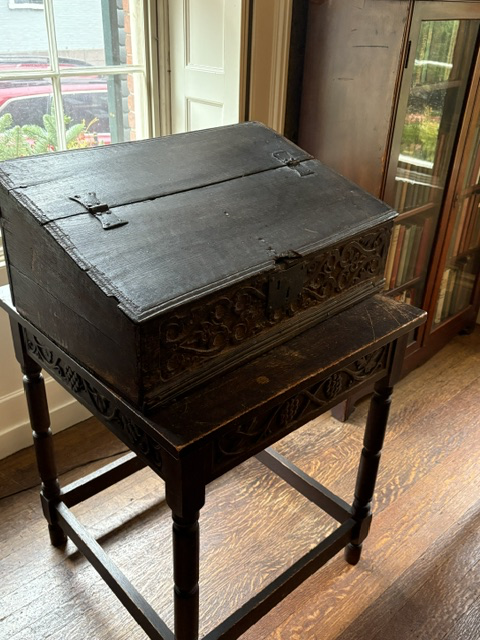
Although often called a “Bible box,” this English oak chest dates to the late seventeenth century and was designed to serve several purposes. Families used boxes like this to store not only a large family Bible but also important documents, money, letters, and other household valuables. The sloping lid could be opened to support a Bible or book for reading, allowing the box to function as a small portable writing or reading desk. The Bible box was not an original furnishing of the Nichols home. In 1912, Dr. Arthur Howard Nichols purchased it at a Boston auction as a gift for his daughter, Rose Standish Nichols, who would later become one of Boston’s leading landscape architects and preservationists. Arthur recorded the purchase in his diary, providing a wonderful glimpse into the family’s interest in collecting and preserving early New England and English antiques.
Displaying the Bible box in Dr. Nichols’ office seems especially fitting. Arthur Nichols was more than a respected Boston physician. He was an educated man with broad intellectual interests, a traveler, musician, collector, and lifelong student of history. The objects throughout the Nichols House reflect the family’s appreciation for craftsmanship, art, and the preservation of the past. This Bible box is one example of how those interests shaped the home they created on Beacon Hill.
Today, the Bible box serves as more than a beautiful antique. It represents the Nichols family’s commitment to preserving objects that connected them with earlier generations. Through pieces like this, visitors gain a deeper appreciation not only for colonial craftsmanship but also for the collectors who recognized the importance of preserving history long before historic preservation became common practice.
Read More From Nancy
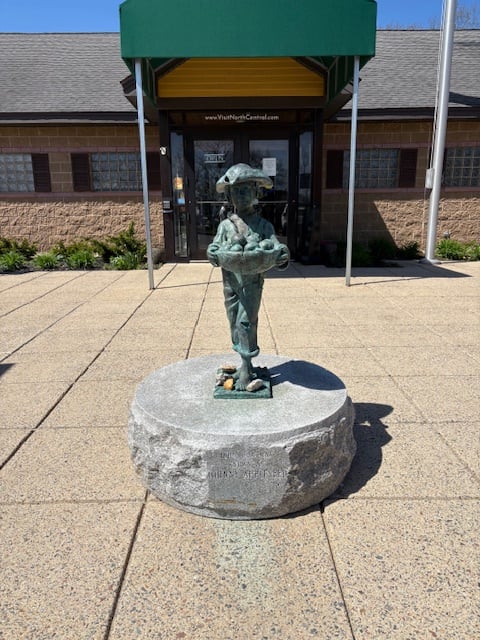
Young Johnny Appleseed
While traveling west on Route 2 through central Massachusetts, I made a stop at the Johnny Appleseed Visitors’ Center in Lancaster. Greeting visitors outside the entrance is this bronze sculpture of a young John Chapman, better known as Johnny Appleseed, one of America’s most enduring folk heroes. Although the visitor center is in Lancaster, it celebrates the […]
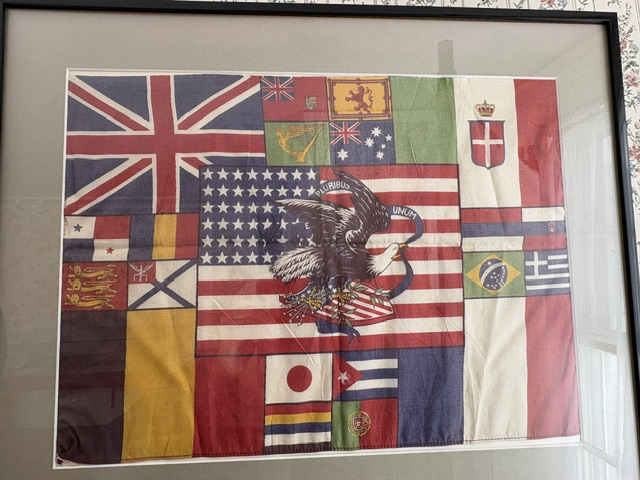
The 1917 Allies Flag
This unusual silk flag, preserved by the Needham History Center & Museum, tells a story not only about World War I, but about how Americans were encouraged to understand the nation’s entry into the conflict. By 1917, Europe had already been at war for nearly three years. The United States had remained officially neutral, but […]
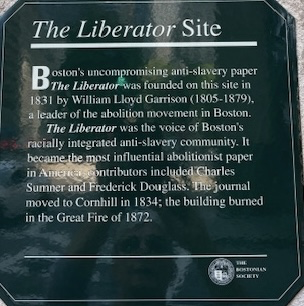
The Liberator Site
I had just stepped away from the busy Freedom Trail, when I came across the bronze plaque on a quiet Boston street. It read: “The Liberator Site – Boston uncompromising anti-slavery paper. The Liberator was founded on this site in 1831 by William Lloyd Garrison…..“ Standing at this spot, I realized that this was the birthplace […]

