Harpers Ferry and the Lewis and Clark Expedition
This historical marker adds another piece to the Meriwether Lewis story in Harpers Ferry. Before the famous Lewis and Clark Expedition began its journey across the continent, Lewis spent several weeks here gathering equipment and working with the skilled craftsmen of the United States Armory.
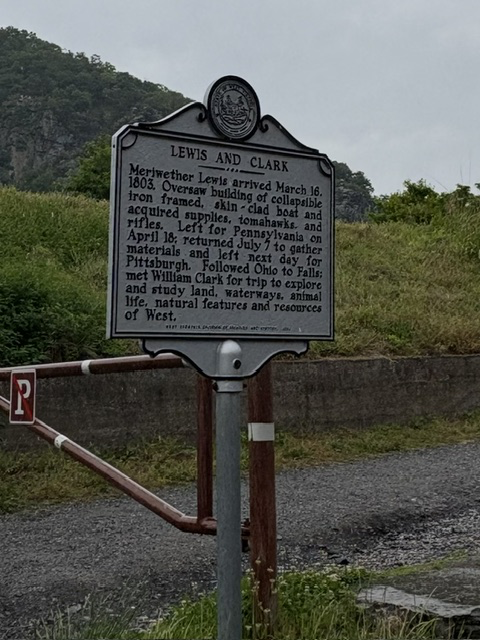
Meriwether Lewis arrived in Harpers Ferry on March 16, 1803. Among his most unusual projects was the construction of an iron-framed collapsible boat. The frame could be taken apart and transported overland, then reassembled and covered with animal hides when an additional boat was needed. Lewis referred to it as his “Experiment.”. He also acquired rifles, tomahawks, knives, ammunition and other equipment that would be needed during the expedition.
According to this marker, Lewis left Harpers Ferry on April 18 and traveled to Lancaster and then Philadelphia before continuing to Pittsburgh. There he met William Clark, and together they began the journey that would become one of the most famous explorations in American history.
Their mission was much larger than simply finding a route west. President Thomas Jefferson instructed the expedition to explore and map the newly acquired Louisiana Territory and lands beyond it, study rivers and possible transportation routes, document plants and animals, and establish relations with the Indigenous nations they encountered. The Corps of Discovery eventually traveled to the Pacific Ocean and returned, covering thousands of miles between 1804 and 1806.
What I like about finding this marker in Harpers Ferry is that it connects the famous expedition with the practical preparations that had to happen first. Before Lewis and Clark could explore the West, someone had to think about rifles, tools, ammunition, boats and all the supplies necessary to survive such an uncertain journey.
Harpers Ferry became one of the places where that preparation began. This small marker reminds us that the Lewis and Clark story did not begin on the Missouri River. Part of it began right here, among the workshops and craftsmen of Harpers Ferry.
Read More From Nancy
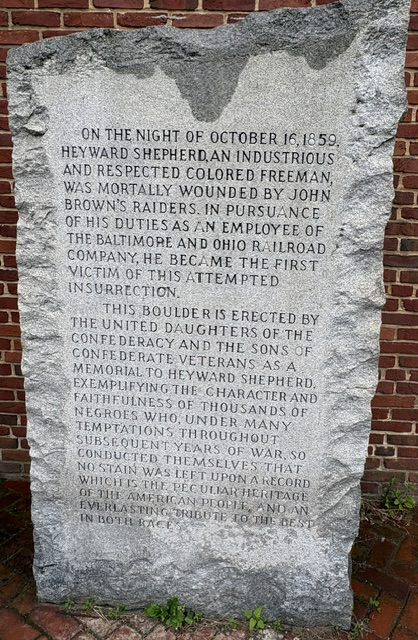
Remembering Heyward Shepherd
This monument in Harpers Ferry tells the story of Heyward Shepherd, a free Black man who became the first person killed during John Brown’s raid on October 16, 1859. Shepherd worked as a baggage master for the Baltimore & Ohio Railroad and was also described as a respected member of the local community. On the night […]
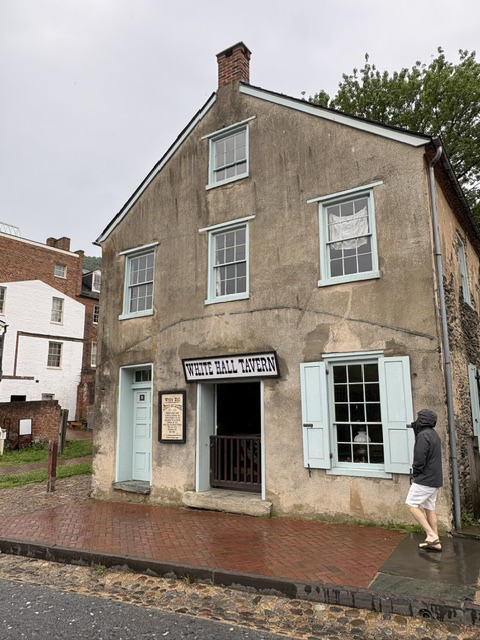
White Hall Tavern
Walking through the historic streets of Harpers Ferry, buildings like White Hall Tavern help tell another side of the town’s story. John Brown’s raid and the Civil War dominate the history here, but Harpers Ferry was also a working industrial community filled with ordinary people who needed places to eat, drink, gather and exchange news. […]
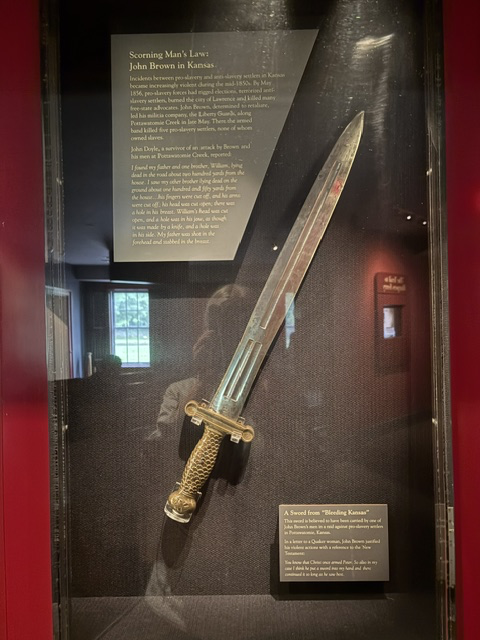
A Sword from “Bleeding Kansas”
This sword connects John Brown’s raid at Harpers Ferry to an earlier and violent chapter in the struggle over slavery. Before Brown came to Virginia in 1859, he had already become a nationally known, and deeply controversial, figure because of his actions in the Kansas Territory. During the 1850s, Americans were fighting over whether Kansas […]

